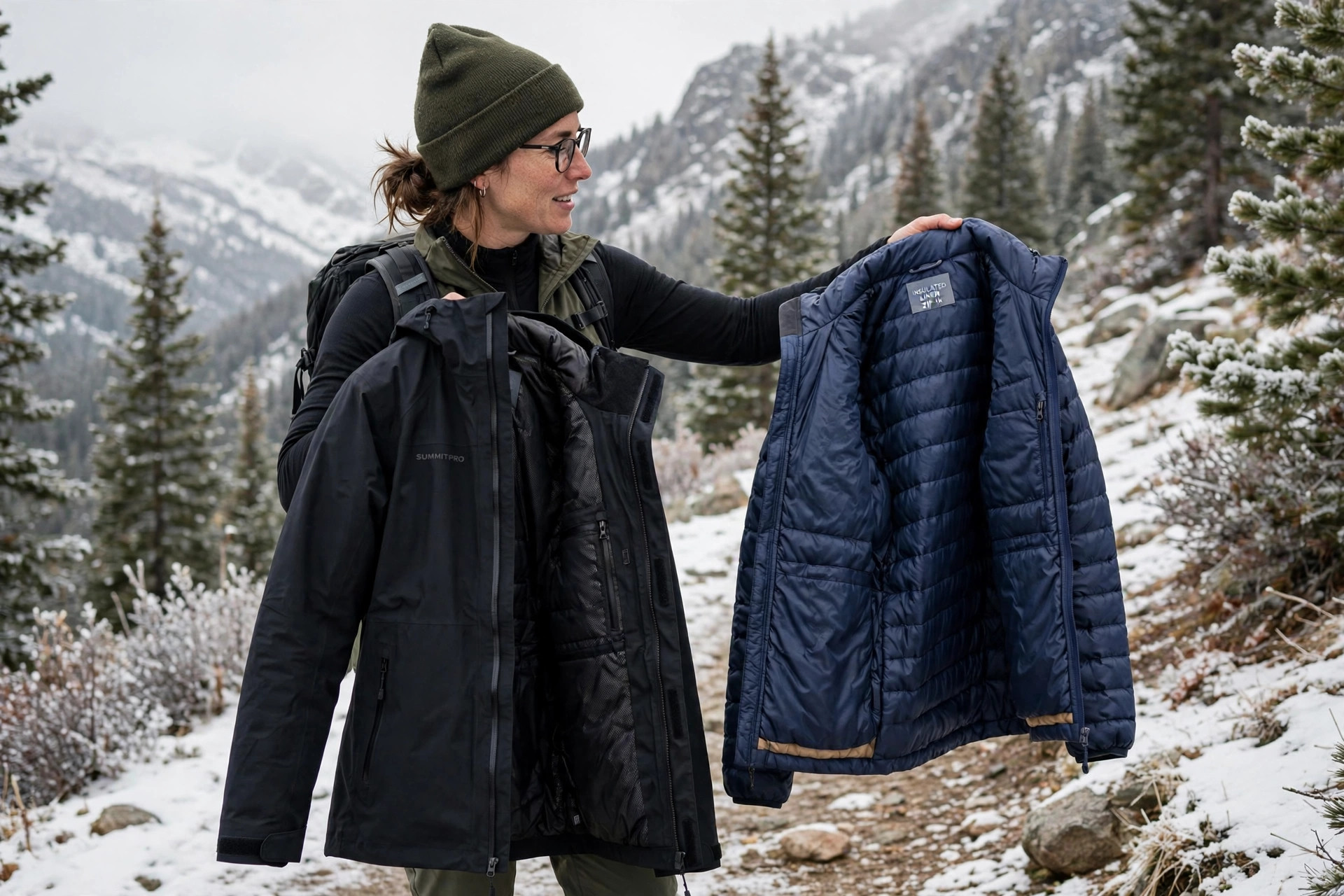
A 3-in-1 jacket combines an outer shell and an insulated inner jacket that zip or snap together, so the two pieces can be worn in three ways: the shell alone, the liner alone, or the two combined for cold, wet weather. It is a system sold as a single purchase, aimed at buyers who want one jacket to cover as much of the year as possible.
How Zip-In Systems Work
The outer piece is typically a waterproof or water-resistant shell with a hood, similar in concept to a hardshell but often built to a simpler, more affordable standard. The inner piece is an insulated jacket, filled with synthetic insulation or, less commonly, down or fleece, with its own collar, cuffs, and pockets. Attachment points at the neck, cuffs, and front zip connect the liner to the shell so the combined garment moves as one piece rather than twisting independently.
Worn together, the system handles cold rain and snow: the shell keeps weather out and the liner supplies warmth. Worn separately, the shell is a rain jacket for mild, wet days and the liner is a light insulated jacket for dry, cool days. That range is the appeal. A single purchase covers autumn rain, winter storms, and spring chill without the buyer assembling a layering system piece by piece.
Compatibility is specific to the system. Liners and shells from the same maker and model line are designed to mate; mixing pieces across brands rarely zips together, although any liner can still be worn under any roomy shell as an ordinary, unattached layer.
Versatility, Compromises, and Who They Suit
The compromises follow from the integration. The combined jacket is usually heavier and bulkier than a dedicated shell worn over a dedicated mid layer of equal warmth, because it carries two sets of zips, facings, and pockets. Fit is a compromise too: the shell must be roomy enough for the liner, which can make it feel oversized when worn alone, and neither piece is typically the best in its category for the price of the pair. Venting and hood and cuff design also tend to be simpler than on specialist mountaineering shells.
Dedicated layers win for backpacking, mountaineering, and any use where weight, pack size, and fine temperature adjustment matter, because each layer can be chosen, replaced, and combined independently. A 3-in-1 suits a different buyer well: commuters, travelers packing for variable weather, resort skiers, parents, and anyone who wants a straightforward, good-enough answer for most winter conditions without researching a full system. Judged on that brief, rather than against specialist gear, it is a sensible and popular design.
Common Questions
- What are the three ways to wear a 3-in-1 jacket?
- The outer shell alone as a rain jacket, the insulated liner alone as a light jacket for dry cool weather, and the two zipped together for cold, wet, or snowy conditions. That flexibility across seasons is the main reason buyers choose the design.
- Is a 3-in-1 jacket as good as separate layers?
- It is more convenient but involves compromises. The combined jacket is usually heavier and bulkier than a dedicated shell over a dedicated mid layer, and the fit of each piece is less refined. For weight-sensitive or technical use, separate layers are better; for general winter use, a 3-in-1 is often good enough.
- Can the liner from one brand be zipped into a shell from another?
- Usually not. Zip-in attachment systems are designed for a specific shell and liner pairing. A liner from another brand can still be worn under a roomy shell as an ordinary layer, but it will not attach at the zip, neck, and cuffs.
- Who should buy a 3-in-1 jacket?
- Commuters, travelers facing variable weather, resort skiers, and anyone who wants one purchase to cover most of autumn, winter, and spring. Buyers building a technical system for backpacking or mountaineering are usually better served by separate, dedicated layers.
Outdoor Layering & Insulation Series
This guide is part of the Apparel Search outdoor layering and insulation series. Browse the full series below, or start from the women's winter clothing guide.