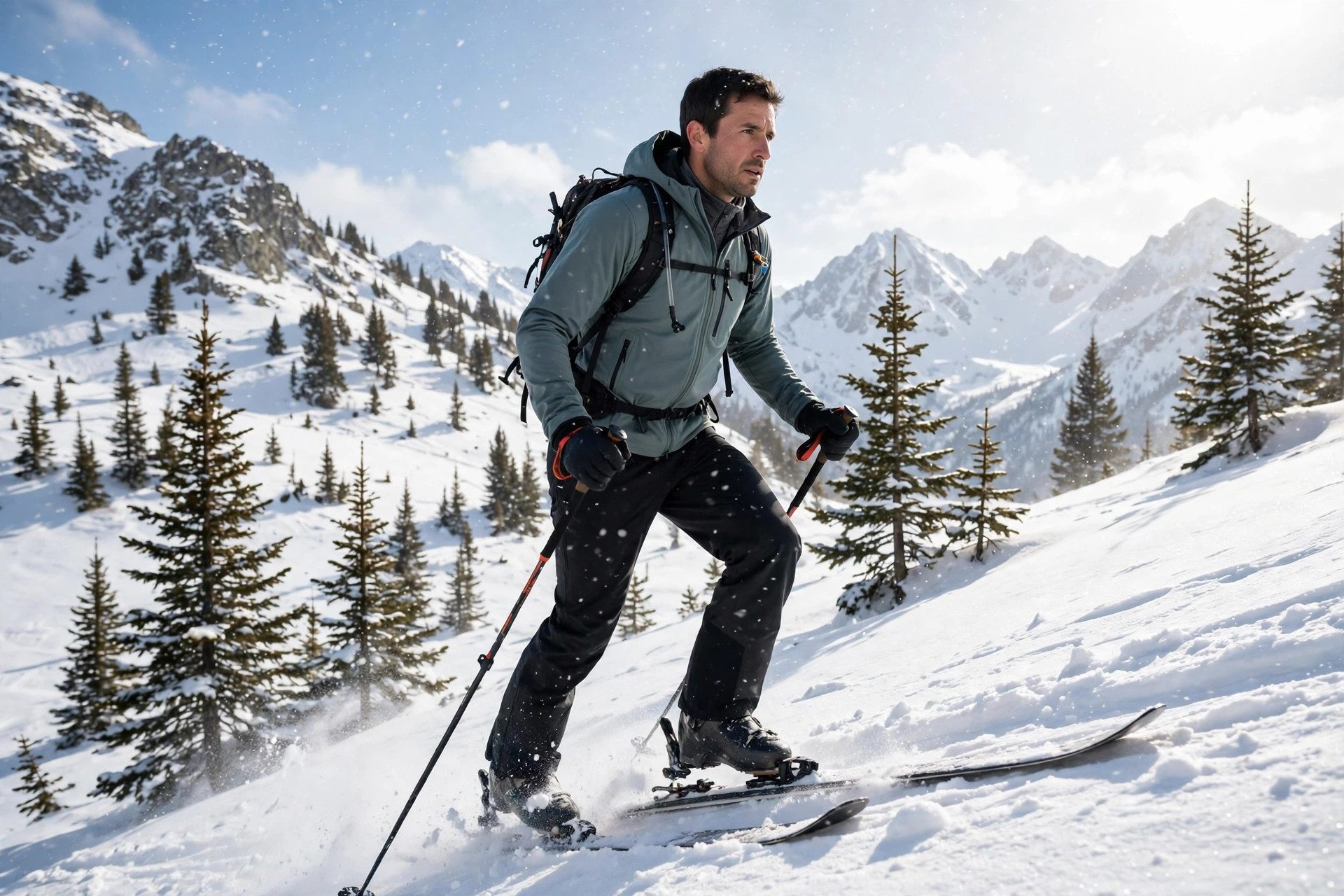
A softshell jacket is a woven outer layer that trades full waterproofing for breathability, stretch, and comfort. Softshell fabrics block wind, shed light snow and drizzle with a water-repellent finish, and allow sweat vapor to escape far more freely than a waterproof membrane. For active use in dry cold, that exchange leaves the wearer drier from the inside, even though the jacket is not waterproof.
How Softshell Fabrics Work
Most softshells are woven nylon or polyester fabrics, often with elastane for stretch, and many bond a light fleece or grid lining to the inside for modest insulation. Because there is no waterproof membrane to pass through, air and vapor move through the weave itself, regulated by how tightly it is woven. A tighter weave blocks more wind and sheds more weather; a looser, stretchier weave breathes better and suits higher output.
Softshells sit on a spectrum. At one end, highly breathable aerobic softshells behave almost like heavy wind shirts and suit ski touring, winter running, and ice climbing approaches. At the other end, more protective softshells with membranes approach hardshell weather resistance but give back much of the breathability advantage. Most general-purpose softshells sit in the middle: warm enough to replace a separate fleece and wind layer in many conditions, quiet, durable, and comfortable enough to wear all day rather than only during storms.
Like hardshells, softshells rely on a durable water repellent finish to shed light precipitation. The finish can be refreshed with appropriate washing and re-proofing, but no finish turns a softshell into a rain jacket.
Where Softshell Beats Hardshell — and Its Limits
High-output activity is where the softshell earns its place. A climber, ski tourer, or winter hiker working hard produces more moisture than a waterproof membrane can vent, so a hardshell can leave the wearer soaked from sweat even while it keeps the rain out. A softshell vents that moisture continuously, resists the wind that makes up most of winter discomfort, and stretches with movement instead of rustling and binding. In dry cold — the common winter condition in many mountain ranges — that comfort advantage lasts all day.
The limitation is sustained rain. Given enough time in steady rain, water passes through the weave, the lining wets, and the jacket becomes heavy and cold. Wet snow and sitting or kneeling on snow can also push moisture through under pressure. The standard answer is a system: the softshell as the everyday working layer, with a light hardshell carried in the pack for the hours when the weather turns genuinely wet. That pairing covers more conditions than either jacket alone.
Common Questions
- Is a softshell jacket waterproof?
- No. A softshell is water-resistant: its weave and repellent finish shed light snow, drizzle, and brief showers, but sustained rain will eventually soak through. For prolonged wet weather a waterproof hardshell is the appropriate outer layer.
- When is a softshell better than a hardshell?
- During high-output activity in dry cold, such as ski touring, climbing, and winter hiking. A softshell breathes and stretches far better than a hardshell, so the wearer stays drier from sweat and more comfortable while moving, as long as rain is not sustained.
- Does a softshell replace a mid layer?
- Sometimes. Many softshells have a fleece or grid lining that provides light insulation, so in milder cold a softshell over a base layer can replace a separate fleece and wind layer. In colder conditions a distinct mid layer underneath is still needed.
- How should a softshell be cared for?
- Wash it with a technical-fabric cleaner to keep the water-repellent finish working, and refresh the finish with a suitable re-proofing product when water stops beading. Avoid fabric softeners, which can impair both breathability and water repellency.
Outdoor Layering & Insulation Series
This guide is part of the Apparel Search outdoor layering and insulation series. Browse the full series below, or start from the women's winter clothing guide.