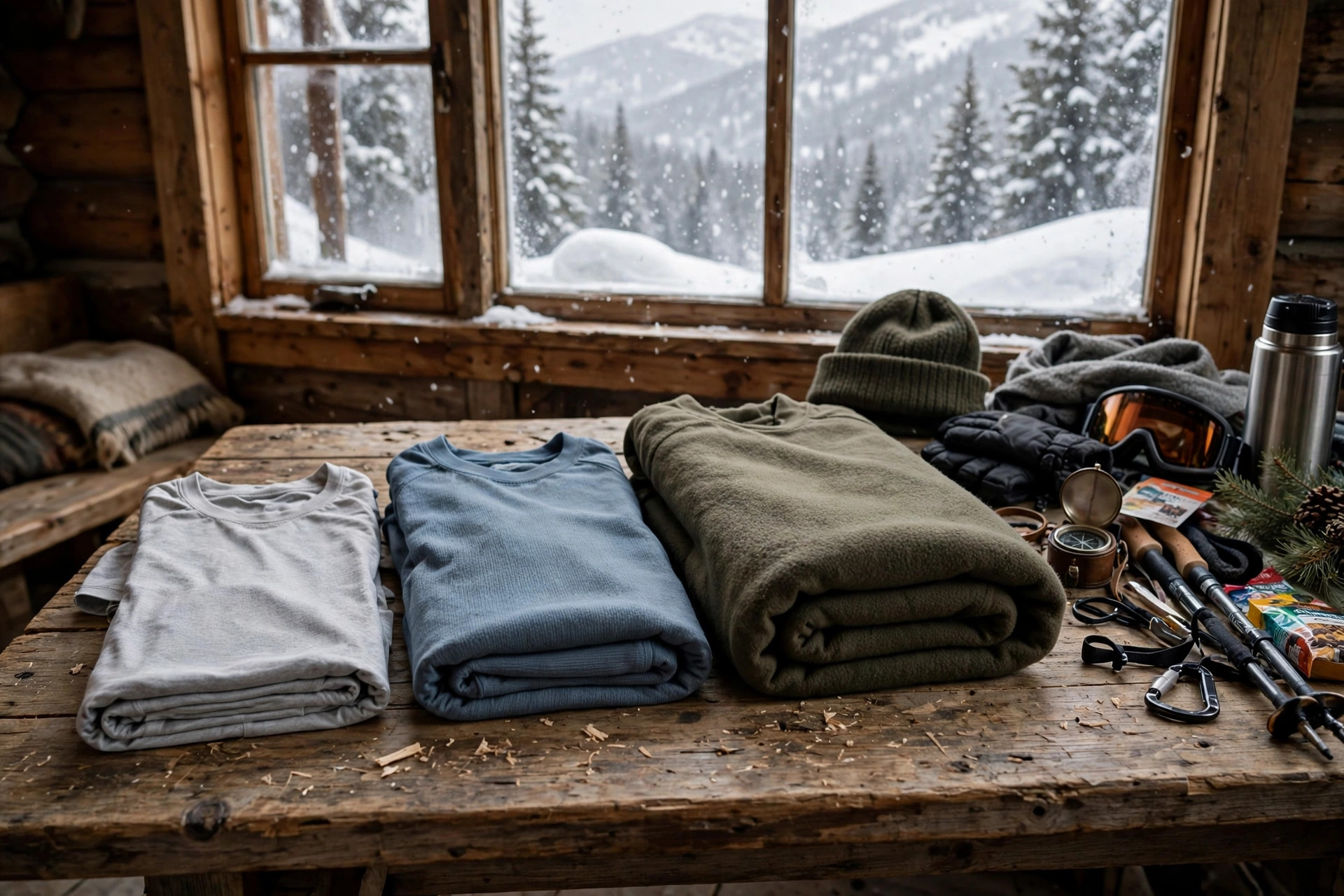
Base layer weight describes how heavy and warm the fabric is, not how much the finished garment weighs on a scale. Makers group base layers into lightweight, midweight, and heavyweight — sometimes called expedition weight. As a general guide, lighter fabrics suit warmer conditions and higher output, while heavier fabrics suit colder conditions and lower output, and many winter users own more than one weight.
The Three Weight Classes and Typical Fabric Weights
Fabric weight is usually expressed in grams per square metre, written as g/m² or gsm. The ranges vary by brand and by fiber, so the figures that follow are general ranges rather than a formal standard. Lightweight base layers commonly fall around 120 to 180 g/m². They are thin, dry quickly, and are the default choice for cool rather than bitter weather, for spring and autumn, and for high-output winter activity where sweat management matters more than insulation.
Midweight base layers commonly fall around 180 to 260 g/m². This is the most versatile class and the one most winter users should buy first: warm enough for typical winter hiking, skiing, and snowshoeing when combined with a proper mid layer and shell, yet not so heavy that it overheats quickly during effort. Many midweight tops add a brushed or lightly textured inner face that traps a little more air and feels warmer on first contact.
Heavyweight or expedition base layers commonly fall around 260 to 320 g/m² and above. They are built for very cold, relatively low-output use — winter camping, ice fishing, lift-served skiing in severe cold, and expeditions. Their extra thickness traps more still air, but that same thickness makes them slow to dry and easy to overheat in once activity rises. A heavyweight top worn on a hard climb can become a liability rather than an asset.
Matching Weight to Temperature and Activity
Temperature alone does not decide the weight. A skier touring uphill at just below freezing may be comfortable in a lightweight top, while a spectator standing still at the same temperature needs a heavyweight top under substantial insulation. Wind, sun, time spent still, and personal cold tolerance all shift the answer. A practical rule is to dress for the active part of the day and add insulation for stops, rather than dressing for the stops and overheating while moving.
Owning more than one weight makes sense for anyone who is active outdoors across a whole winter. A lightweight and a midweight set together cover most combinations of season and effort, and layering a lightweight top under a midweight top is a legitimate way to extend the range on the coldest days. A heavyweight set is a specialist purchase: worthwhile for people who are regularly still in severe cold, and unnecessary weight and cost for everyone else.
Common Questions
- What do lightweight, midweight, and heavyweight base layers mean?
- They describe fabric weight and warmth. Lightweight fabrics are roughly 120 to 180 grams per square metre, midweight roughly 180 to 260, and heavyweight roughly 260 to 320 and above. Ranges vary by brand, so the labels are a guide rather than a formal standard.
- Which base layer weight should most people buy first?
- Midweight is the most versatile first purchase for typical winter activity. It is warm enough for most hiking, skiing, and snowshoeing with a mid layer and shell, without overheating as quickly as a heavyweight fabric during effort.
- Can two lighter base layers be worn together?
- Yes. A lightweight top under a midweight top is a common way to extend the range on very cold days, and it gives more flexibility than a single heavyweight top. The fit needs to allow both layers to sit smoothly without restricting movement.
- Does a heavier base layer always mean a warmer system?
- No. A heavyweight base layer that causes overheating and heavy sweating can leave the wearer wetter and colder later. Warmth comes from the whole system, and matching fabric weight to activity level matters as much as thickness alone.
Outdoor Layering & Insulation Series
This guide is part of the Apparel Search outdoor layering and insulation series. Browse the full series below, or start from the women's winter clothing guide.