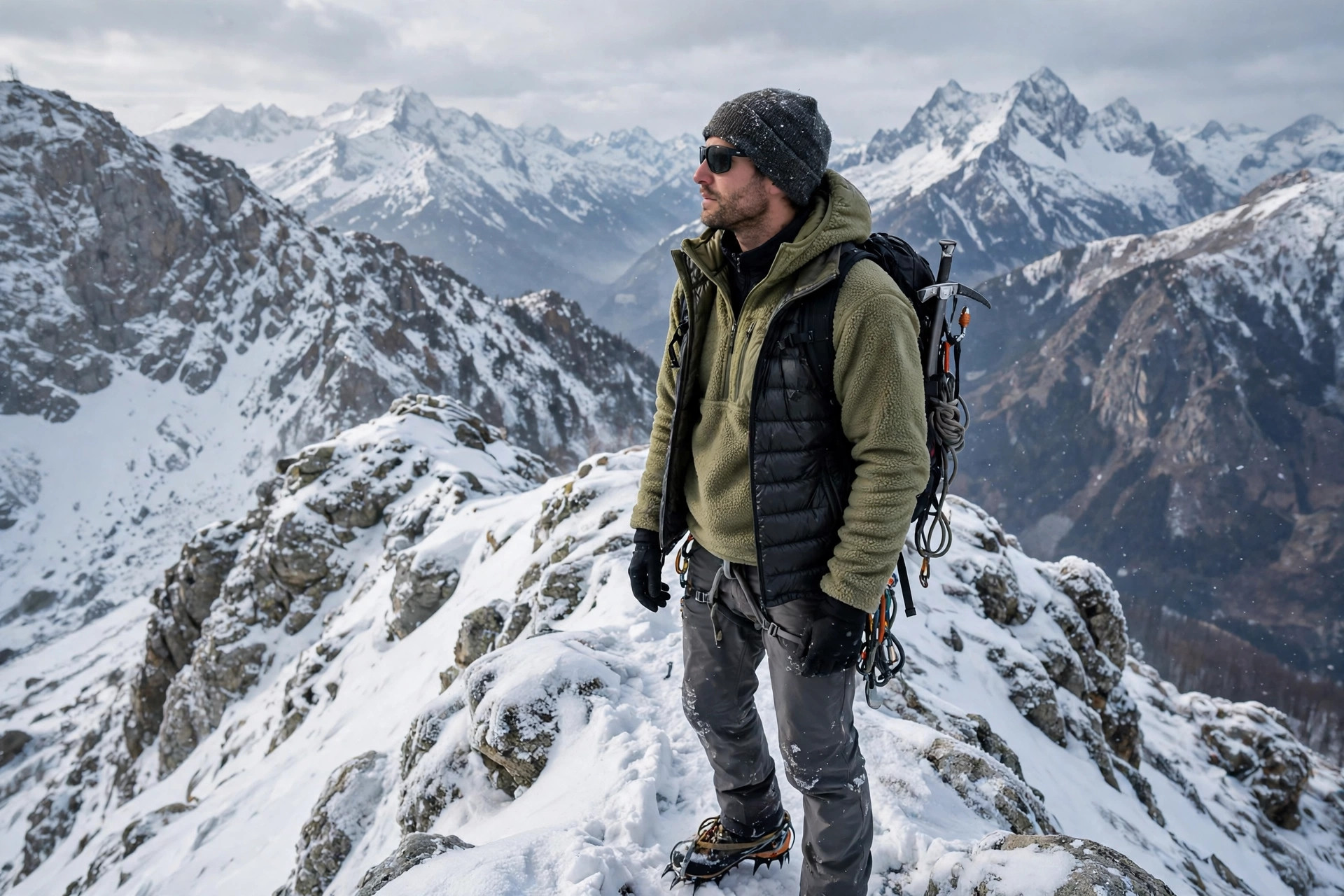
A mid layer is the insulating layer worn between the base layer and the outer shell. Its job is to trap still air warmed by the body and hold that warmth in, while still allowing sweat vapor from the base layer to pass outward. The right mid layer depends less on the coldest moment of the day than on how much heat and moisture the wearer produces while moving.
Fleece, Grid Fleece, Down, and Synthetic Puffy Mid Layers
Classic fleece is the traditional mid layer: durable, relatively inexpensive, breathable, and warm even when damp, though bulky for the warmth it provides and poorly resistant to wind on its own. Grid fleece refines the idea with a raised grid pattern on the inner face. The channels in the grid move moisture and reduce weight and bulk, making grid fleece a favorite for high-output activity where a standard fleece would feel too warm and slow to dry.
Down puffy jackets can serve as mid layers in dry, very cold conditions, offering the most warmth for the least weight. Their weakness is moisture: a down mid layer worn during hard effort can collect sweat and lose loft. Synthetic puffy jackets trade some warmth-to-weight efficiency for resilience — they keep insulating when damp, dry faster, and suit changeable conditions and active use better, at the cost of more bulk in the pack.
Many systems use more than one mid layer. A light grid fleece for moving, plus a puffy jacket carried in the pack for stops and camp, covers a wider range than either alone and lets the wearer adjust in small steps. That combination is common in ski touring, winter mountaineering, and cold-weather backpacking.
Breathability Versus Warmth, and Layering Under Shells
Every mid layer sits on a spectrum between breathability and maximum warmth. While moving, breathability usually matters more: insulation that traps vapor will leave the base layer wet, and that moisture chills the wearer at the first stop. While still, maximum loft matters more. Experienced users therefore separate the moving insulation from the stopped insulation instead of asking one garment to do both jobs perfectly.
Fit under a shell also matters. A mid layer should be close enough to avoid bunched fabric and cold air pockets, but not so tight that its loft is compressed, because compressed insulation traps less air and insulates less. Shells cut generously for layering, sometimes described as expedition or relaxed fit, assume a substantial mid layer; trim alpine shells assume a light one. Trying the complete system together, with arms raised and pack straps on, reveals problems that no single garment shows on its own.
Common Questions
- What is the purpose of a mid layer?
- The mid layer provides most of the insulation in a layering system by trapping still air warmed by the body. It sits between the moisture-managing base layer and the protective shell, and it should still allow sweat vapor to pass outward.
- Is fleece or a puffy jacket better as a mid layer?
- Fleece breathes better, handles moisture well, and suits active movement. A puffy jacket, down or synthetic, provides far more warmth for stops and very cold conditions but breathes less. Many people carry a light fleece for moving and a puffy for stopping.
- Can a down jacket be used as a mid layer?
- Yes, in dry and very cold conditions a down jacket works well as a mid layer under a shell. During hard effort it can collect sweat and lose loft, so for active or damp use a synthetic puffy or fleece is usually the safer choice.
- How should a mid layer fit under a shell?
- Close enough to avoid bunching and cold pockets, but loose enough that its loft is not compressed, since compressed insulation traps less air. The complete system should be tried together, ideally with a pack on, before relying on it.
Outdoor Layering & Insulation Series
This guide is part of the Apparel Search outdoor layering and insulation series. Browse the full series below, or start from the women's winter clothing guide.