Women's Winter Clothing Guide
Women's winter clothing is clothing designed for cold weather: insulated coats and jackets, thermal layers, knitwear, scarves, gloves, mittens and snow footwear, built around layering and water-resistant outer shells for snow conditions.
Shop Women's Winter Clothing Now
Shop Women's Winter Clothing on Amazon Shop Women's Winter Clothing on eBayThe Amazon and eBay links on this page are affiliate links. If you make a purchase through them, Apparel Search may earn a commission.
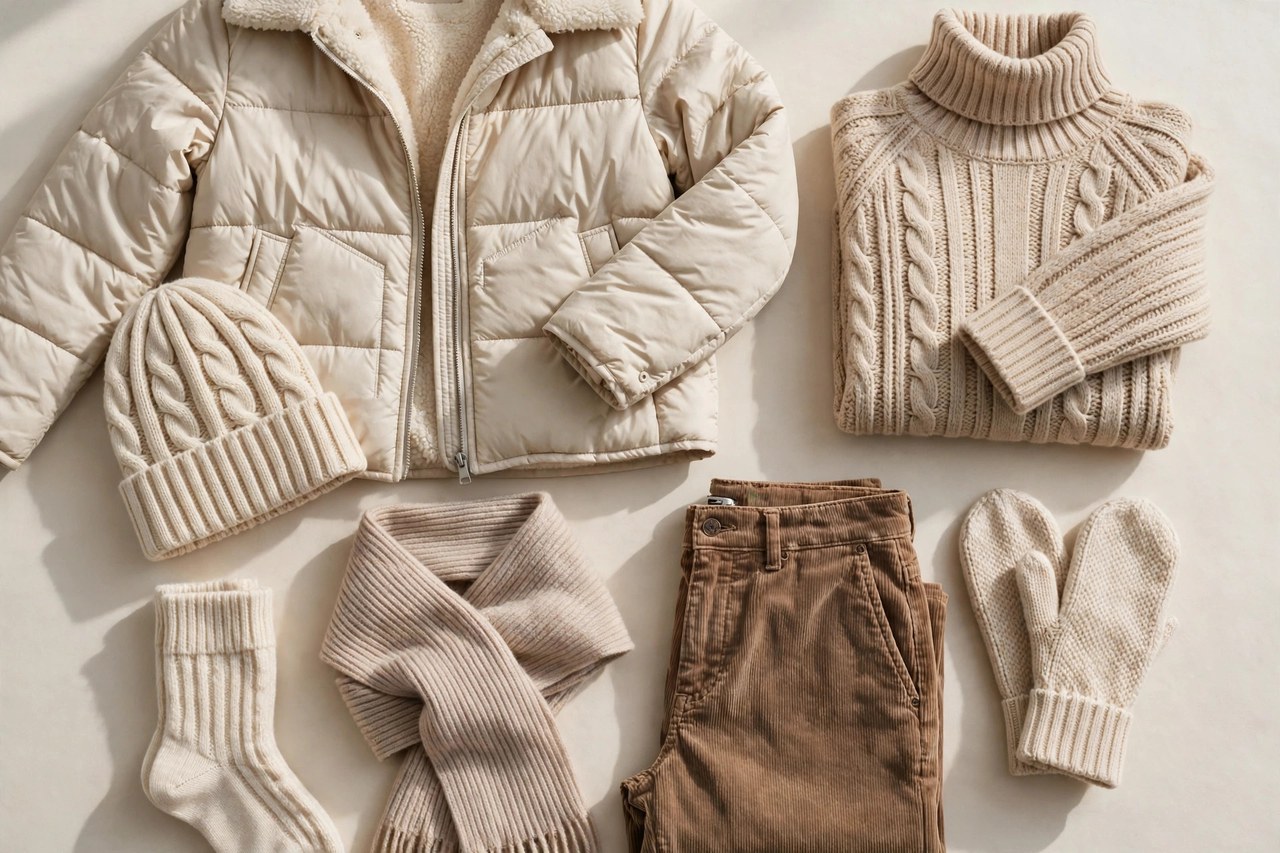
Women's winter clothing is clothing designed for cold weather: insulated coats and jackets, thermal layers, knitwear, scarves, gloves, mittens and snow footwear, built around layering and water-resistant outer shells for snow conditions. Winter dress is a system, not a garment, so this guide covers the three-layer method, the insulation families (down, synthetic, wool), the extremities where heat escapes, and dressing for activity level so you are warm standing still without overheating in motion.
This guide covers winter clothing in the order a careful buyer needs it: what the product is made from, how it is constructed, how it should fit, how to choose it for real use, and how to care for it so it lasts. The focus here is on measurable details, named materials and checks you can perform in a shop or on a parcel's arrival, rather than general fashion language.
Insulation and Layer Materials
Winter clothing is built from insulation families with different physics: down clusters that loft and trap air (supreme warmth per weight, helpless when wet), synthetic fills that imitate down's loft and keep working damp, wool that insulates and manages moisture across a wide temperature band, and fleece and thermal knits that trap air in a pile or waffle.
Shells and details decide whether insulation gets to work: windproof outer fabrics protect loft from being stripped by wind, water-resistant finishes shed snow, and cuffs, hems and neck closures seal the gaps where warm air escapes. The layering rule is base, mid, shell: a wicking base that keeps sweat off skin, an insulating mid-layer that traps air, and a wind- and water-resistant shell — cotton fails as a base because it holds sweat and chills. A winter garment is a system of insulation plus seals — judge both, never the fill alone.
Fitting Layers, Not Garments
Fit winter clothing as a system: each layer must fit over the one beneath without compressing its loft, because compressed insulation is insulation lost. Try coats and jackets over the thickest mid-layer you will actually wear, and check reach, sitting and stairs — winter clothes are worn in motion, on ice, carrying things.
Extremities fit by room, not snugness: gloves, mittens, hats and boots all insulate with trapped air, and a tight fit that squeezes air out and slows circulation makes hands and feet colder. Slightly roomy, with a wicking liner layer, beats tight at every extremity.
Dressing by Temperature and Activity
Choose winter clothing in a fixed order: the coldest condition honestly expected, your activity level in it (standing still needs far more insulation than moving), layering room, and only then appearance. In practice, rank these checks in the order your own use demands — frequency of wear first, then weather, washing facilities and budget — because that order differs by wardrobe, and it is the real reason two careful buyers can correctly choose differently from the same rail.
Judge price by insulation quality and shell construction: high-loft down, branded synthetic fills and sealed, well-finished shells cost more and protect in worse weather. Fashion winter clothing with thin fill is priced for the pavement outside a shop, not for a February bus stop.
Washing and Summer Storage
Wash winter clothing by its fill: down needs gentle washing and a long, thorough tumble dry with dryer balls to restore loft; synthetics forgive more; wool follows wool rules. A garment stored dirty or damp loses loft and gains odour across the summer — clean before storing, always.
Store insulation uncompressed so its loft survives: hang coats, use oversize breathable bags for down, and keep everything cool, dry and dark. Check stored winter clothing mid-summer for the damp and moths that work while nobody is looking.
Common Questions
What is the warmest way to layer winter clothing?
A moisture-wicking base layer (merino or synthetic), a thick insulating mid-layer such as down, fleece or wool, and a windproof, water-resistant outer shell. Each layer traps air; together they adapt — unzip or remove the mid-layer when active, add it back when you stop.
Down or synthetic insulation — which is warmer?
Down has the best warmth-to-weight and packs smallest, but loses insulation when wet and dries slowly. Synthetic fills cost less, keep working when damp and dry fast. For wet, maritime winters synthetic is the safer warmth; for dry, deep cold, down wins gram for gram.
Why do my hands and feet get cold first?
In cold, the body protects its core by reducing circulation to the extremities, so hands and feet chill first — and tight gloves or boots make it worse by squeezing blood flow. Warm, slightly roomy mittens (warmer than gloves, because fingers share heat) and insulated boots with space for thick socks are the fix.
Related Women's Guides
The Winter Wardrobe List
Winter clothing is protection against the particularly cold weather of the winter season — the coldest season of the year in polar and temperate climates, between autumn and spring. Winter clothing and footwear run to sweaters, down coats, scarves, ski suits, winter gloves, mittens, snow boots and outerwear.
Winter clothes often have good water resistance to help with snow conditions and consist of multiple layers to protect and insulate against low temperatures. Snow boots and snow pants cover the legs and feet in deep snow, mukluks are the choice for truly warm feet, and many northern cultures use animal fur in winter clothes. Above all, cold-weather clothing matters in harsh conditions, so dress appropriately for your environment. The small pieces that complete the system have dedicated guides too: the snood and neck warmer for the collar gap, thermal socks for the feet, and the Fair Isle sweater for the patterned knit at its heart.
Looking for Women's Clothing Stores?
This guide helps you choose women's winter clothing. To browse where to buy, visit our women's clothing store directory, where you can find retailers that carry them.