Layered Clothing
Fashion Terms — the Apparel Search fashion terminology directory
Layered clothing is a term describing a way of dressing using many garments that are worn on top of each other. Some of the layers have different, largely non-overlapping functions, and using more or fewer layers, or replacing one layer but not others, allows flexible clothing to match the needs of each situation. Two thin layers can be warmer yet lighter than one thick layer, because the air trapped between layers serves as thermal insulation. Layered clothing is particularly relevant in cold climates, where clothing must at the same time transfer moisture (wicking), provide warmth, and protect from wind and rain — and layering is also done simply for style, with clothing or jewelry.
Did your mother tell you to make sure to layer up today?
With a significant drop in temperatures, parents prep kids by layering them up to stay warm. However, fashion is not all about warmth. Layering is often done simply so that we can stay stylish.
Fashionable people can layering with clothing or jewelry (or both).
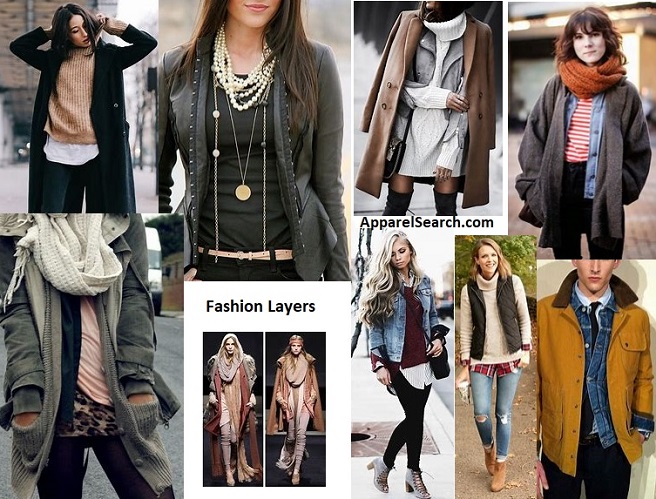
Layered clothing is a term describing a way of dressing using many garments that are worn on top of each other. Some of the layers have different, largely non-overlapping, functions. Using more or fewer layers, or replacing one layer but not others, allows for flexible clothing to match the needs of each situation. Two thin layers can be warmer yet lighter than one thick layer, because the air trapped between layers serves as thermal insulation. Layered clothing is particularly relevant in cold climates, where clothing must at the same time transfer moisture (wicking), provide warmth, and protect from wind and rain.
Outdoor and sportswear manufacturers favor layered clothing because, among other reasons, it allows them to offer so-called "technical" or "functional" clothes which are optimized for the particular demands of a specific layer. Such clothes are often made of advanced synthetic materials, and can be expensive.
Another benefit to wearing multiple layers of clothing is that if you become too warm, you can reduce layers as appropriate.
Put on a t-shirt, then a thin sweatshirt, then put on a sweater, then put on a hoodie. Now you are layered.
How to Layer Clothes for Fall Without Looking Bulky
Why should I wear several layers of shirts? Isn't one shirt enough?
Adjusting Through the Day
The practical benefit of layers is adjustment. Temperatures, activity and indoor heating all change between leaving home and coming back, and a layered outfit changes with them: if you become too warm, you reduce layers as appropriate, and a removed layer can be carried or tied rather than making the whole outfit wrong. Parents layering children up for a cold day are using the same system — protection that can be lightened at school, sports or a warm car without starting the outfit over.
Layering as Style
Layering is not only about warmth. Fashionable people layer clothing and jewelry for looks — different lengths, textures and colors showing at necklines, cuffs and hems, with each garment still visible as part of a whole. That is why layering guides focus as much on proportion and bulk as on temperature: thin, close layers under shaped outer layers read as deliberate, while thick layers stacked without order read as accidental. The layered fashion looks, men's layering tees and fall layering guides linked on this page show the styling side, and the wicking term explains the moisture job the base layer does.
Common Questions
What is layered clothing?
A way of dressing using many garments worn on top of each other, where different layers do different jobs. A simple example is a t-shirt, then a thin sweatshirt, then a sweater, then a hoodie.
Why can two thin layers be warmer than one thick layer?
The air trapped between layers serves as thermal insulation. Two thin layers trap that insulating air while staying lighter than a single thick layer, and they can be separated when warmth is not needed.
What jobs do the layers do in cold climates?
Clothing in cold climates must transfer moisture away from the body (wicking), provide warmth, and protect from wind and rain at the same time. Outdoor and sportswear makers favor layering because each layer can be optimized for one of those demands.