Men's Solid Layering Tees Guide
Men's solid layering tees are plain, unadorned T-shirts bought to be worn under other garments - beneath open shirts, sweaters, jackets and blazers - where their job is to provide a clean, solid field of color, a smooth surface, and a layer that can be added or shed with the temperature. This guide takes the tee in its layering role specifically: lighter, smoother and more deliberately sized than the statement tee, because a layer's success is measured by how well it disappears into the outfit.
Shop Men's Layering Tees Now
Shop Men's Layering Tees on Amazon Shop Men's Layering Tees on eBayThe Amazon and eBay links on this page are affiliate links. If you make a purchase through them, Apparel Search may earn a commission.
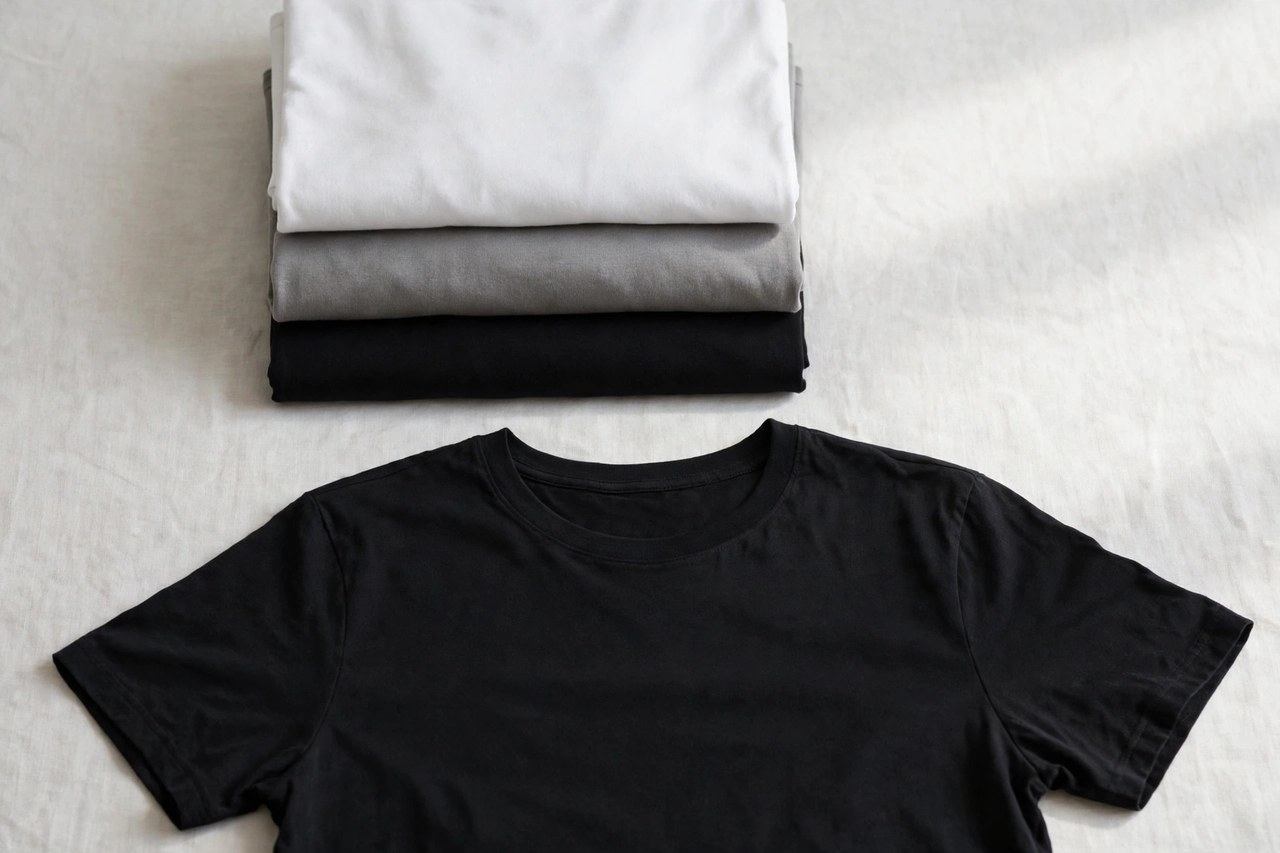
Men's solid layering tees are plain, unadorned T-shirts bought to be worn under other garments - beneath open shirts, sweaters, jackets and blazers - where their job is to provide a clean, solid field of color, a smooth surface, and a layer that can be added or shed with the temperature. This guide takes the tee in its layering role specifically: lighter, smoother and more deliberately sized than the statement tee, because a layer's success is measured by how well it disappears into the outfit. This guide is built around the questions buyers actually ask: which style, which size, which fabric, and what will it look like after a year of real use - answered in order, with the trade-offs stated plainly.
The Layering Specification: Weight, Neckline, Color
A layering tee is engineered downward in weight and outward in smoothness. Fabric runs light to mid-weight jersey - cotton for softness, cotton-modal for drape and a cooler hand, performance blends where the layer must also wick under athletic wear - because every gram shows under a sweater and every seam ridges under a knit. Necklines are chosen by what's above: crew necks for under sweaters and closed shirts, V-necks where the outer shirt opens, and the depth of the V calibrated so the tee reads as intent, not accident. Solid colors only, by the definition of the role: white, black, grey, navy and the earth tones that sit quietly under a wardrobe's louder citizens.
A top earns its keep in finishing: seams that hang straight and stay even at eight to twelve stitches per inch, collars and plackets that lie flat after washing, buttons sewn with thread shanks so they sit in their holes without pulling. Hold the cloth to the light - a tight, even weave or knit outwears a loose one at the same labeled weight, and pattern pieces cut on grain keep the garment from twisting around your body by the third wash.
Fit and Sizing
Layering tees fit closer than standalone tees - skim the body, never compress it - because bulk under a layer defeats the layer. Length must stay tucked or end cleanly at the waistband without showing below the outer garment's hem in a sloppy tail; sleeves should end high enough not to peek past the outer sleeve except where the peek is the point (a white crew under a rolled shirt sleeve is a look; a sagging grey hem is not). Size down one from your graphic tee habit if that habit is relaxed.
Fit tops shoulders and chest first, because tailors cannot cheaply move either: the shoulder seam ends at the shoulder bone, the chest closes without pulling, and both arms raise without the hem escaping the waistband. Tucked lengths must stay tucked sitting; untucked lengths should end mid-fly. Sleeves are the cheap alteration, shoulders the permanent one - reject a wrong shoulder for any reason, forgive a long sleeve for many.
Wearing and Care
Layering tees are washed constantly because they are worn constantly, so buy them like consumables with standards: cool washing, inside out, low drying to keep the fit you sized for, and replacement when the white greys, the neckline sags or the underarms confess. A standing stock of fresh basics - rotated, identical, replaceable - is the system working as designed; the layering tee is the one garment where a uniform drawer is a strategy, not a failure of imagination.
Launder tops by the label with three defaults: cool or warm water to protect color and trims, dark and printed pieces inside out, and low or line drying, which is the largest single lever on a shirt's lifespan. Fasten buttons and zips before washing to protect the whole load, treat stains before the dryer can set them, and store knits folded so their shoulders keep the shape they were knitted with.
Common Questions
What makes a tee a layering tee?
Weight, smoothness and intention. It is lighter and finer than a standalone tee so it disappears under sweaters and shirts, cut closer so it does not bunch, finished with necklines chosen to sit correctly under specific outer layers, and solid in color so it serves as a field rather than a statement. Any plain tee can layer in a pinch; a layering tee is specified for the job from the yarn up.
Crew neck or V-neck for layering?
Follow the garment above. Under a sweater or a closed collar, a crew neck is the clean frame. Under an open camp shirt, an unbuttoned overshirt or a blazer, a V-neck removes the visible triangle problem - or embraces it, since a crisp white crew showing at an open collar is a deliberate classic look. The failure mode is the accidental peek: the wrong neckline depth showing by default rather than by decision.
How many layering tees should a man own?
Enough for a full wash cycle of the ways he layers - for most wardrobes, three to five in white, two or three in black or grey, and one or two in navy covers every outer garment he owns. Because they are worn and washed constantly, they are a rotating stock: buy multiples of the exact tee that fits, and replace the set when the whites tire, rather than accumulating singles.
More in Men's Clothes Guide S
Layering as a System
The dressing system is layered clothing - a way of dressing using many garments worn on top of each other, some layers having different, largely non-overlapping functions, so that using more or fewer layers - or replacing one layer but not others - allows flexible clothing to match each situation; two thin layers can be warmer yet lighter than one thick layer, because the air trapped between layers serves as thermal insulation. Layering tees are essentially solid color t-shirts worn under other shirts - a black t-shirt underneath a favorite button-down flannel, buttoned or left open as the style of the moment dictates.
Looking for Men's Clothing Stores?
This guide explains men's solid layering tees. To browse where to buy, visit our men's clothing store directory, where you can find retailers that carry them.