Men's Blank T-Shirts Guide
A men's blank t-shirt is the undecorated tee: a plain crew or V-neck shirt with no print, sold to be worn plain, worn as a layer, or decorated later by screen print, embroidery or transfer. Blanks are the substrate of the whole printed-apparel industry, which makes their specifications unusually honest - fabric weight in ounces or GSM, fiber blend, tubular or side-seamed construction - and learning to read a blank's spec is learning how every t-shirt is actually made.
Shop Men's Blank T-Shirts Now
Shop Men's Blank T-Shirts on Amazon Shop Men's Blank T-Shirts on eBayThe Amazon and eBay links on this page are affiliate links. If you make a purchase through them, Apparel Search may earn a commission.
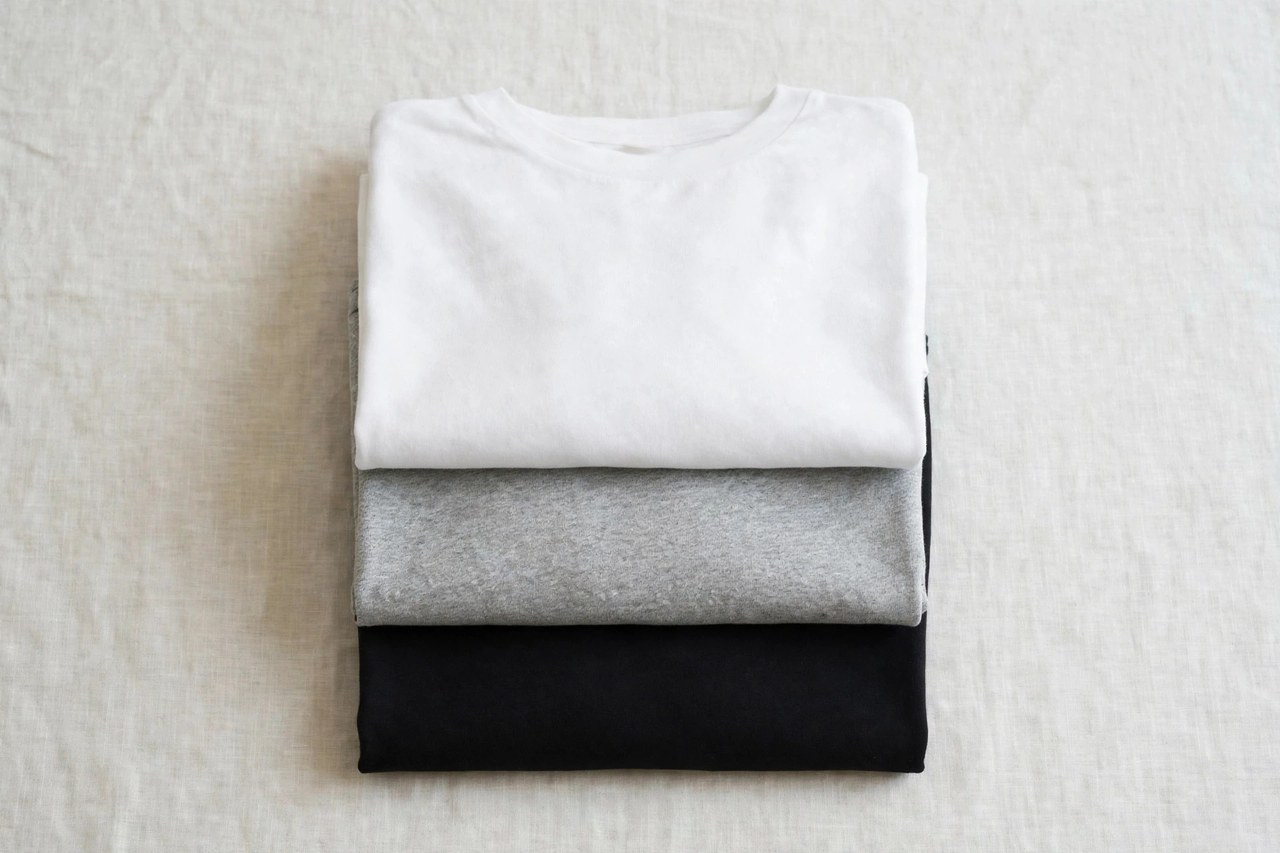
A men's blank t-shirt is the undecorated tee: a plain crew or V-neck shirt with no print, sold to be worn plain, worn as a layer, or decorated later by screen print, embroidery or transfer. Blanks are the substrate of the whole printed-apparel industry, which makes their specifications unusually honest - fabric weight in ounces or GSM, fiber blend, tubular or side-seamed construction - and learning to read a blank's spec is learning how every t-shirt is actually made. This guide is built around the questions buyers actually ask: which style, which size, which fabric, and what will it look like after a year of real use - answered in order, with the trade-offs stated plainly.
Styles and Construction
Weight divides the field: lightweights around 4.3 ounces drape soft and fashionably but show and wear faster; midweights near 5.3 ounces are the classic tee balance; heavyweights at 6 ounces and above feel substantial and hold shape through years of washing. Fiber divides it again - open-end carded cotton is sturdy and matte, ringspun cotton is softer, and cotton-polyester blends trade a little breathability for shape retention and less shrinkage. Construction details to check: side seams (better fit) versus tubular bodies, ribbed collars with reinforcement, and shoulder-to-shoulder taping.
Construction tells separate a shirt that lasts from one that twists after three washes: side seams should hang straight on a flat surface, collars and plackets should lie flat without curling, and stitching should run even - roughly eight to twelve stitches per inch on better garments - with no loose threads at stress points. Shoulder seams belong on the shoulder bone, and buttonholes should be dense and cleanly cut. Hold the fabric to the light: a tight, even weave wears longer and keeps its color better than a loose one at the same labeled weight.
Fit and Sizing
A blank's fit is a blank decision with no print to hide behind: judge the shoulder seam placement, the body's length against your torso, and sleeve angle. Fashion blanks run slimmer and longer; classic blanks run boxier and are the layering and work standard. Buy one and wash it before committing to a dozen - shrinkage patterns declare themselves in the first two washes, and a blank rotation only works if every unit comes out of the wash the same shape.
Fit a top by the shoulders and the chest first, because those cannot be tailored cheaply: the shoulder seam should end at your shoulder bone, the chest should button or lie without pulling, and you should be able to raise both arms without the hem leaving your waistband. Length is the second check - a shirt meant to tuck should stay tucked when you sit, and one meant to wear loose should end mid-fly. Sleeve length is the easiest alteration, so never reject an otherwise right garment for sleeves alone, and never accept a wrong shoulder for any reason.
Wearing and Care
Plain tees live or die in the wash: cool water, inside out (even blanks have a face worth protecting), low or line dry to hold length. Whites stay white by being washed as whites - a single dark sock's worth of dye transfer greys a whole load slowly. Store folded; hangers stretch crew necks into waves. A stained blank is not ruined, it is reassigned: work, layering, and the rag drawer are honorable retirements.
Launder by the label, but know the defaults: cool or warm water preserves color and elastic trims, turning printed or dark garments inside out protects their faces, and tumble-low or line drying is the single biggest lever on a shirt's lifespan. Button buttons and zip zips before washing to protect both the garment and its load-mates. Iron or steam on the fabric's own setting, store knits folded rather than hung so shoulders keep their line, and treat stains before the wash, not after the dryer has set them.
Common Questions
What t-shirt weight should you choose in a blank?
Match weight to purpose. Lightweight blanks (about 4.3 oz) drape softly and suit fashion wear and hot climates but wear sooner. Midweight (about 5.3 oz) is the all-purpose standard for printing and daily wear. Heavyweight (6 oz and up) feels substantial, holds shape longest, and is the choice for work tees and anyone tired of thin collars.
Tubular or side-seamed - does it matter?
Side-seamed blanks are cut and sewn to a body's shape, so they fit closer and twist less in the wash. Tubular blanks are knitted as a tube with no side seams - cheaper, boxier, and prone to torque (the whole shirt gradually spiraling) after repeated washing. For a tee worn on its own, side-seamed is worth the small premium.
Why do blank tees shrink unevenly?
Cotton shrinks mostly in length, and the amount depends on the knit and whether the fabric was pre-shrunk or garment-dyed. Expect up to about five percent on a standard blank, concentrated in the first washes. Washing cool and drying low or on the line is the entire prevention program - heat is the shrinking agent in both machines.
More in Men's Clothes Guide B
What a Blank Is
Blank t-shirts is another way of saying t-shirts that have not been decorated — primarily a solid color t-shirt, though a blank raglan sleeve t-shirt can be two colors. Blanks are worn by consumers, but they are also used by the fashion industry to decorate: for a clothing company to design a novelty t-shirt, it first must have blanks to print onto. That dual life — garment and substrate — defines the category.
Looking for Men's Clothing Stores?
This guide explains men's blank t-shirts. To browse where to buy, visit our men's clothing store directory, where you can find retailers that carry them.