Men's Baseball Shirts Guide
Men's baseball shirts cover the tops of the diamond: button-front jerseys, pullover batting-practice shirts, raglan three-quarter-sleeve tees and the undershirts layered beneath them. The jersey is the most traditional garment in team sports - a buttoned front borrowed from early twentieth-century uniforms - and the family around it is built for the game's real rhythm: long still stretches, sudden sprints, and hours of sun.
Shop Men's Baseball Shirts Now
Shop Men's Baseball Shirts on Amazon Shop Men's Baseball Shirts on eBayThe Amazon and eBay links on this page are affiliate links. If you make a purchase through them, Apparel Search may earn a commission.
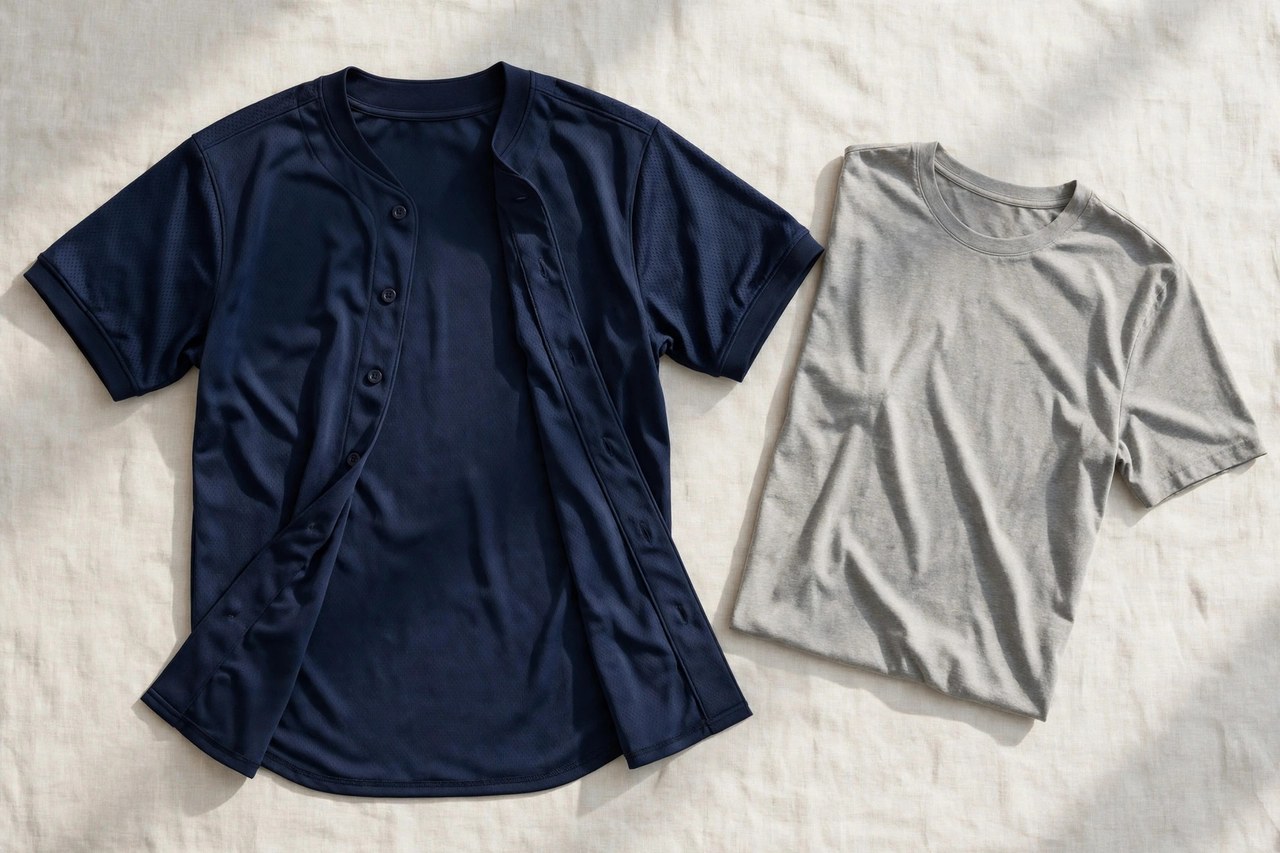
Men's baseball shirts cover the tops of the diamond: button-front jerseys, pullover batting-practice shirts, raglan three-quarter-sleeve tees and the undershirts layered beneath them. The jersey is the most traditional garment in team sports - a buttoned front borrowed from early twentieth-century uniforms - and the family around it is built for the game's real rhythm: long still stretches, sudden sprints, and hours of sun. This guide covers the styles worth knowing, the fit points that decide comfort, the fabrics and construction that separate a good buy from a regret, and the simple care that makes the garment last.
Styles and Construction
The button-front jersey remains the formal standard, in fabrics that moved from wool flannel to today's moisture-wicking knits while keeping the silhouette. Pullover jerseys and V-neck styles serve most amateur and youth levels at lower cost. Raglan shirts - sleeves in a contrasting color, joined on a diagonal seam that frees the throwing shoulder - are the classic practice and fan style. Underneath, players layer compression or loose undershirts, and batting-practice tops add mesh panels where heat builds during cage work.
Construction tells separate a shirt that lasts from one that twists after three washes: side seams should hang straight on a flat surface, collars and plackets should lie flat without curling, and stitching should run even - roughly eight to twelve stitches per inch on better garments - with no loose threads at stress points. Shoulder seams belong on the shoulder bone, and buttonholes should be dense and cleanly cut. Hold the fabric to the light: a tight, even weave wears longer and keeps its color better than a loose one at the same labeled weight.
Fit and Sizing
A jersey should fit like equipment: room through the shoulders and chest for a full throwing motion, tested by miming one, with sleeves that end mid-bicep and a hem long enough to stay tucked through a game. Fan and fashion versions can fit closer, but a game jersey bought tight will spend the season fighting its owner. Numbers and lettering are sewn (stitched tackle twill) on better shirts and heat-applied on budget ones - sewn survives more seasons.
Fit a top by the shoulders and the chest first, because those cannot be tailored cheaply: the shoulder seam should end at your shoulder bone, the chest should button or lie without pulling, and you should be able to raise both arms without the hem leaving your waistband. Length is the second check - a shirt meant to tuck should stay tucked when you sit, and one meant to wear loose should end mid-fly. Sleeve length is the easiest alteration, so never reject an otherwise right garment for sleeves alone, and never accept a wrong shoulder for any reason.
Wearing and Care
Wash jerseys inside out in cool water to protect lettering, and hang them to dry - dryer heat is the main enemy of applied numbers and printed names. Treat undershirts as the consumable they are and rotate several. Store the jersey hung or loosely folded; a stitched-lettering shirt folded hard on its numbers can crack them over a winter.
Launder by the label, but know the defaults: cool or warm water preserves color and elastic trims, turning printed or dark garments inside out protects their faces, and tumble-low or line drying is the single biggest lever on a shirt's lifespan. Button buttons and zip zips before washing to protect both the garment and its load-mates. Iron or steam on the fabric's own setting, store knits folded rather than hung so shoulders keep their line, and treat stains before the wash, not after the dryer has set them.
Common Questions
What is a raglan baseball shirt?
A raglan shirt has sleeves joined to the body with diagonal seams running from underarm to collarbone, usually in a contrasting color to the body, and often in a three-quarter length. The diagonal seam removes the shoulder seam from the throwing path, which made it a natural practice and undershirt style - and later a fan fashion staple.
Should a baseball jersey be button-front or pullover?
Button-front is the traditional uniform standard and still required by many leagues and schools; pullover and V-neck jerseys are lighter, cheaper and common in youth and recreational ball. For a player, follow the team specification. For a fan, choose by comfort - the playing difference is negligible, the look is a matter of era preference.
How do you keep jersey lettering from cracking?
Wash inside out in cool water, skip heavy softeners, and hang dry instead of tumble drying - heat and tumbling are what crack heat-applied lettering and lift stitched edges. Ironing, if needed, goes on the reverse at low heat, never directly over numbers or names.
More in Men's Clothes Guide B
Uniforms and the Raglan Sleeve
A baseball uniform is the uniform worn by baseball players. Most uniforms carry the names and uniform numbers of the players on their backs to distinguish players from one another, and that shirts (jerseys), pants, shoes, socks, caps and gloves are all parts of it — with different logos and colors aiding players, officials and spectators in distinguishing the two teams and the officials. A raglan sleeve, often used on sweatshirts and other shirts made from jersey fabric, joins the body on a diagonal seam.
More to Explore on Apparel Search
Looking for Men's Clothing Stores?
This guide explains men's baseball shirts. To browse where to buy, visit our men's clothing store directory, where you can find retailers that carry them.