Men's Baseball Pants Guide
Men's baseball pants are the knicker-born trousers of the diamond: hard-wearing, soil-forgiving pants cut to slide, sprint and crouch in, worn with a belt and usually with stirrups or high socks showing beneath. Modern versions trade the old knicker length for a menu of cuts - hemmed, open-bottom and elastic - but the job is unchanged: protect the legs on slides, move without binding at the hip, and survive a season of dirt.
Shop Men's Baseball Pants Now
Shop Men's Baseball Pants on Amazon Shop Men's Baseball Pants on eBayThe Amazon and eBay links on this page are affiliate links. If you make a purchase through them, Apparel Search may earn a commission.
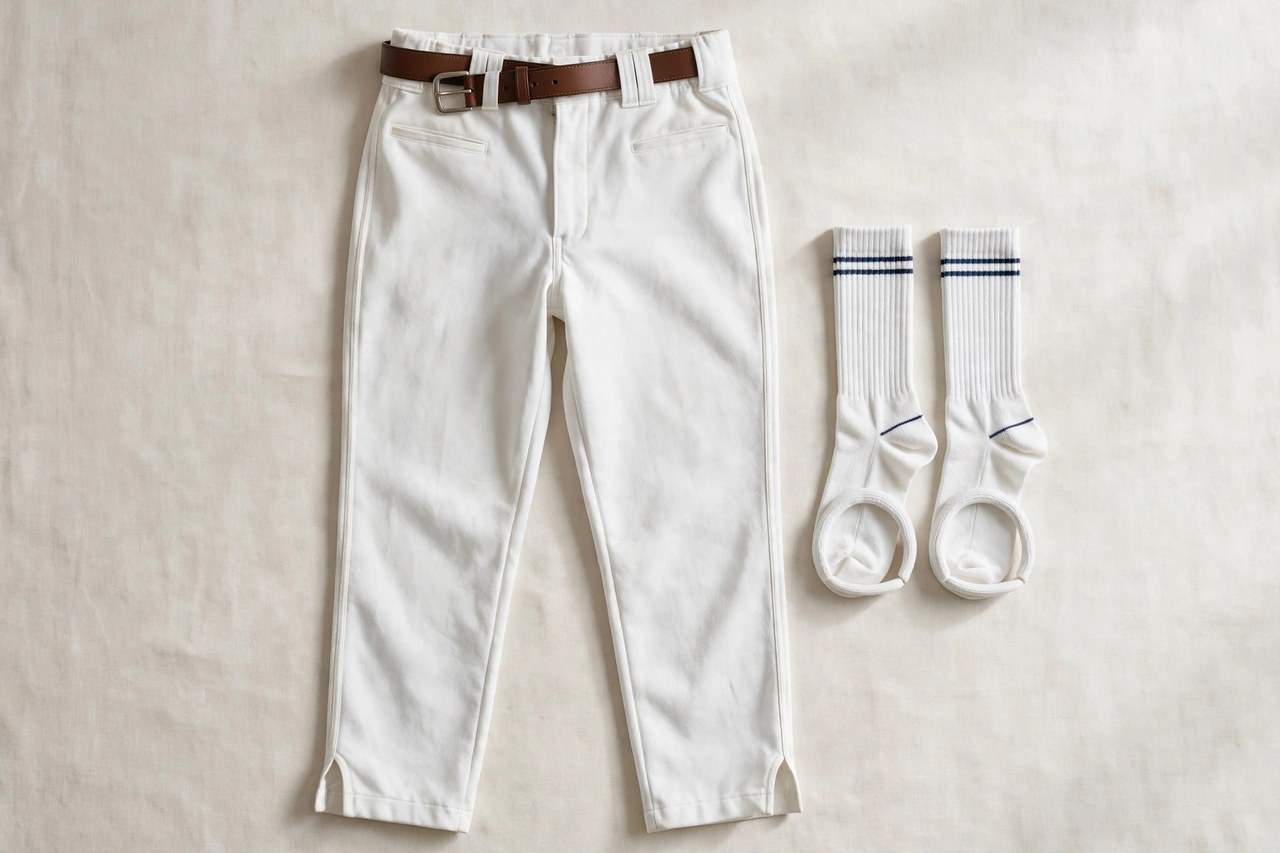
Men's baseball pants are the knicker-born trousers of the diamond: hard-wearing, soil-forgiving pants cut to slide, sprint and crouch in, worn with a belt and usually with stirrups or high socks showing beneath. Modern versions trade the old knicker length for a menu of cuts - hemmed, open-bottom and elastic - but the job is unchanged: protect the legs on slides, move without binding at the hip, and survive a season of dirt. This guide is built around the questions buyers actually ask: which style, which size, which fabric, and what will it look like after a year of real use - answered in order, with the trade-offs stated plainly.
Styles and Construction
Cuts divide by hem. Traditional hemmed pants end below the knee with elastic, worn with stirrups over sanitary socks - the classic look still standard in much youth and amateur ball. Open-bottom pants run full length with a straight, trouser-like leg, the modern professional style. Piped pants add a contrasting braid down the seam, a team-identity detail that costs little. Fabrics are double-knit polyester or polyester blends, chosen because they slide on dirt, release stains in the wash, and resist the abrasion that would shred ordinary trousers in a month.
On any leg garment, the rise decides comfort before the cloth does: the distance from front waist through to back waist must match your body, or the waistband will dig sitting and gap standing. Check that pockets are deep enough to be useful, that belt loops are bar-tacked at both ends, and that the hem is finished evenly all round. Seams at the inner leg take the most abrasion, so double stitching there is worth paying for, and a gusset or articulated knee repays its small premium the first long day you spend in the garment.
Fit and Sizing
Fit should be athletic but never tight across the seat - a player must drop into a fielding crouch and a batting stance without the waistband fighting back. Check the waist with your belt on, since the belt is part of the system, and choose length by style: hemmed pants should bloom slightly over the stirrup, open bottoms should break just at the shoe. Reinforced knees and seats are worth having at any level that slides regularly.
Measure before you shop: waist at the point the waistband will actually sit, inseam from crotch to the hem point you prefer, and - for closer fits - thigh and seat as well, taken over the underwear you wear. Sit, squat and climb an imaginary stair in the fitting room; a leg garment that only works standing still does not work. Remember that waistbands relax about half an inch with wear and that inseams shrink most in the first washes, so buy the fit you want after those changes, not before them.
Wearing and Care
Baseball pants wash hard by design: shake out the dirt, pre-treat grass and clay stains, and wash in warm water - the double-knit fabric tolerates what dress trousers cannot. Avoid bleach on piped or colored pairs. Hang or tumble low, and keep a practice pair separate from the game pair so the whites stay white for the games that matter. Mend loose hems early; a caught hem in a slide is a trip hazard.
Wash leg garments inside out in cool water to protect color and surface, and dry them low or on the line: heat is what shortens elastic, fades dye and shrinks inseams. Hang or fold promptly - the crease you iron in is a choice, but the wrinkle you sleep in becomes one too. Check hems and pocket corners each season and mend the small fray early; bottoms fail at stress points gradually and then suddenly, and a two-minute repair in October saves a replacement in November.
Common Questions
What is the difference between hemmed and open-bottom baseball pants?
Hemmed pants end below the knee with an elastic hem and are worn with stirrups and socks showing - the traditional baseball silhouette. Open-bottom pants run to the ankle with a straight leg like ordinary trousers, the modern professional style. Both play identically; the choice is team uniform rules and personal preference.
Why do baseball pants come in white and grey?
Tradition and laundry: white is the home uniform standard and shows the dirt of the game honestly, while grey - road grey - hides travel and field stains better for away games. Youth leagues often allow either. Whatever the color, the fabric is a soil-release double-knit polyester built to be washed hard and often.
How should baseball pants fit?
Athletic through the seat and thigh with room to crouch, sprint and slide - never tight enough to restrict a stance, never loose enough to flap. Fit them with your belt on, because the belt is part of the waist system, and check the crouch test in the fitting room: if the waistband pulls down at the back, size or rise is wrong.
More in Men's Clothes Guide B
The Rest of the Uniform
Baseball pants are one part of the uniform. The men’s baseball shirts and men’s baseball hats sections, linked below, cover the rest of the kit, and the wider Men’s Clothes Guide gathers the full uniform family.
Looking for Men's Clothing Stores?
This guide explains men's baseball pants. To browse where to buy, visit our men's clothing store directory, where you can find retailers that carry them.