Men's Baseball Cleats Guide
Men's baseball cleats are the traction footwear of the diamond: shoes built with spikes or molded studs that bite into dirt and grass so a player can sprint, cut and stop without sliding. They are the most specialized member of the baseball footwear family - where baseball shoes as a category includes trainers and turf shoes, cleats are the game-day tool, and their whole design, from spike material to ankle height, is decided by the surface under them.
Shop Men's Baseball Cleats Now
Shop Men's Baseball Cleats on Amazon Shop Men's Baseball Cleats on eBayThe Amazon and eBay links on this page are affiliate links. If you make a purchase through them, Apparel Search may earn a commission.
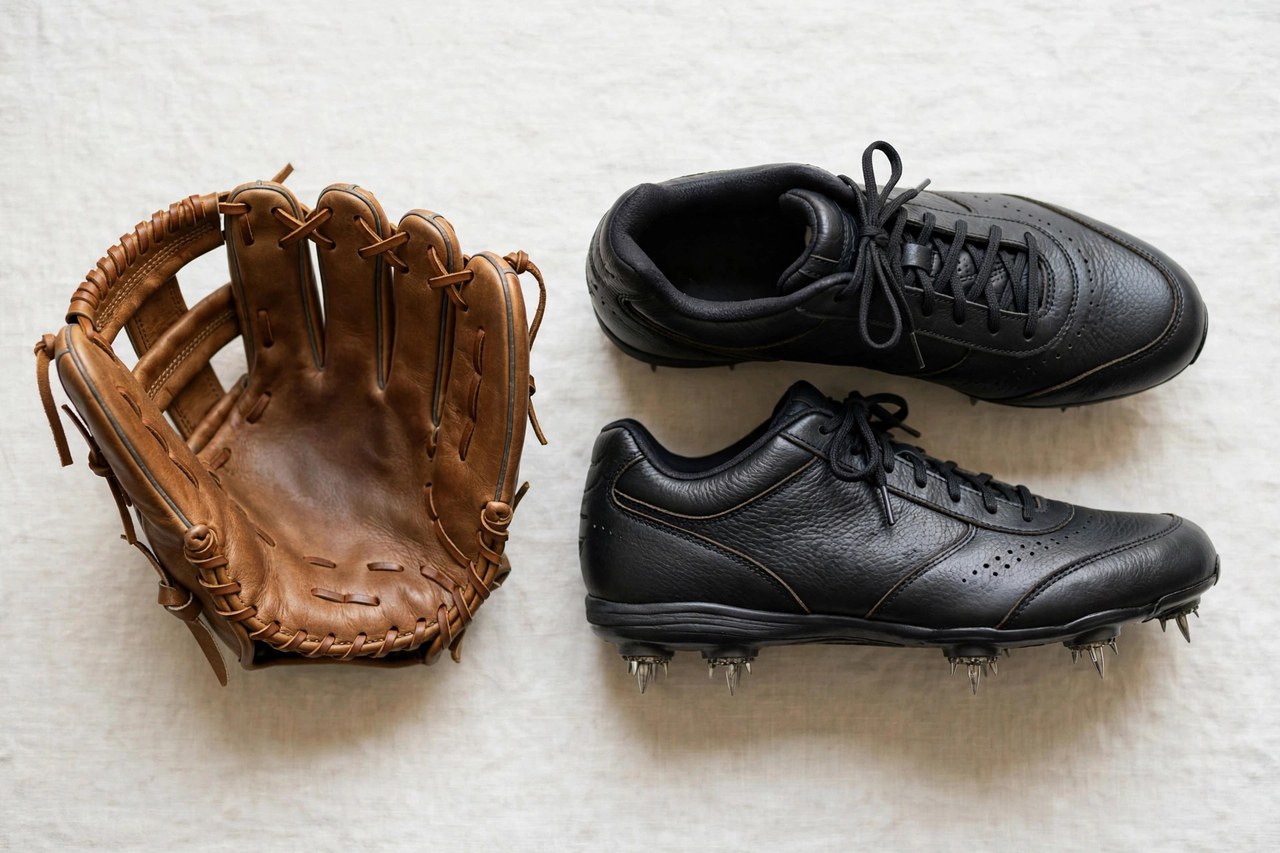
Men's baseball cleats are the traction footwear of the diamond: shoes built with spikes or molded studs that bite into dirt and grass so a player can sprint, cut and stop without sliding. They are the most specialized member of the baseball footwear family - where baseball shoes as a category includes trainers and turf shoes, cleats are the game-day tool, and their whole design, from spike material to ankle height, is decided by the surface under them. This guide is built around the questions buyers actually ask: which style, which size, which fabric, and what will it look like after a year of real use - answered in order, with the trade-offs stated plainly.
Styles and Construction
The first choice is the spike itself. Metal spikes give the sharpest grip on dirt and grass and are the standard for adult and high-level play, but many youth and some adult leagues ban them for safety. Molded rubber or TPU cleats are the universal alternative - nearly as grippy, safe on more surfaces, and the only option on synthetic fields. Interchangeable cleats let a player swap spike length for conditions. Above the sole, uppers divide into low cuts for speed, mid cuts for ankle support, and synthetic or leather builds trading durability against break-in time.
Judge any pair by the same construction checklist: how the sole is attached (cemented soles are light and cheaper, stitched welts are repairable and dearer), what the lining does with moisture over a long day, and whether the insole is removable if you use your own supports. Weight matters more than most listings admit - a heavy pair taxes every step, while a well-balanced lighter pair disappears on the foot. Finally, check the outsole compound against your surfaces: hard rubber lasts, soft rubber grips, and the right answer is the one matched to where the shoes will actually walk, play or work.
Fit and Sizing
Fit cleats snugger than street shoes - heel slip becomes a blister at game speed - but toes still need a small breathing margin because feet swell across nine innings. Try them late in the day with game socks, and check league rules before buying: spike material and even color can be regulated. Break new cleats in during practice, never on game day, and size youth players with a little growth room but never a full size of slide.
Fit footwear at the end of the day, when feet are at their largest, wearing the socks you will actually use. There should be roughly a thumb's width - about half an inch - between your longest toe and the end of the shoe, the heel should hold without lifting out as you walk, and the widest part of your foot should sit in the widest part of the shoe. Sizes are not standardized between makers, so treat your measured length and width as the truth and the printed size as a starting guess; between sizes, the one that needs no breaking-in argument is usually right.
Wearing and Care
Clean cleats after every game - knock the plates together, brush off dried dirt, and stuff them with newspaper if they played wet, drying them at room temperature only. Rotate practice in turf shoes or trainers where your surface allows, because cleats worn on concrete wear their spikes to nubs. Store them loose in a ventilated bag; a sealed, muddy cleat bag is how leather uppers and linings go to ruin.
Care is rotation first: never wear the same pair on consecutive days if you can help it, because twenty-four hours lets moisture leave the lining and cushioning recover its shape. Brush or wipe down after wear, use trees or stuffing to hold the shape while drying, and never dry footwear on direct heat, which cracks leather and warps adhesives. Condition leather on schedule rather than on appearance - by the time it looks thirsty it is already dry - and reproof water-resistant finishes when water stops beading on the surface.
Common Questions
Metal or molded cleats - which should you buy?
Check your league first: many youth leagues and some adult leagues prohibit metal. Where metal is allowed and the fields are natural dirt and grass, it gives the best bite for sprinting and cutting. Molded rubber or TPU cleats suit mixed and synthetic surfaces, cost less, and are the safer default if you play in more than one league.
How tight should baseball cleats fit?
Snug through the heel and midfoot with no sideways slide, but with a small margin at the toes - feet swell over a long game. A cleat fitted like a loose trainer blisters; one fitted like a dress shoe cramps. Try them on late in the day, in game socks, and walk, crouch and push off before deciding.
Can you wear baseball cleats on turf?
Metal spikes should never go on synthetic turf - they catch instead of releasing and can injure knees and ankles, and most facilities ban them. Molded cleats are acceptable on many turf fields, but purpose-made turf shoes with dense rubber nubs grip better and wear slower on artificial surfaces.
More in Men's Clothes Guide B
What Is a Cleat?
Do you even know what a cleat is? The fashion terminology section linked below gives the full definition. Around the cleat sits the rest of the baseball uniform family: baseball hats, pants, shirts and shoes, and batting gloves — and players in other sports should check the soccer cleats section as well, linked below.
More to Explore on Apparel Search
- Athletic Shoes
- Men's Shoes Guide
- Men's Shoes
- Men's Footwear
- Footwear News
- Shoe Definition
- Footwear Definition
- Footwear Definition List
- Men's Shoe Wholesalers
- Men's Shoe Stores
- Where to Buy Shoes
- Shopping For Shoes
- Men's Baseball Clothing on eBay
- What are cleats?
- soccer cleats
- Men's Clothes Guide H-P
- Men's Clothes Guide Q-Z
Looking for Men's Clothing Stores?
This guide explains men's baseball cleats. To browse where to buy, visit our men's clothing store directory, where you can find retailers that carry them.