Men's Athletic Shoes Guide
Men's athletic shoes are the most specialized part of the performance wardrobe — running shoes, cross-trainers, basketball, tennis and wrestling shoes are each built for one movement pattern and punish the others.
Shop Men's Athletic Shoes Now
Shop Men's Athletic Shoes on Amazon Shop Men's Athletic Shoes on eBayThe Amazon and eBay links on this page are affiliate links. If you make a purchase through them, Apparel Search may earn a commission.
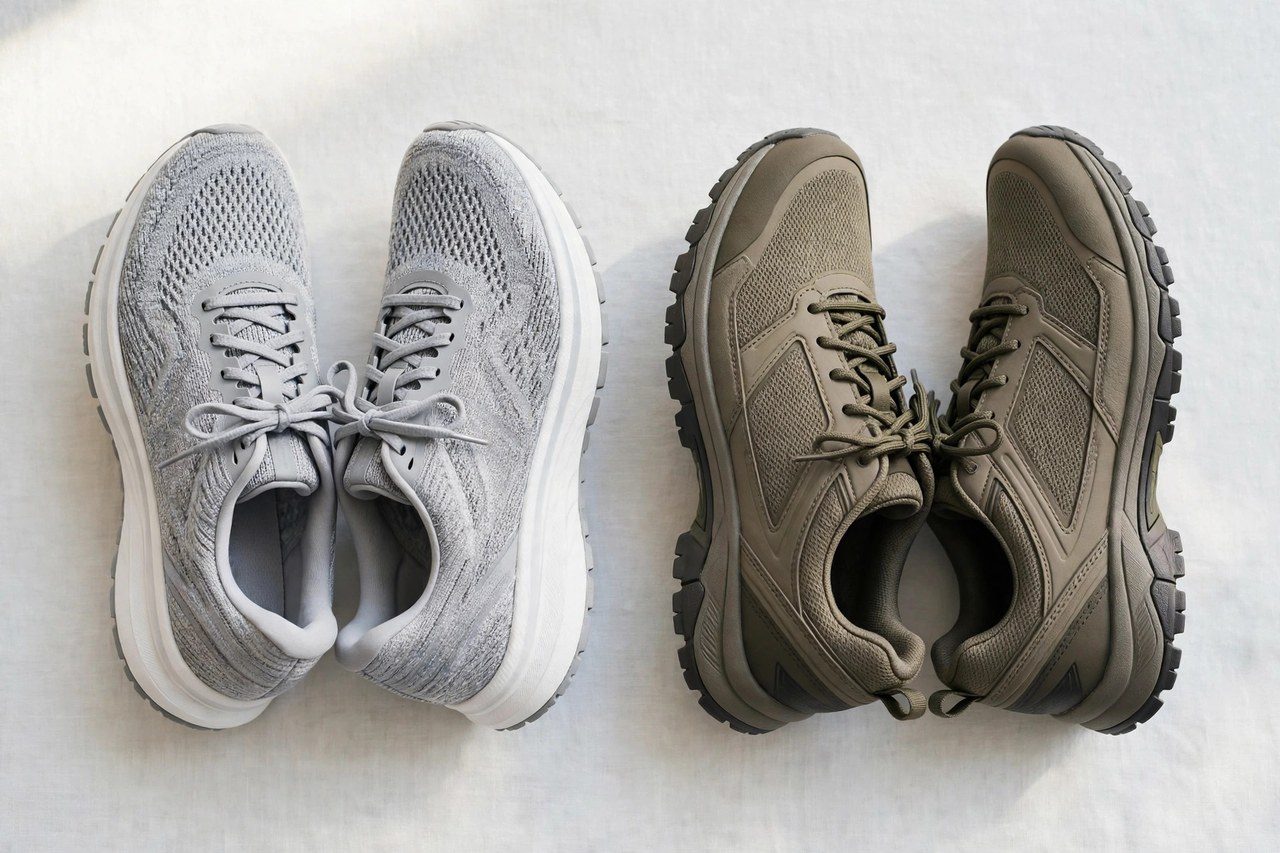
Athletic shoes are where the performance wardrobe stops generalizing. In the athletic apparel system, footwear is the specialized category: running shoes are specifically designed for running, with cushioning, support, and traction features to enhance performance and reduce the risk of injury, while a basketball shoe is built around jumping and cutting, and a wrestling shoe around grip and mat feel. This guide compares the main types a man will meet — running, cross-training, basketball, tennis, wrestling and the sneaker family generally — and explains why the right shoe is matched to the movement, not the outfit.
Start with men's running shoes, men's tennis shoes, basketball shoes and wrestling shoes as separate studies; the map below shows how they relate.
Running and Cross-Training: The Two Defaults
Running shoes are built for one repeated motion: straight ahead. Their cushioning stacks under heel and forefoot to absorb thousands of identical impacts, their uppers trade support for lightness, and their geometry rolls the stride forward. Those virtues are vices sideways — a tall, soft running shoe is unstable for lateral work and wears fast when dragged through cuts and pivots.
Cross-training shoes are the versatile answer: footwear suitable for a variety of activities, providing stability, support, and cushioning for multidirectional movements. Flatter, firmer and wider-based than runners, they suit lifting, classes, court drills and mixed gym work. The buying rule is honest self-knowledge: if most of your training is running, buy runners and lift in something flat; if it is everything else, the cross-trainer is your default and the runner your specialist.
Court, Mat and Cleat: The Specialists
Basketball shoes are high-top sneakers with ankle support and excellent grip for basketball players, cushioned for jumping landings and patterned for squeak-clean cuts on hardwood. Tennis shoes answer a similar court with a different emphasis: lateral support and durable toe guards for a game of sprints, stops and drags. Wrestling shoes go the opposite direction from both — thin, flexible, high-gripping soles that let the foot feel and work the mat, with support moved up the ankle in a soft wrap.
Beyond the gym, the family continues into cleats — soccer cleats are specialized shoes with cleats for traction on grass — and into sneakers, the wide everyday category from which athletic shoes historically grew and to which retired trainers return as casual wear. Each specialist exists because its movement pattern is different; that is the whole argument for owning more than one pair.
Fit and Replacement
Fit athletic shoes late in the day, in your athletic socks, with a thumb's width — roughly a centimeter — ahead of the longest toe for runners, and a heel that locks without slipping in every type. Feet swell in exercise as they do across a day, and a shoe fitted to a morning foot is a blister machine by mile three. Width matters as much as length: the forefoot should spread, not spill over the midsole's edge.
Athletic shoes wear out from the inside before they look it: midsole foam compresses and stops protecting, typically after 300 to 500 miles of running or a comparable season of gym work. Track the pair's job and mileage, rotate two pairs if you train daily, and retire by feel — new aches in shins, knees or feet in an old shoe are the shoe reporting its own condition.
Common Questions
What is the difference between running shoes and cross-training shoes?
Running shoes are designed for one repeated straight-ahead motion, with cushioning, support and traction to enhance performance and reduce injury risk over thousands of identical strides. Cross-training shoes are versatile footwear for a variety of activities, providing stability, support and cushioning for multidirectional movements - flatter and firmer, for lifting, classes and mixed gym work.
Why are basketball and tennis shoes different?
Both are court shoes, but the games move differently. Basketball shoes are high-tops with ankle support and excellent grip, cushioned for jumping landings. Tennis shoes emphasize lateral support and durable toe guards for sprinting, stopping and toe-dragging. Using either for the other's sport wears the wrong parts and supports the wrong movements.
When should athletic shoes be replaced?
When the midsole stops protecting, which usually looks fine from outside: roughly 300 to 500 miles for running shoes, or a season of regular gym work for trainers. Rotate two pairs if you train daily, and treat new aches in the shins, knees or feet in an older pair as the shoe reporting that its cushioning is done.
More in Men's Clothes Guide A
Looking for Men's Clothing Stores?
This guide helps you choose men's athletic shoes by sport. To browse where to buy, visit our men's clothing store directory, where you can find retailers that carry them.