Men's Basketball Shoes Guide
Men's basketball shoes are court footwear engineered for the game's specific violence: vertical jumps and hard landings, lateral cuts at full speed, and constant pivoting on sealed hardwood. Of all athletic shoes they carry the most technology per pair - cushioning systems for landing, traction patterns tuned to bite wood without squealing through a cut, and uppers built to contain a foot trying to escape sideways.
Shop Men's Basketball Shoes Now
Shop Men's Basketball Shoes on Amazon Shop Men's Basketball Shoes on eBayThe Amazon and eBay links on this page are affiliate links. If you make a purchase through them, Apparel Search may earn a commission.
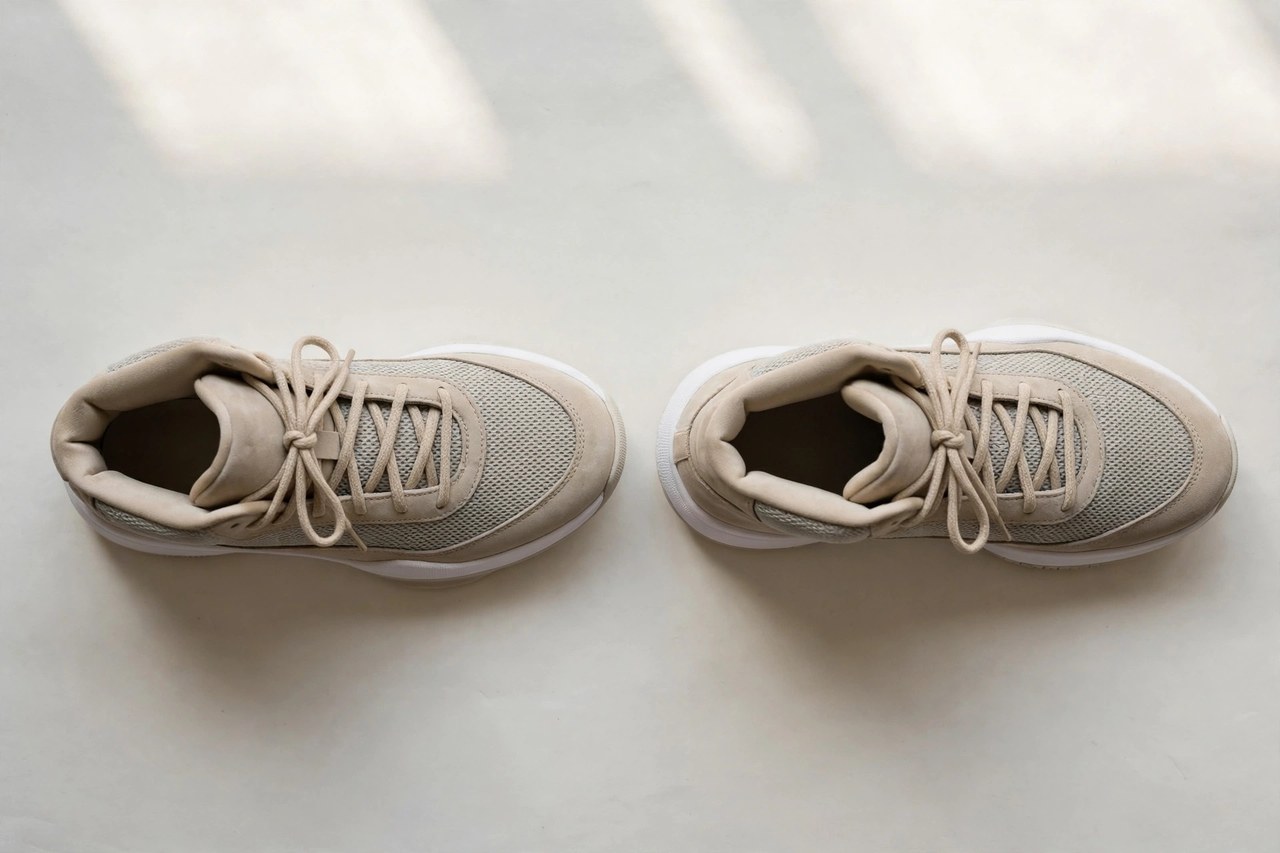
Men's basketball shoes are court footwear engineered for the game's specific violence: vertical jumps and hard landings, lateral cuts at full speed, and constant pivoting on sealed hardwood. Of all athletic shoes they carry the most technology per pair - cushioning systems for landing, traction patterns tuned to bite wood without squealing through a cut, and uppers built to contain a foot trying to escape sideways. This guide covers the styles worth knowing, the fit points that decide comfort, the fabrics and construction that separate a good buy from a regret, and the simple care that makes the garment last.
Styles and Construction
Cuts divide by ankle philosophy. High tops wrap the ankle in padded collars - supportive in feel, though the research credit for injury prevention belongs more to fit and strength than height. Mid cuts are the modern compromise most guards choose, and low cuts maximize speed and freedom for players who trust their ankles. Cushioning divides by position: heavier players and frequent jumpers benefit from maximum impact foam or air systems, while quick guards often prefer a lower, firmer ride that keeps the court feel. Herringbone remains the benchmark traction pattern on clean courts.
Judge any pair by the same construction checklist: how the sole is attached (cemented soles are light and cheaper, stitched welts are repairable and dearer), what the lining does with moisture over a long day, and whether the insole is removable if you use your own supports. Weight matters more than most listings admit - a heavy pair taxes every step, while a well-balanced lighter pair disappears on the foot. Finally, check the outsole compound against your surfaces: hard rubber lasts, soft rubber grips, and the right answer is the one matched to where the shoes will actually walk, play or work.
Fit and Sizing
Fit is containment: the heel locks, the midfoot cannot slide laterally, and the toes have just enough room for the foot's forward surge on a hard stop - about a thumbnail's width. Try both shoes, lace them fully as you would for a game, and make actual cuts and a jump-stop in the shop. Court shoes fit smaller in feel than trainers because they are built to; if your heel lifts when you cut, the size or the model is wrong, full stop.
Fit footwear at the end of the day, when feet are at their largest, wearing the socks you will actually use. There should be roughly a thumb's width - about half an inch - between your longest toe and the end of the shoe, the heel should hold without lifting out as you walk, and the widest part of your foot should sit in the widest part of the shoe. Sizes are not standardized between makers, so treat your measured length and width as the truth and the printed size as a starting guess; between sizes, the one that needs no breaking-in argument is usually right.
Wearing and Care
Keep court shoes for the court - outdoor asphalt grinds a hardwood traction pattern down in weeks and fills it with dust that slips indoors. Brush the soles before games, wipe them mid-game if your court is dusty, and air them out between sessions rather than sealing sweaty shoes in a gym bag. Rotate two pairs if you play more than twice a week; cushioning foam needs a day to recover like the player does.
Care is rotation first: never wear the same pair on consecutive days if you can help it, because twenty-four hours lets moisture leave the lining and cushioning recover its shape. Brush or wipe down after wear, use trees or stuffing to hold the shape while drying, and never dry footwear on direct heat, which cracks leather and warps adhesives. Condition leather on schedule rather than on appearance - by the time it looks thirsty it is already dry - and reproof water-resistant finishes when water stops beading on the surface.
Common Questions
Do high-top basketball shoes prevent ankle sprains?
Less than their reputation suggests. Studies credit fit, lace lockdown, a stable base and the player's own strength and bracing far more than collar height. A high top can add proprioceptive feedback and confidence, and many players simply prefer the feel - but buy the cut that locks your heel and suits your game, not the tallest collar on the shelf.
What traction pattern is best for basketball?
Herringbone - the zigzag groove pattern - remains the benchmark on indoor hardwood because it bites in every direction of cut and sheds dust well. Radial and blade patterns can match it on clean courts. On dusty courts, deeper grooves and a quick sole-wipe beat any pattern; outdoors, only a hard, deep outdoor outsole survives.
How often should you replace basketball shoes?
When the cushioning feels dead - landings get harsh and legs tire faster - or when the traction pattern smooths at the ball of the foot. For a player on court three or more times a week, that is commonly six to twelve months. Rotating two pairs extends both lives and gives foam its recovery days.
More in Men's Clothes Guide B
From Our Original Guide: The Game and Its Footwear
Our original guide grounded the topic in the sport: basketball is played by two teams of five on a rectangular court, shooting a ball through a hoop 18 inches (46 cm) in diameter mounted 10 feet (3.048 m) high at each end — and to achieve good results as a player, it is important to have good footwear. It pointed readers to the Men’s Basketball Sneakers page for more, the companion relationship this rebuild keeps between its court-performance and sneaker-culture guides.
Looking for Men's Clothing Stores?
This guide explains men's basketball shoes. To browse where to buy, visit our men's clothing store directory, where you can find retailers that carry them.