Men's Tennis Shoes Guide
Men's tennis shoes are court shoes engineered for lateral movement: the side-to-side stops, pivots and recoveries that define tennis and that running shoes - built to go straight - are not designed to survive. A true tennis shoe has a flatter, wider outsole with a herringbone or modified herringbone tread, a reinforced toe and medial side for drag, and an upper built to hold the foot against sideways force. In casual speech 'tennis shoes' means any sneaker; this guide is about the real court shoe.
Shop Men's Tennis Shoes Now
Shop Men's Tennis Shoes on Amazon Shop Men's Tennis Shoes on eBayThe Amazon and eBay links on this page are affiliate links. If you make a purchase through them, Apparel Search may earn a commission.
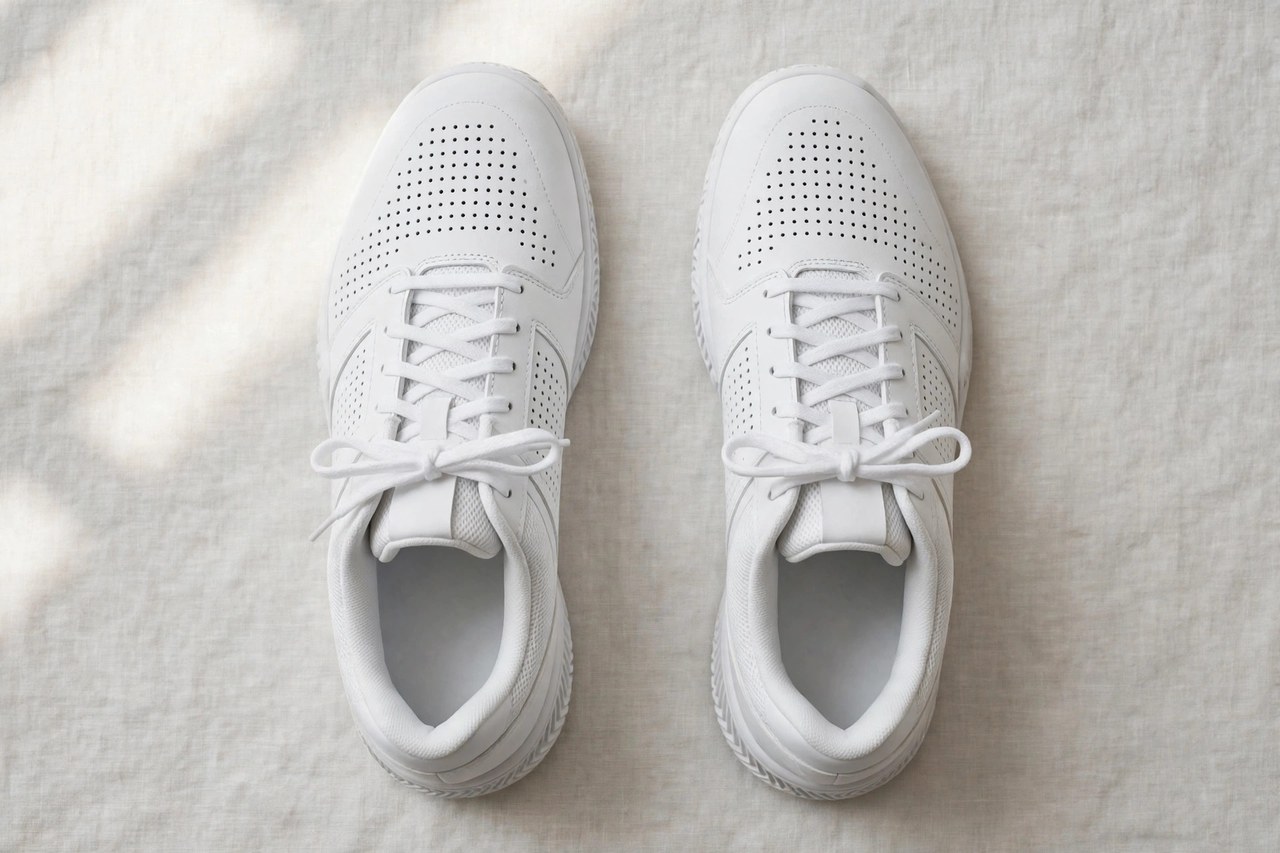
Men's tennis shoes are court shoes engineered for lateral movement: the side-to-side stops, pivots and recoveries that define tennis and that running shoes - built to go straight - are not designed to survive. A true tennis shoe has a flatter, wider outsole with a herringbone or modified herringbone tread, a reinforced toe and medial side for drag, and an upper built to hold the foot against sideways force. In casual speech 'tennis shoes' means any sneaker; this guide is about the real court shoe. This guide covers the styles worth knowing, the fit points that decide comfort, the fabrics and construction that separate a good buy from a regret, and the simple care that makes the garment last.
Styles and Construction
Outsole pattern follows surface: full herringbone grips clay and sheds it, modified herringbone serves hard courts, and smooth, non-marking soles serve indoor courts. Durability concentrates where players drag: a toe guard and reinforced medial upper on the dominant side, a midsole that resists compression on lateral plants, and a heel counter that locks the rear foot. Cushioning has modernized - foam compounds now absorb baseline pounding without the old weight - but stability remains the tennis shoe's first job: an outrigger flare on the lateral edge, a midfoot shank, and lacing that can be locked down at the top eyelet for hard stops.
Judge footwear by attachment and compound: cemented soles are light and affordable, stitched or welted constructions cost more and can be repaired, and the outsole rubber decides grip against longevity - soft compounds bite, hard compounds endure. Linings decide comfort over hours, removable insoles decide whether your own supports can come along, and honest weight decides whether the pair disappears on the foot or taxes every mile of the day.
Fit and Sizing
Fit tennis shoes in the afternoon, in court socks, with a thumb's width beyond the longest toe - feet slide forward on hard stops and toes pay for a short shoe. The forefoot should feel held, not compressed, because lateral cuts load the outside of the foot; heel slip is disqualifying. Players between sizes often take the larger and lock the heel with a runner's loop. Break court shoes in with practice sessions, not a first match.
Fit footwear late in the day in the socks you will actually wear, with roughly a thumb's width beyond the longest toe, the heel held without lift, and the foot's widest point meeting the shoe's widest point. Sizes are unstandardized between makers - trust your measured length and width over the printed number, and require no break-in argument: a shoe that needs excuses in the shop delivers them on the road.
Wearing and Care
Rotate two pairs if you play several times a week - midsoles need a day to rebound - and let shoes dry at room temperature, never on a heater. Brush hard-court dust from the tread so the herringbone keeps its bite, replace insoles when they pack out, and retire a court shoe when the outsole smooths at the ball or the toe drag wears through: past that point the shoe is a liability to ankles as much as to your game.
Rotation is the first care rule: a day of rest between wears lets linings dry and cushioning rebound, and it doubles a rotation's life compared with daily wear of one pair. Clean after use, dry at room temperature away from radiators, hold shape with trees or paper, and condition leather on a schedule rather than when it looks thirsty. Reproof weather finishes when water stops beading, and resole stitched footwear before the wear reaches the welt.
Common Questions
Can I play tennis in running shoes?
You can, but you should not make a habit of it. Running shoes are tall, narrow and built for straight-line motion; their soft midsoles roll on lateral cuts and their uppers are not reinforced for toe drag. A court shoe's flat, wide, herringbone-soled stability is a safety feature as much as a performance one - ankles notice the difference first.
Which tennis shoe sole suits which court?
Full herringbone tread for clay, because it grips and releases clay cleanly; modified herringbone for hard courts, balancing grip with the durability an abrasive surface demands; and smooth, non-marking gum soles for indoor courts. Most recreational hard-court players are best served by a modified herringbone with a six-month outsole warranty behind it.
How long do tennis shoes last?
For a regular player, roughly 45-60 hours of court time before cushioning and outsole wear change the shoe's behavior - often three to six months. Drag wear at the toe, a smoothed tread at the ball of the foot, and new aches in knees or ankles are the practical retirement signals, in roughly that order.
More in Men's Clothes Guide T
Background and History
First let's answer the questions what are sneakers? Sneakers are shoes primarily designed for sports or other forms of physical exercise. The term generally describes a type of footwear with a flexible sole made of rubber or synthetic material and an upper part made of leather or synthetic materials. Examples of such shoes include athletic footwear such as tennis shoes, cross trainers, basketball shoes, and other shoes worn for specific sports. Sneakers are also known as athletic shoes, tennis shoes, runners, takkies, or trainers. The word "sneaker" is often attributed to American Henry Nelson McKinney who was an advertising agent for N. W. Ayer & Son. In 1917, he used the term because the rubber sole made the shoe stealthy. The word was already in use at least as early as 1887, as the Boston Journal made reference to "sneakers" as "the name boys give to tennis shoes ." One of the early sneaker designs had been nicknamed Plimsolls. They were widely worn by vacationers and also began to be
Looking for Men's Clothing Stores?
This guide explains men's tennis shoes. To browse where to buy, visit our men's clothing store directory, where you can find retailers that carry them.