Men's Tennis Shorts Guide
Men's tennis shorts are athletic shorts built for the court's movement and its pockets: a lightweight woven short, usually with an inseam between five and nine inches, deep front pockets angled to actually hold a tennis ball, and a waistband that stays put through serves and sprints. The white short is the tradition; the modern garment is a technical piece whose fabric, liner and pocket geometry are all answers to the game's specific demands.
Shop Men's Tennis Shorts Now
Shop Men's Tennis Shorts on Amazon Shop Men's Tennis Shorts on eBayThe Amazon and eBay links on this page are affiliate links. If you make a purchase through them, Apparel Search may earn a commission.
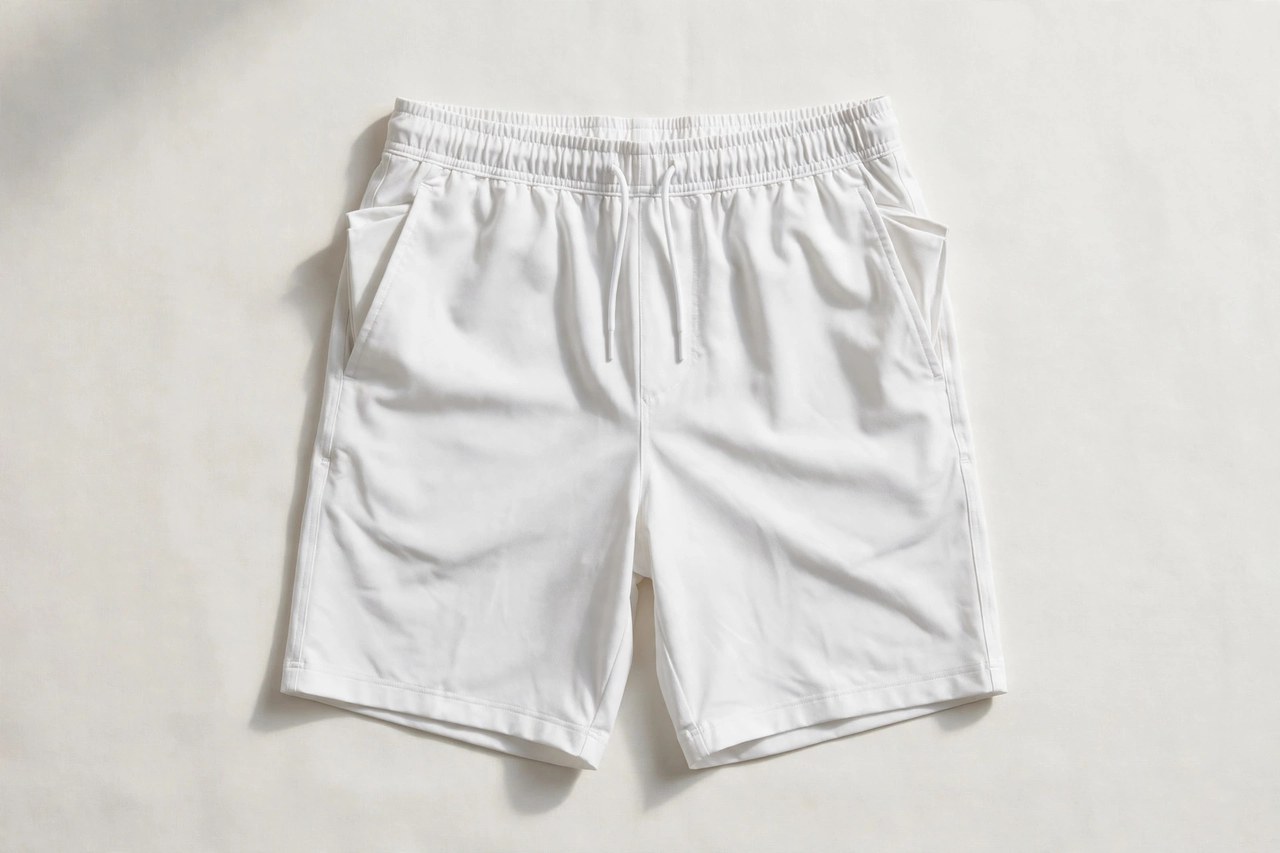
Men's tennis shorts are athletic shorts built for the court's movement and its pockets: a lightweight woven short, usually with an inseam between five and nine inches, deep front pockets angled to actually hold a tennis ball, and a waistband that stays put through serves and sprints. The white short is the tradition; the modern garment is a technical piece whose fabric, liner and pocket geometry are all answers to the game's specific demands. This guide is built around the questions buyers actually ask: which style, which size, which fabric, and what will it look like after a year of real use - answered in order, with the trade-offs stated plainly.
Styles and Construction
Pocket design is the tennis short's signature engineering: front pockets are cut deep and angled so a ball sits securely during points yet presents instantly between them - test any pair by putting a ball in and jogging in place. Fabric divides into classic cotton-blend twill (the traditional look, heavier when wet) and modern woven polyester or nylon with stretch, which dries fast and moves with lunges. Many current patterns add a knit inner brief or compression liner; others keep a clean unlined shell for players who wear their own base layer. Waistbands combine elastic with a drawcord - snaps or buttons at the front belong to the traditional pattern and must be backed by elastic to survive a match.
For any leg garment the rise is the first specification, because it decides sitting comfort before fabric gets a vote: measure from front waistband through to back and compare it with a pair that already works. Then audit the stress points - bar-tacked belt loops and pocket corners, double-stitched inseams, hems finished evenly - and the pocketing, which should be deep, smooth and strong enough to carry what the garment's pockets invite you to carry.
Fit and Sizing
Fit for movement: the waistband should sit securely without the drawcord doing all the work, and the leg should allow a full split-step lunge without binding at the thigh. Inseam is preference with consequences - shorter (5-7 inches) frees the leg and suits warm climates, longer (9 inches) reads more traditional and protects against slide abrasion. Size by waist measurement against the maker's chart, and test the fit with a ball in each pocket, because that is the garment's working condition.
Measure where the waistband will actually sit, plus inseam to your preferred break, and thigh and seat for closer cuts. Then sit, squat and climb a step in the fitting room - a leg garment that only works standing still does not work. Waistbands relax roughly half an inch in wear and inseams shrink most in early washes, so buy the fit you want after those changes rather than the fit in the mirror.
Wearing and Care
Wash tennis shorts cool with other synthetics, close any fastenings, and dry low or on the line; fabric softener coats performance wovens and dulls their wicking, so skip it. White shorts need prompt treatment of clay and grass stains before washing. Inspect pocket linings each season - pocket holes announce themselves by dropping a ball mid-point - and mend them early, while the repair is still two minutes of stitching.
Wash leg garments inside out and cool; heat is the agent that fades dye, tires elastic and shortens inseams. Dry low or on the line, hang or fold promptly, and crease deliberately or not at all. Walk the stress points each season - hem edges, pocket corners, seat and inner thigh - and mend the small fray while it is still small: leg garments fail gradually, then suddenly, and the two-minute October repair prevents the November replacement.
Common Questions
Why are tennis shorts' pockets special?
Because they must do two opposite jobs: hold a ball completely securely through sprints, stops and stretches, then give it up instantly with one hand between points. That is why they are deep, angled and often lined in mesh - a standard trouser pocket fails the first job, and a shallow fashion pocket fails both. Always test a new pair with actual balls before a match.
What inseam is right for men's tennis shorts?
Most players land between 7 and 9 inches: enough coverage to read traditional and protect the leg, short enough to lunge freely. Shorter 5-inch patterns suit fast, warm-climate play and confident movers; the classic 9-inch pattern suits traditional clubs and taller players. Court dress codes, where they exist, care about color far more than length.
Are lined tennis shorts better?
A knit liner or brief adds support and removes a layer decision, and modern liners wick well; unlined shells let you choose your own base layer and dry faster after washing. It is preference, not hierarchy - but check that a liner's leg openings do not ride up, because a liner you adjust between points is worse than none.
More in Men's Clothes Guide T
Background and History
Tennis is a racket sport that can be played individually against a single opponent (singles) or between two teams of two players each (doubles). Each player uses a tennis racket that is strung with cord to strike a hollow rubber ball covered with felt over or around a net and into the opponent's court. Athletes playing this sport typically wear short when playing. Shorts are a garment worn by both men and women over their pelvic area, circling the waist and splitting to cover the upper part of the legs, sometimes extending down to the knees but not covering the entire length of the leg. They are called "shorts" because they are a shortened version of trousers, which cover the entire leg. Casual play does not have strict rules in regard to the type of short to wear. However, if you belong to a country club or are playing on private courts you will need to consult with them regarding the dress code. Wimbledon has a dress code for athletes.
Looking for Men's Clothing Stores?
This guide explains men's tennis shorts. To browse where to buy, visit our men's clothing store directory, where you can find retailers that carry them.