Men's Athletic Shirts Guide
Men's athletic shirts are designed specifically to be worn during exercise, where comfort, support, breathability and performance are the four factors every fabric and cut is judged by.
Shop Men's Athletic Shirts Now
Shop Men's Athletic Shirts on Amazon Shop Men's Athletic Shirts on eBayThe Amazon and eBay links on this page are affiliate links. If you make a purchase through them, Apparel Search may earn a commission.
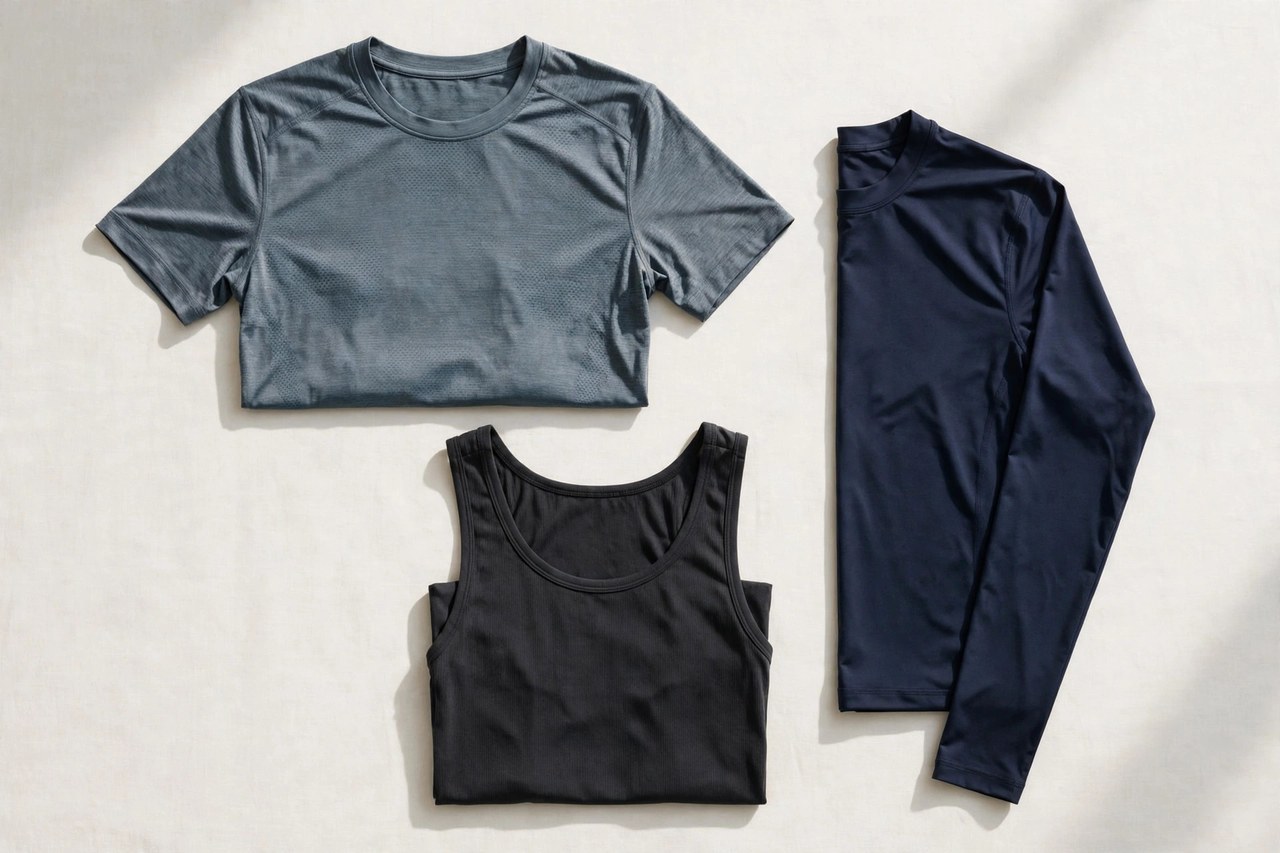
Some shirts are designed specifically to be worn during exercise. Comfort, support, breathability and performance are key factors. Our original guide stated the brief in two sentences, and this page works to it: an athletic shirt is not a tee that happens to be at the gym, but a top engineered against those four factors. This guide covers the shirt family — training tees, tanks, long-sleeve shirts and compression tops — and how fabric and cut deliver each factor for different sports.
The athletic shirt is the most-worn, most-washed garment in the performance wardrobe, which makes its details worth more attention than its price suggests.
The Four Factors, Garment by Garment
Comfort is seams and surface: flatlock seams that do not saw at the shoulders under a pack or bar, tagless backs, and fabrics that do not turn abrasive when wet. Support is the compression end of the family — tightly fitting shirts that provide muscle support and aid recovery during intense workouts — and, at the everyday end, a cut that stays in place through overhead and ground work instead of riding up. Breathability is wicking knit plus ventilation where heat collects: mesh backs and underarm panels earn their keep in the second half of a session.
Performance is the sum in motion: a shirt that manages sweat so its weight stays low, stretches so a reach costs nothing, and dries between sessions. Cotton fails the performance test while passing every other — it is comfortable dry, supportive of nothing, and once wet it stays wet, heavy and cold. That single fact explains the synthetic wardrobe of modern training.
Tees, Tanks, Long Sleeves and Compression
The training tee is the default: short sleeves, a crew or V-neck, cut close enough to avoid flap and loose enough to avoid cling. Tank tops free the shoulder completely for lifting, pressing and hot-weather work, at the cost of sun and contact coverage. Long-sleeve athletic shirts are designed for cooler weather, providing warmth without compromising mobility, and they double as base layers under the outerwear in the athletic apparel system.
The original guide also pointed readers to two neighbors: fitness shirts, the broader product family these tops belong to, and sweatshirts, the fleece layer that warms up and cools down around the session. And it closed with a word that has since taken over the category: readers might also want to learn about athleisure clothing — athletic shirts styled for the street are where exercise design and everyday dress now meet, and the best training tees are cut to survive both readings.
Fit, Care and Buying
Fit by movement, not mirror: raise both arms, bend, twist — the hem should stay near the waistband and the shoulders should not bind. Sleeve length should clear the biceps' work; a compression shirt should feel like a firm handshake everywhere, never a tourniquet anywhere. Between sizes in synthetics, choose by the chest and let the length fall where it falls.
Care decides lifespan: wash cool and inside out, skip fabric softener, which coats wicking fibers, and dry low or on the line, because elastane and heat are enemies. Own enough shirts for your training week plus one — an athletic shirt washed promptly and rotated lasts seasons, while a single favorite washed harshly and worn daily gives up its stretch and its wicking within the year.
For runners specifically, the running tops and layers guide narrows this family down to singlets, tees, long sleeves and shells — and explains the order they go on, from base layer to jacket.
Common Questions
What makes a shirt an athletic shirt?
It is designed specifically to be worn during exercise, judged on four key factors: comfort, support, breathability and performance. In practice that means flat seams that do not chafe, wicking synthetic fabrics instead of cotton, ventilation where heat builds, and cuts - including compression fits - that stay in place and support muscle through movement.
Why not just train in a cotton T-shirt?
Cotton is comfortable when dry but absorbs sweat, stays wet, and turns heavy and cold as a session goes on. Athletic shirts use polyester or nylon knits that wick sweat to the surface and dry quickly, keeping their weight low and their temperature steady - the practical core of the performance factor.
What is a compression shirt for?
Compression shirts are tightly fitting shirts that provide muscle support and aid in recovery during intense workouts. They are the support end of the athletic shirt family, contrasted with loose training tees and tanks. A compression shirt should feel firm everywhere and restrictive nowhere - size by the chest, and never by squeezing into a smaller size.
More in Men's Clothes Guide A
From Our Original Guide: Shirts Designed for Exercise
Our original guide opened with the design brief for the whole category: some shirts are designed specifically to be worn during exercise, and comfort, support, breathability and performance are key factors. It connected the topic to fitness shirts, to sweatshirts as the warming layer around a session, and to athletic apparel for men as the parent category — and it pointed readers onward to athleisure clothing, the crossover where exercise shirts became everyday dress.
Looking for Men's Clothing Stores?
This guide helps you choose men's athletic shirts for training. To browse where to buy, visit our men's clothing store directory, where you can find retailers that carry them.