Men's Athletic Socks Guide
A sock is apparel worn on the feet, often covering the ankle and part of the calf — and the athletic version is engineered equipment: cushioning, moisture management and fit that decide whether shoes can do their job.
Shop Men's Athletic Socks Now
Shop Men's Athletic Socks on Amazon Shop Men's Athletic Socks on eBayThe Amazon and eBay links on this page are affiliate links. If you make a purchase through them, Apparel Search may earn a commission.
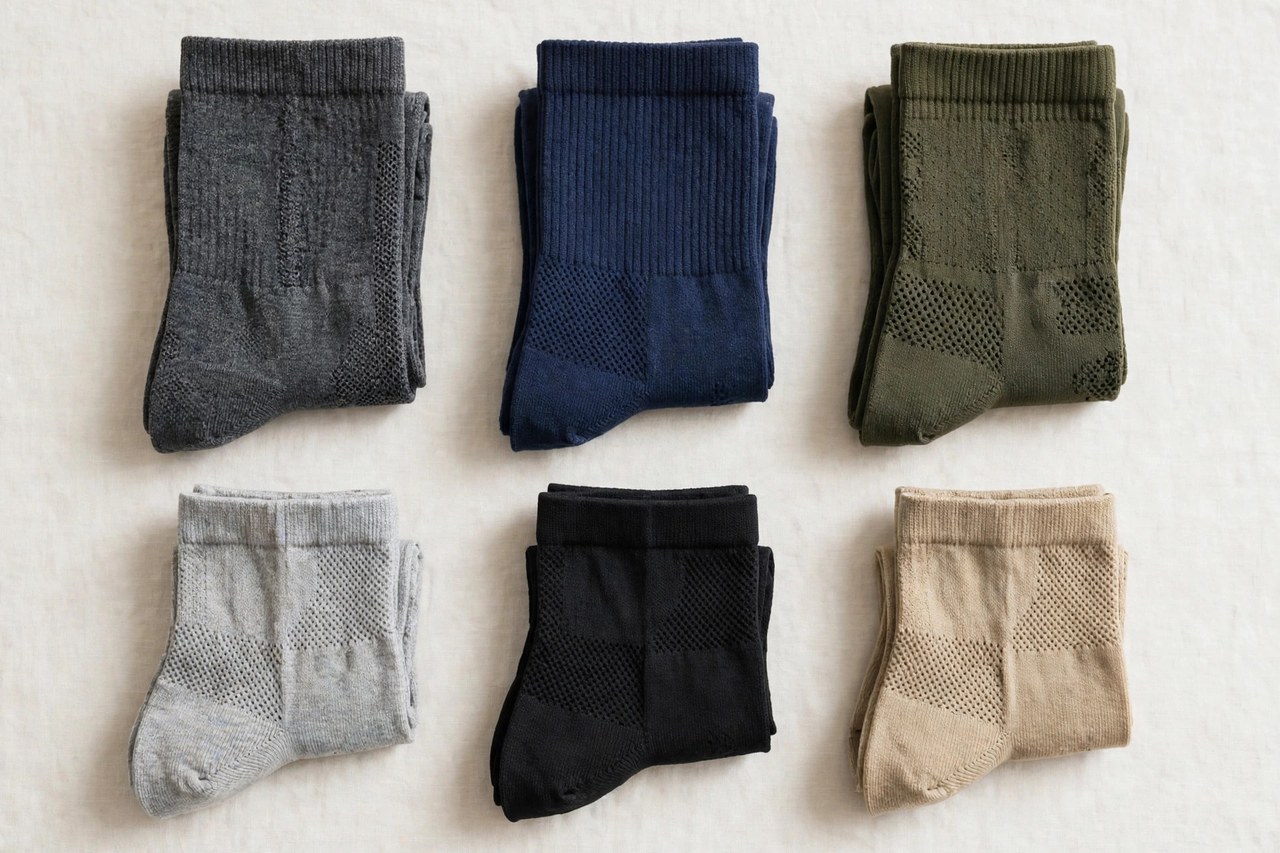
A sock is a type of apparel worn on the feet and often covers the ankle and some portion of the calf (lower leg). Socks are typically worn under some sort of footwear such as a shoe, sneaker or boot, and socks come in a variety of colors, fiber content and sizes. That plain definition hides an engineering story: the athletic sock is the interface between foot and shoe, and it controls friction, moisture and cushioning at exactly the point where blisters, hot spots and fatigue begin. This guide covers what athletic socks do, their heights and fibers, and how to select them — the subject an Ohio State fact sheet in our education section treats formally, linked below.
Of everything in the athletic apparel system, socks are the cheapest item and the most commonly bought wrong.
What Athletic Socks Actually Do
In the apparel system, athletic socks are moisture-wicking, cushioned socks designed to reduce friction and enhance comfort during sports and exercise. Each word works: moisture-wicking moves sweat off the skin, because wet skin blisters; cushioning pads the heel and forefoot where impact lands; friction control comes from a close, anatomical fit that moves with the foot instead of bunching inside the shoe. A sock that fails any of the three turns a good shoe into a problem, which is why experienced runners and hikers speak of a shoe-and-sock system, never a shoe alone.
Compression socks are the specialist branch: socks designed to enhance blood flow, reduce muscle fatigue, and prevent injuries during physical activities, worn for long efforts, recovery and travel. They fit by graduated pressure, snug at the ankle and easing up the calf, and they are sized by calf measurement rather than shoe size alone.
Heights and Fibers
Heights run from no-show and ankle socks for gym and summer running, through quarter and crew lengths that protect the Achilles and ankle from shoe collars, to knee-high compression and sport styles. Choose by shoe and exposure: the sock should always rise above the shoe's collar, so no skin meets the shoe's edge anywhere.
Fiber content is the variety to watch, and the letter's own sock family shows the range: cotton socks are soft and cheap but hold sweat — the classic blister recipe in sport. Synthetic blends and merino wool wick and regulate, which is why wool socks serve runners and hikers far beyond winter. Silk socks appear as liners and dress-leaning delicacies, and cashmere socks are pure comfort luxury — each fiber has its full guide linked below, and the athletic choice among them is almost always a wicking blend or merino.
Selecting and Caring
Select by activity first: thin, tight socks for court and fitted shoes; cushioned crews for running volume; compression for long efforts and recovery. Then by size honesty — a sock too large bunches and a sock too small slides into the toe — and by construction details: a seamless or flat toe, arch banding that holds the midfoot, and left-right shaping where offered.
Care is rotation and restraint: enough pairs to never train twice in a worn pair before washing, cool washes, and air-drying for elastic life. Replace athletic socks when the heel or ball thins, because cushioning is the product and a thin sock is a retired one whatever its color says. Spend shoe money on shoes, by all means — but spend sock attention on socks, and the shoes will finally perform as advertised.
Common Questions
Why do athletic socks matter if I have good shoes?
Because the sock is the interface between foot and shoe: athletic socks are moisture-wicking, cushioned socks designed to reduce friction and enhance comfort during sports and exercise. Wet skin blisters, bunched fabric rubs, and thin cushioning fatigues - a sock failing any job turns a good shoe into a problem, which is why runners talk about a shoe-and-sock system.
Are cotton socks good for sports?
Generally no. Cotton is soft and inexpensive, but it absorbs sweat and holds it against the skin - the classic blister recipe. Athletic socks use synthetic blends or merino wool that wick moisture away and regulate temperature. Wool socks serve far beyond winter for the same reason, while silk and cashmere socks belong to liners and luxury rather than training.
What are compression socks for?
Compression socks are designed to enhance blood flow, reduce muscle fatigue and prevent injuries during physical activities. They fit with graduated pressure - snug at the ankle, easing up the calf - and are worn for long efforts, recovery and travel. Size them by calf measurement as well as shoe size, since the pressure gradient is the product.
More in Men's Clothes Guide A
What a Sock Is
Start with the garment itself: a sock is a type of apparel worn on the feet and often covers the ankle and some portion of the calf (the lower leg); socks are typically worn under some sort of footwear such as a shoe, sneaker or boot; and socks come in a variety of colors, fiber content and sizes. The fiber family around the topic — cashmere socks, wool socks, silk socks and cotton socks, each with its own guide — and a formal selecting-socks fact sheet in the education section are linked below.
Looking for Men's Clothing Stores?
This guide helps you select men's athletic socks that work with your shoes. To browse where to buy, visit our men's clothing store directory, where you can find retailers that carry them.