Men's Wrestling Shoes Guide
Men's wrestling shoes are the lightest, closest-fitting footwear in sport: thin split soles that grip the mat, a high, flexible ankle collar, and uppers that wrap the foot like a sock so a wrestler can feel the mat, pivot without sticking and shoot without the shoe becoming a handle for an opponent. Everything on the shoe exists for the mat - nothing on it is decoration.
Shop Men's Wrestling Shoes Now
Shop Men's Wrestling Shoes on Amazon Shop Men's Wrestling Shoes on eBayThe Amazon and eBay links on this page are affiliate links. If you make a purchase through them, Apparel Search may earn a commission.
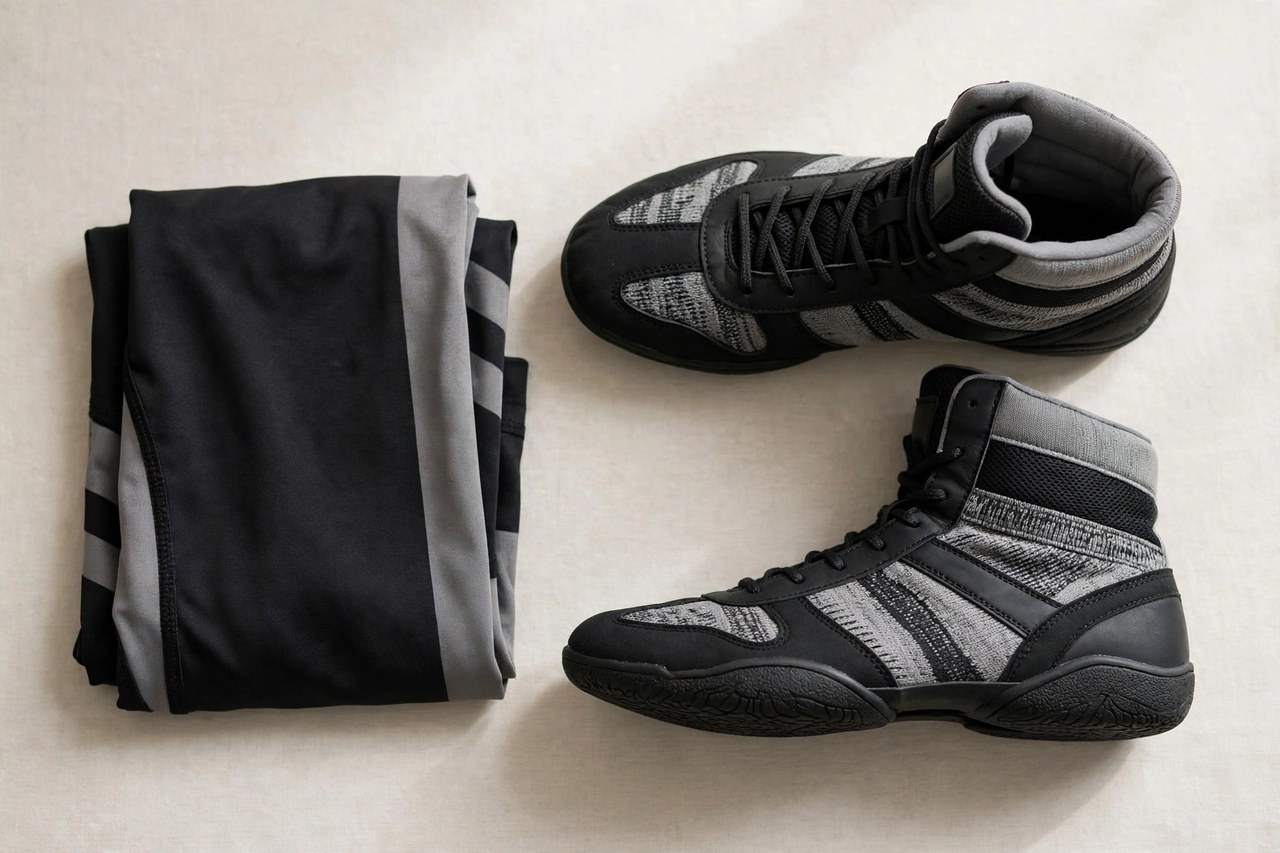
Men's wrestling shoes are the lightest, closest-fitting footwear in sport: thin split soles that grip the mat, a high, flexible ankle collar, and uppers that wrap the foot like a sock so a wrestler can feel the mat, pivot without sticking and shoot without the shoe becoming a handle for an opponent. Everything on the shoe exists for the mat - nothing on it is decoration. This guide covers the styles worth knowing, the fit points that decide comfort, the fabrics and construction that separate a good buy from a regret, and the simple care that makes the garment last.
Styles and Construction
The sole is the design: gum rubber or unisole rubber patterns that bite the mat for drives yet release for spins, split at the midfoot so the shoe flexes with the arch. Uppers are mesh and synthetic leather for breathability and a close fit, with laces that must be taped or tucked - most designs add a lace garage or strap because loose laces stop matches. Ankle support comes from the height and fit of the collar, not from stiffness; the shoe must move with the joint. Sizing runs small and narrow compared with trainers, and competition rules require a clean, mat-only shoe.
Judge footwear by attachment and compound: cemented soles are light and affordable, stitched or welted constructions cost more and can be repaired, and the outsole rubber decides grip against longevity - soft compounds bite, hard compounds endure. Linings decide comfort over hours, removable insoles decide whether your own supports can come along, and honest weight decides whether the pair disappears on the foot or taxes every mile of the day.
Fit and Sizing
Fit wrestling shoes tighter than any other footwear you own: toes near the end with no pressure curl, the midfoot locked so the foot does not slide inside during shots, and the heel seated. They stretch modestly with wear, so a new pair should feel like a firm handshake, not a shoe. Buy your trainer size as a starting point only - wrestling lasts differ by brand - and always fit both feet, because a half size of slop is a rolled ankle in a scramble.
Fit footwear late in the day in the socks you will actually wear, with roughly a thumb's width beyond the longest toe, the heel held without lift, and the foot's widest point meeting the shoe's widest point. Sizes are unstandardized between makers - trust your measured length and width over the printed number, and require no break-in argument: a shoe that needs excuses in the shop delivers them on the road.
Wearing and Care
Wrestling shoes are indoor-only equipment: wearing them outside grinds the mat grip off the soles and tracks dirt and skin infections onto the mat, which is why gyms forbid it. Air them after every session - they live in kit bags and breed bacteria - spray with a shoe-safe disinfectant, loosen laces fully to dry, and wash only by hand if the maker allows. Replace them when the sole pattern polishes smooth at the ball of the foot or the upper splits at the toe drag area.
Rotation is the first care rule: a day of rest between wears lets linings dry and cushioning rebound, and it doubles a rotation's life compared with daily wear of one pair. Clean after use, dry at room temperature away from radiators, hold shape with trees or paper, and condition leather on a schedule rather than when it looks thirsty. Reproof weather finishes when water stops beading, and resole stitched footwear before the wear reaches the welt.
Common Questions
Why are wrestling shoes so high around the ankle?
The high collar supports the ankle against rolls during takedowns and adds coverage that protects the skin on the mat. It is flexible support - the shoe wraps and moves with the joint rather than bracing it stiffly like a boot, because a wrestler needs full ankle mobility.
Can wrestling shoes be used for lifting or boxing?
For lifting, their flat thin sole and locked fit actually work well, and many lifters borrow the idea. For boxing they lack the wrist-of-the-ankle support and sole shape boxing shoes are built with. They are mat specialists; other sports are a compromise, never the design goal.
How do I stop wrestling shoes smelling?
Dry them fully after every session - open, insoles out, away from the kit bag - and rotate pairs if you train daily. Disinfectant shoe sprays and washable insoles help; the smell is bacteria in trapped moisture, and a shoe dried within hours never develops it.
More in Men's Clothes Guide W
Background
The right shoes can change the outcome of a match; or a whole season. Shoes built for aggression, defense & dominance. Wrestling shoes are active wear used in competition and practice for the sport of wrestling. Generally light and flexible, they try to mimic the bare foot, while providing slightly more traction and ankle support and less chance of contracting a disease or hurting the opponent with exposed toe nails. As a result, wrestling shoes tend to have a high top design to provide ankle support and cushioning. You will find that wrestling shoes come in a full range of styles from brands like Nike, adidas and Asics, etc. ASICS has a decades-long legacy with wrestling, providing high-performance wrestling shoes, singlets and training gear, wrestling knee pads, and headgear to top world competitors like Dan Gable, Rulon Gardner, Bruce Baumgartner, Cael Sanderson, Adeline Gray, and former champ Jordan Burroughs. That legacy continues with boots like the Omniflex-Attack™, Aggressor®, Matflex® and JB Elite™.
More to Explore on Apparel Search
References & Further Reading
Looking for Men's Clothing Stores?
This guide explains men's wrestling shoes. To browse where to buy, visit our men's clothing store directory, where you can find retailers that carry them.