Men's Baseball Shoes Guide
Men's baseball shoes are the whole footwear system of the sport - cleats for the field, turf shoes for practice and artificial surfaces, and trainers for the cage and the gym - and this guide treats them as one buying decision, because most players need more than one kind and the mistakes happen at the boundaries: cleats worn on concrete, trainers worn on wet grass, and practice habits that wear out the game pair.
Shop Men's Baseball Shoes Now
Shop Men's Baseball Shoes on Amazon Shop Men's Baseball Shoes on eBayThe Amazon and eBay links on this page are affiliate links. If you make a purchase through them, Apparel Search may earn a commission.
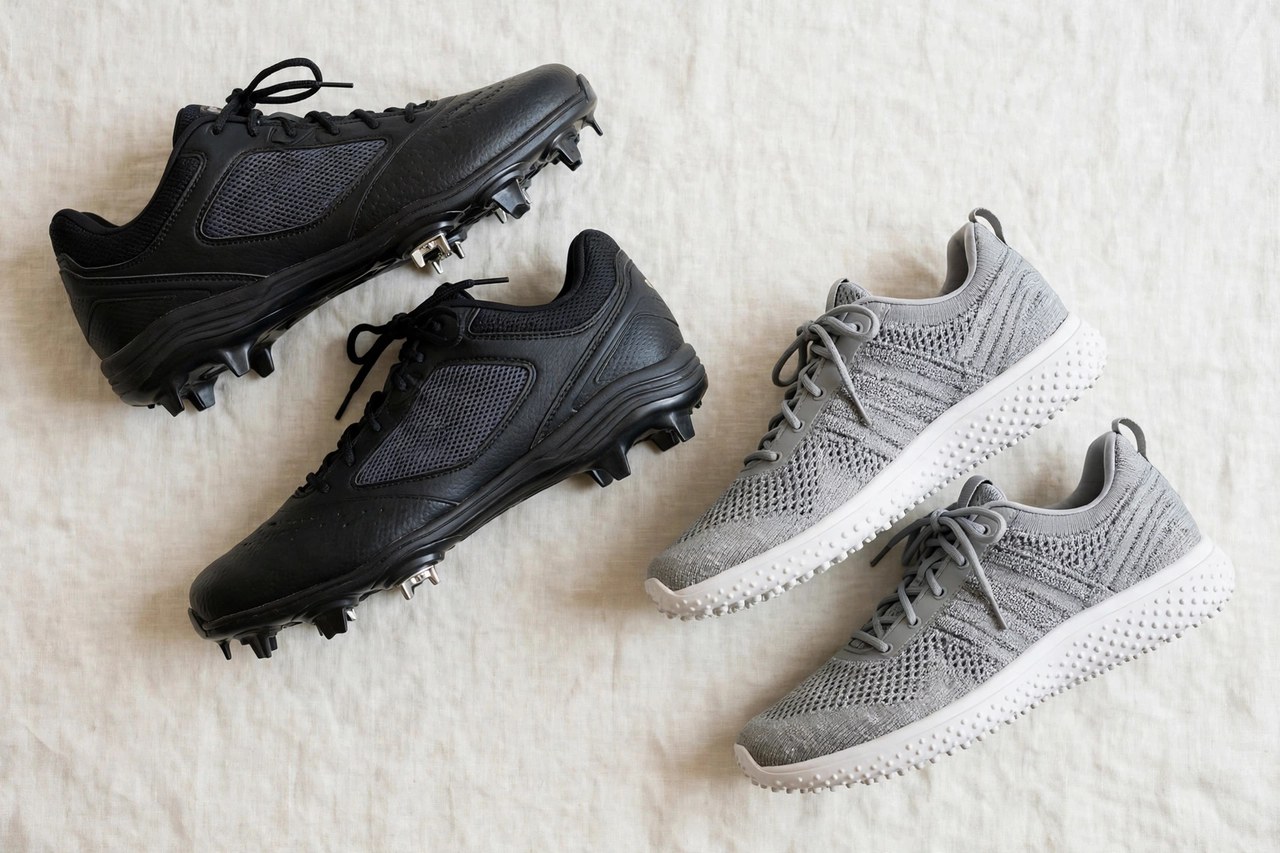
Men's baseball shoes are the whole footwear system of the sport - cleats for the field, turf shoes for practice and artificial surfaces, and trainers for the cage and the gym - and this guide treats them as one buying decision, because most players need more than one kind and the mistakes happen at the boundaries: cleats worn on concrete, trainers worn on wet grass, and practice habits that wear out the game pair. This guide is built around the questions buyers actually ask: which style, which size, which fabric, and what will it look like after a year of real use - answered in order, with the trade-offs stated plainly.
Styles and Construction
Cleats, covered in their own guide, are the game shoe: metal or molded spikes chosen by league and surface. Turf shoes replace spikes with dense rubber nubs that grip artificial turf and hard infields without damaging either the surface or the player's joints, and they double as the standard batting-practice and coaching shoe. Trainers are ordinary cushioned athletic shoes for dry gym and cage work. Uppers across the family split into leather (durable, breaks in, heavier) and synthetic or mesh builds (light, ready immediately, less long-lived).
Judge any pair by the same construction checklist: how the sole is attached (cemented soles are light and cheaper, stitched welts are repairable and dearer), what the lining does with moisture over a long day, and whether the insole is removable if you use your own supports. Weight matters more than most listings admit - a heavy pair taxes every step, while a well-balanced lighter pair disappears on the foot. Finally, check the outsole compound against your surfaces: hard rubber lasts, soft rubber grips, and the right answer is the one matched to where the shoes will actually walk, play or work.
Fit and Sizing
Buy the game cleat first and fit it like equipment - snug heel, swelling room at the toes, tried on late in the day with game socks. Turf shoes fit like trainers and can follow your normal athletic size. The common error is buying one pair to do everything: a player who practices four days a week in game cleats on mixed surfaces will destroy the spikes and the uppers before the season's midpoint.
Fit footwear at the end of the day, when feet are at their largest, wearing the socks you will actually use. There should be roughly a thumb's width - about half an inch - between your longest toe and the end of the shoe, the heel should hold without lifting out as you walk, and the widest part of your foot should sit in the widest part of the shoe. Sizes are not standardized between makers, so treat your measured length and width as the truth and the printed size as a starting guess; between sizes, the one that needs no breaking-in argument is usually right.
Wearing and Care
Assign each pair its surface and keep the rule - cleats never touch concrete beyond the walk from dugout to field, and even that walk is why toe guards and spike protectors exist. Clean and air every pair after use, rotate practice footwear, and replace cleats when spike length or sole integrity goes, not when the upper finally tears - traction fails first and quietly.
Care is rotation first: never wear the same pair on consecutive days if you can help it, because twenty-four hours lets moisture leave the lining and cushioning recover its shape. Brush or wipe down after wear, use trees or stuffing to hold the shape while drying, and never dry footwear on direct heat, which cracks leather and warps adhesives. Condition leather on schedule rather than on appearance - by the time it looks thirsty it is already dry - and reproof water-resistant finishes when water stops beading on the surface.
Common Questions
What baseball shoes does a player actually need?
Most players need two: a game cleat matched to their league and field surface, and a turf shoe or trainer for practice, cages and artificial surfaces. Playing and practicing in the one pair wears the cleats out early and leaves no backup when a sole fails. Coaches and umpires can live in turf shoes alone.
What is the difference between baseball cleats and turf shoes?
Cleats carry a small number of long spikes - metal or molded - that penetrate dirt and grass for maximum bite. Turf shoes carry many short rubber nubs that grip artificial turf and hard ground by surface contact. Each fails on the other's surface: spikes catch and strain joints on turf, nubs skate on wet natural fields.
How long do baseball cleats last?
A season of regular play is a fair expectation for a mid-priced cleat worn only on the field; two seasons is possible for lighter schedules with good care. The spikes and sole integrity decide retirement, not the upper's appearance - when traction goes or the sole plate cracks, the shoe is done however good it looks.
More in Men's Clothes Guide B
A Short History of Baseball Shoes
In the late 19th century, soft but durable leather shoes were the preferred choice of baseball players; detachable spikes became popular in the 20th century because they helped players avoid slipping, especially on turf, but they were banned in 1976; and in the 19th and early 20th centuries baseball shoes were commonly black, until the 1960s, when the Kansas City Athletics began wearing revolutionary white shoes — a tradition carried over when the team moved to Oakland. Since then, team-colored shoes have been part of the game’s dress.
More to Explore on Apparel Search
Looking for Men's Clothing Stores?
This guide explains men's baseball shoes. To browse where to buy, visit our men's clothing store directory, where you can find retailers that carry them.