Men's Cleats Guide
Men's cleats are athletic shoes whose soles carry protruding studs - cleats - that penetrate grass or dirt for traction: the footwear of football, soccer, baseball, lacrosse, rugby and golf's spiked branch. The baseball specialist version has its own guide in the B letter of this guide; this page is the umbrella - how stud systems differ by sport, why they are not interchangeable, and how to buy the pair your field and your league actually require.
Shop Men's Cleats Now
Shop Men's Cleats on Amazon Shop Men's Cleats on eBayThe Amazon and eBay links on this page are affiliate links. If you make a purchase through them, Apparel Search may earn a commission.
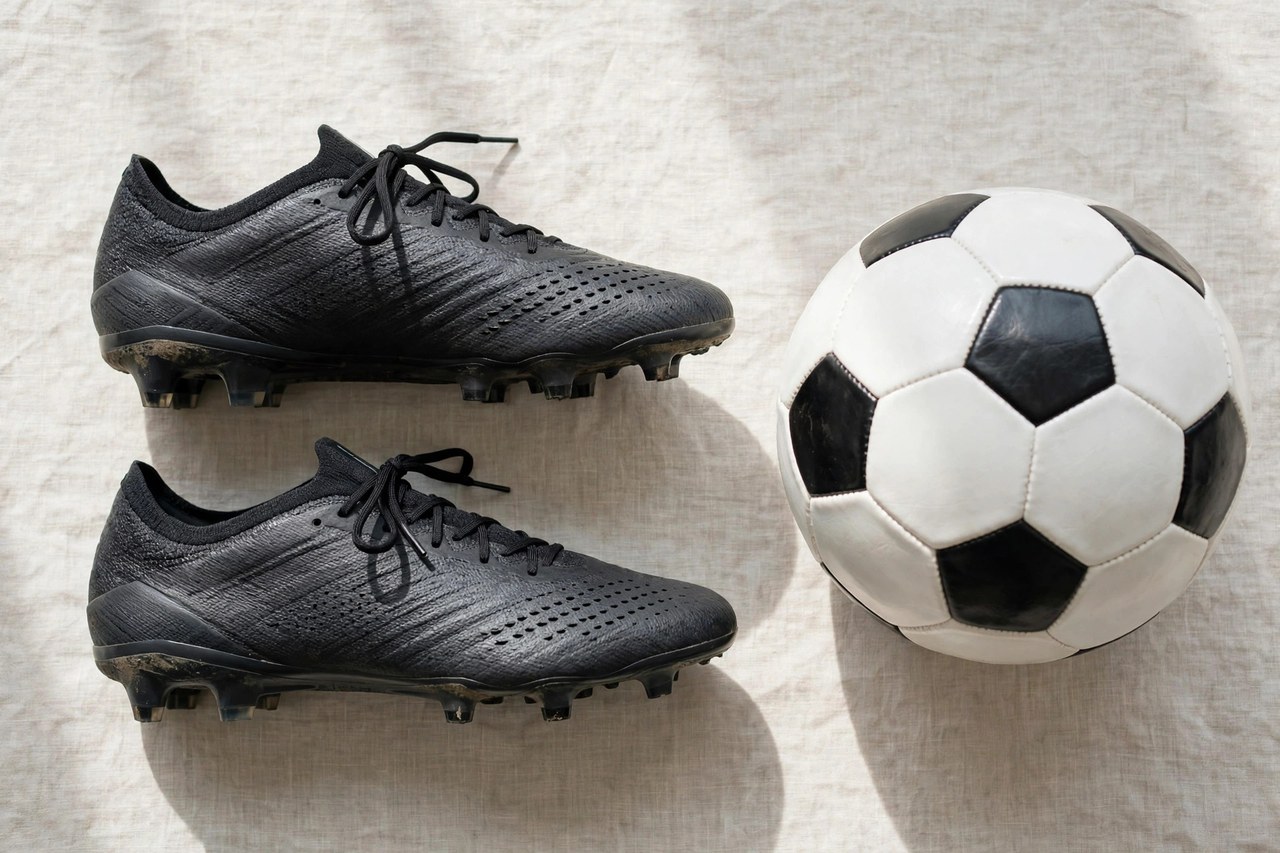
Men's cleats are athletic shoes whose soles carry protruding studs - cleats - that penetrate grass or dirt for traction: the footwear of football, soccer, baseball, lacrosse, rugby and golf's spiked branch. The baseball specialist version has its own guide in the B letter of this guide; this page is the umbrella - how stud systems differ by sport, why they are not interchangeable, and how to buy the pair your field and your league actually require. This guide covers the styles worth knowing, the fit points that decide comfort, the fabrics and construction that separate a good buy from a regret, and the simple care that makes the garment last.
Styles and Construction
Stud systems are sport-specific engineering. Soccer cleats use low-profile conical or bladed studs for a close ball feel on firm ground, with soft-ground versions carrying longer, partly metal studs. American football cleats add a toe stud for drive and come in lineman and skill-position cuts. Baseball cleats (see the B guide) run metal, molded or turf by league. Lacrosse splits the difference, and interchangeable-stud systems let serious players tune length to the day's surface. The governing rule: a stud pattern is a contract with one sport's movements and one surface's hardness.
Judge footwear by attachment and compound: cemented soles are light and affordable, stitched or welted constructions cost more and can be repaired, and the outsole rubber decides grip against longevity - soft compounds bite, hard compounds endure. Linings decide comfort over hours, removable insoles decide whether your own supports can come along, and honest weight decides whether the pair disappears on the foot or taxes every mile of the day.
Fit and Sizing
Fit cleats snugger than trainers - the foot must not travel inside a shoe whose studs are planted, or blisters and lost toenails follow - but keep a small toe margin for the game's swelling. Try them late in the day, in game socks, and simulate the sport's signature move: cut, plant, push. Check league rules before money changes hands: stud material, length and even color can be regulated, and a banned pair is an expensive practice shoe.
Fit footwear late in the day in the socks you will actually wear, with roughly a thumb's width beyond the longest toe, the heel held without lift, and the foot's widest point meeting the shoe's widest point. Sizes are unstandardized between makers - trust your measured length and width over the printed number, and require no break-in argument: a shoe that needs excuses in the shop delivers them on the road.
Wearing and Care
Knock plates together after every outing, brush studs clean, and stuff wet pairs with newspaper to dry at room temperature - heat warps plates and loosens studs. Tighten interchangeable studs before each game with the wrench, and keep a spare set: a lost stud mid-match is a traction emergency. Store cleats loose and ventilated, never sealed in the kit bag with last week's mud.
Rotation is the first care rule: a day of rest between wears lets linings dry and cushioning rebound, and it doubles a rotation's life compared with daily wear of one pair. Clean after use, dry at room temperature away from radiators, hold shape with trees or paper, and condition leather on a schedule rather than when it looks thirsty. Reproof weather finishes when water stops beading, and resole stitched footwear before the wear reaches the welt.
Common Questions
Can you wear soccer cleats for baseball, or the reverse?
Not safely or legally in most cases: baseball cleats lack soccer's low profile and can carry metal forbidden in soccer, while soccer cleats lack the baseball toe stud and their stud pattern is tuned for a different cutting motion. Leagues commonly prohibit cross-use, and studs built for one surface can catch dangerously in another sport's movement.
Metal or molded studs - which is better?
Metal bites best on natural, softer surfaces and is the high-level standard in several sports, but it is banned by many youth leagues and forbidden on synthetic turf. Molded TPU or rubber studs suit firm ground, mixed surfaces and most amateur play, cost less, and double as the safer default when you play more than one league.
How should cleats fit compared with running shoes?
Closer: a performance fit with the heel locked and no internal slide, because your studs fix the shoe to the ground while your body moves over it. Keep roughly a quarter to half inch at the toes. If your toes jam the end on a hard stop, go up; if your heel lifts when you cut, go down or change model.
More in Men's Clothes Guide C
One Word, Many Sports
Cleats are a cross-sport family: baseball cleats and soccer cleats sit beside athletic shoes and the wider footwear guides, and the baseball specialist version has its own full guide in the B letter. For all their shared name, the members of this family are not interchangeable.
Looking for Men's Clothing Stores?
This guide explains men's cleats. To browse where to buy, visit our men's clothing store directory, where you can find retailers that carry them.