Men's Cycling Apparel Guide
Men's cycling apparel is clothing engineered for the bicycle: close-fitting jerseys that do not flap, padded shorts built for the saddle, and layers that manage wind, sweat and weather at riding speed. It looks technical because every feature answers the bike's physics - a rider makes his own 20-mile-an-hour wind in still air, sits on a narrow saddle for hours, and pedals in a bent position no walking garment is cut for.
Shop Men's Cycling Apparel Now
Shop Men's Cycling Apparel on Amazon Shop Men's Cycling Apparel on eBayThe Amazon and eBay links on this page are affiliate links. If you make a purchase through them, Apparel Search may earn a commission.
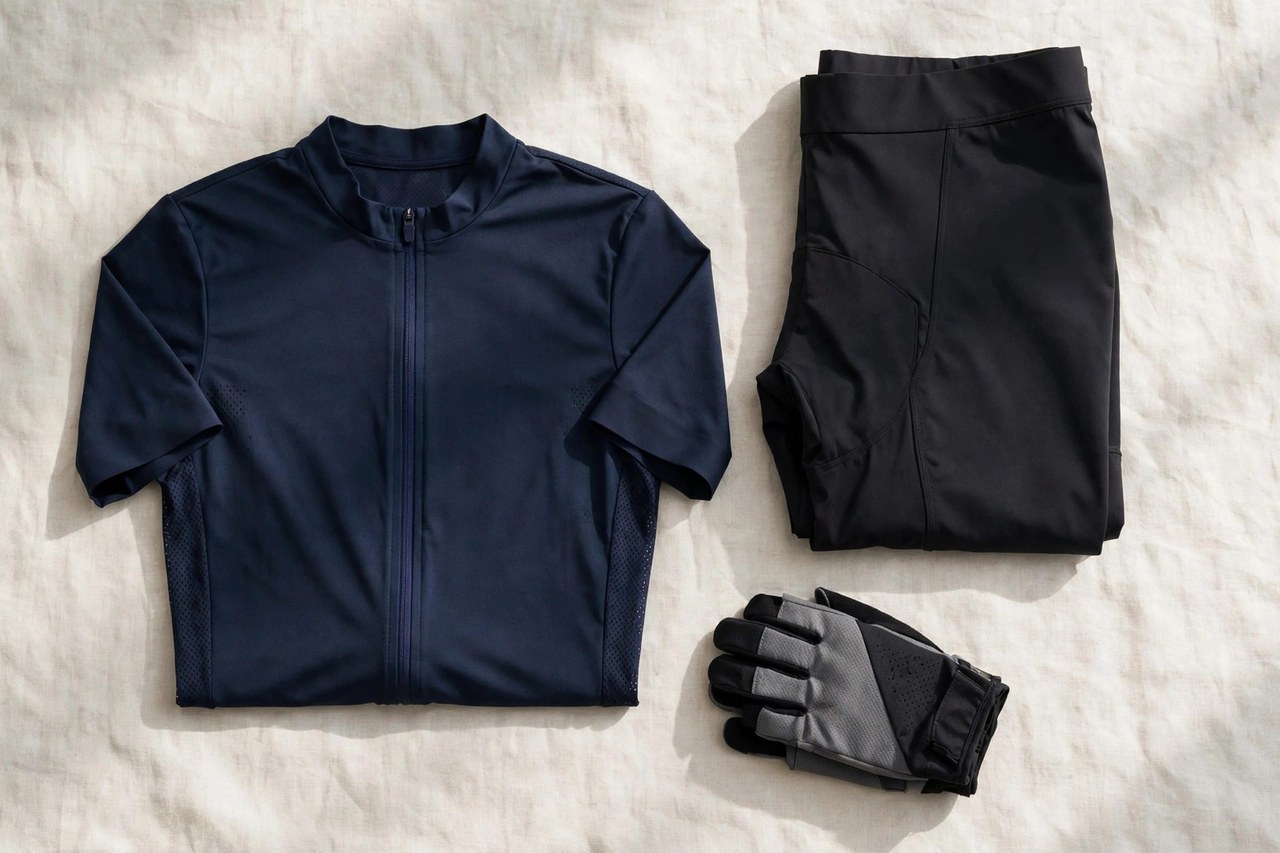
Men's cycling apparel is clothing engineered for the bicycle: close-fitting jerseys that do not flap, padded shorts built for the saddle, and layers that manage wind, sweat and weather at riding speed. It looks technical because every feature answers the bike's physics - a rider makes his own 20-mile-an-hour wind in still air, sits on a narrow saddle for hours, and pedals in a bent position no walking garment is cut for. This guide is built around the questions buyers actually ask: which style, which size, which fabric, and what will it look like after a year of real use - answered in order, with the trade-offs stated plainly.
Styles and Construction
The core kit is three pieces. The jersey: a zippered, rear-pocketed top in wicking knit, cut longer at the back to cover the bent position, with grippers that hold it there. The shorts or bib shorts: a padded insert (the chamois) sewn where body meets saddle, in compressive stretch fabric - bibs hold position without a waistband and are the serious rider's default. Around them: a wind vest or jacket that packs to pocket size, arm and leg warmers for changeable days, gloves that pad the palm and wipe the brow, and eyewear that doubles as a windscreen. Road kit fits like skin; mountain and gravel kit loosens toward trail clothing; commuter kit hides the tech in ordinary-looking cloth.
The durable buying order is job, specification, budget - in that sequence. Decide what the garment must do, translate that into fiber, weight, construction and size numbers, and only then shop price. Read labels as specifications, inspect the garment inside out where finishing is unposed, and prefer the maker who publishes measurements to the one who publishes adjectives. A garment that matches your measurements, climate and laundry will be worn; one that misses any of the three becomes expensive storage.
Fit and Sizing
Fit cycling apparel by the riding position, not the mirror: bend as if on the bike and check the jersey's back coverage, the shorts' pad placement (it should sit under your sit bones when bent, not when standing), and that nothing binds the knee's stroke or the neck's look-up. Compression should support without numbness. Sizes run smaller and more European than American street clothes - buy by the brand's centimeter chart, and expect the first kit to feel a size brave until the first ride explains it.
Measure yourself once a year and keep the numbers - chest, waist, inseam, foot, head - because bodies drift gradually while size habits never do. Shop from measurements, try garments under real conditions (over layers, in your own shoes, late in the day for footwear), and be honest about alterations: lengths and small waist changes tailor beautifully; shoulders, rises and patterns are the garment you bought forever.
Wearing and Care
Wash cycling kit after every ride - the chamois is a hygiene item - cool and gentle, no softener (it coats the pad and the wicking fibers), and hang-dry out of sun, which degrades the elastane that is the kit's fit. Inspect the pad's stitching and the shorts' seat for wear: shorts are the consumable of the sport, and a worn pad announces itself on mile thirty of the next ride, mid-ride, without appeal.
Five minutes when a garment comes off - shake it out, hang or fold it correctly, note the stain and the loose button - prevents most of the damage later blamed on quality. Keep a small kit where the clothes live: brush, lint roller, conditioner suited to your leathers, black, navy and grey thread. Clothing rarely dies at once; it fades by small neglects, and small attentions reverse the process at the same pace.
Common Questions
Why do cycling shorts have padding?
The chamois pads the sit-bone contact, reduces friction between skin and saddle over thousands of pedal strokes, and manages moisture at the contact point. It is not a cushion so much as an interface, shaped and channeled for anatomy and saddle shape. Correct pad position - achieved by the bent riding fit - matters more than pad thickness.
Bib shorts or waist shorts?
Bibs, for most riders who try both: the straps hold the pad exactly in place with no waistband to dig in the bent position, and nothing migrates on long rides. Waist shorts are easier for breaks and cheaper, and suit shorter and casual riding. The pad and fabric quality matter more than the format at entry level.
Do you wear underwear under cycling shorts?
No - the chamois is designed to sit against skin, and underwear under it adds seams, bunching and friction that cause exactly the chafing the pad exists to prevent. This is the sport's firmest clothing rule, and new riders who break it learn it in one long ride. Wash the shorts after every ride and the arrangement is perfectly hygienic.
More in Men's Clothes Guide C
Compression and the Kit
Cycling clothing is a system of engineered pieces rather than a jersey worn alone, and the kit connects outward to its technical relatives, compression shorts among them. Every piece of the kit answers the bicycle’s physics, and it is bought, fitted and washed as a system.
Looking for Men's Clothing Stores?
This guide explains men's cycling apparel. To browse where to buy, visit our men's clothing store directory, where you can find retailers that carry them.