Men's Combat Boots Guide
Men's combat boots are military-pattern boots: ankle-to-mid-calf leather boots with speed lacing, lugged rubber soles and a construction built for marching, standing and working in any terrain an army issues. Civilian versions range from genuine surplus and current-issue patterns to fashion interpretations, and the design's virtues are the soldier's virtues - support, durability, grip and the ability to be repaired in the field.
Shop Men's Combat Boots Now
Shop Men's Combat Boots on Amazon Shop Men's Combat Boots on eBayThe Amazon and eBay links on this page are affiliate links. If you make a purchase through them, Apparel Search may earn a commission.
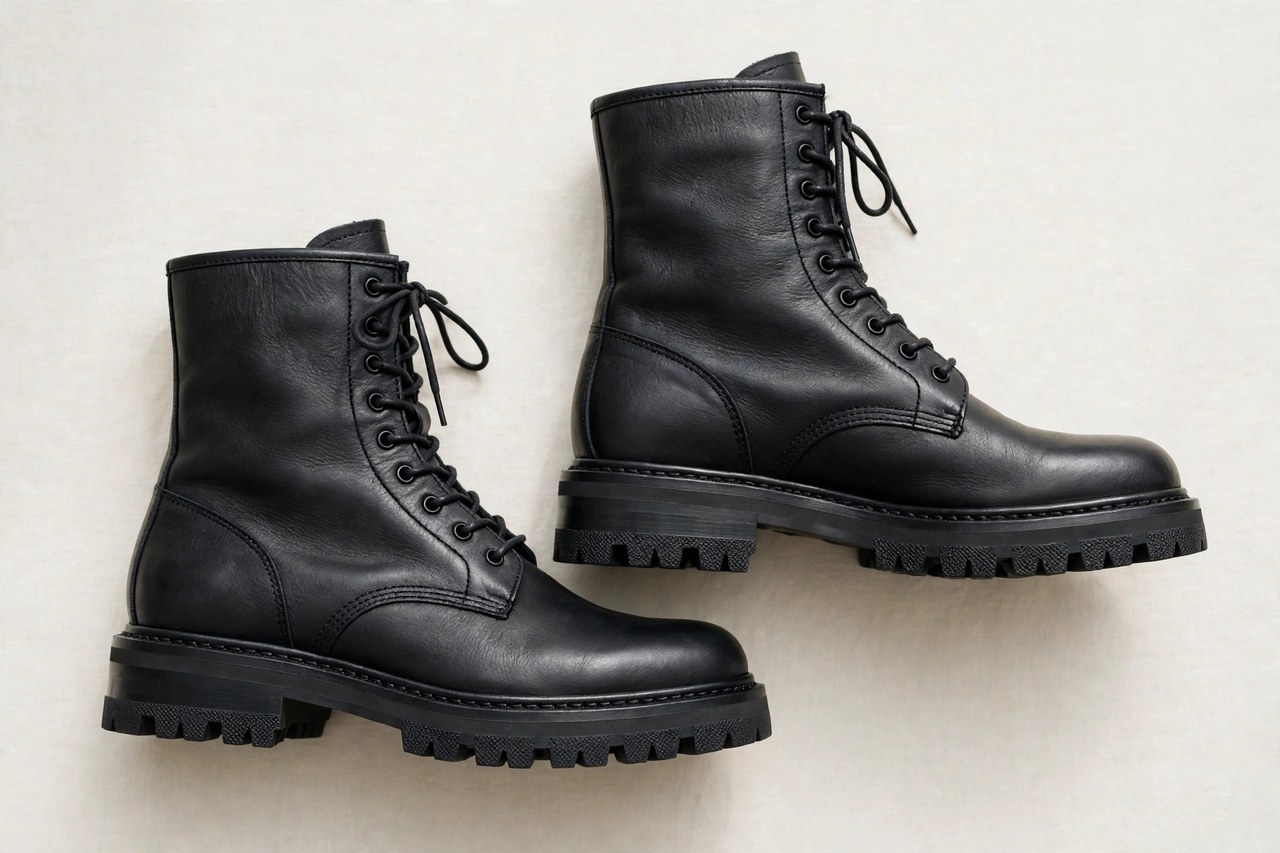
Men's combat boots are military-pattern boots: ankle-to-mid-calf leather boots with speed lacing, lugged rubber soles and a construction built for marching, standing and working in any terrain an army issues. Civilian versions range from genuine surplus and current-issue patterns to fashion interpretations, and the design's virtues are the soldier's virtues - support, durability, grip and the ability to be repaired in the field. This guide covers the styles worth knowing, the fit points that decide comfort, the fabrics and construction that separate a good buy from a regret, and the simple care that makes the garment last.
Styles and Construction
An issue-style combat boot runs eight to ten inches high in full-grain or suede roughout leather, on a direct-molded or stitched lug sole, with drainage eyelets on temperate and jungle patterns and insulation on cold-weather ones. Modern military patterns added athletic-shoe midsoles and lighter weights, and civilian buyers inherit both generations: the classic leather boot that breaks in like a tool, and the modern hybrid that walks like a trainer. Fashion versions keep the silhouette and skip the substance - check sole attachment and leather grade to tell them apart.
Judge footwear by attachment and compound: cemented soles are light and affordable, stitched or welted constructions cost more and can be repaired, and the outsole rubber decides grip against longevity - soft compounds bite, hard compounds endure. Linings decide comfort over hours, removable insoles decide whether your own supports can come along, and honest weight decides whether the pair disappears on the foot or taxes every mile of the day.
Fit and Sizing
Fit combat boots with the socks of their intended use - military and work wearers should size over a liner plus a wool sock - with a thumb's width at the toes for descents and swelling, and the heel locked by the lacing rather than by tightness at the toe. Leather combat boots break in over weeks, not days: short wears first, lace snug at the ankle, and let the boot mold before judging it. A boot bought for fashion can fit closer; a boot bought for marching cannot.
Fit footwear late in the day in the socks you will actually wear, with roughly a thumb's width beyond the longest toe, the heel held without lift, and the foot's widest point meeting the shoe's widest point. Sizes are unstandardized between makers - trust your measured length and width over the printed number, and require no break-in argument: a shoe that needs excuses in the shop delivers them on the road.
Wearing and Care
Combat boots are maintained like equipment: brush off the day, dry slowly away from heat (forced drying cracks leather and is the classic barracks mistake), condition full-grain leather, and keep a second pair in rotation so each dries fully - armies issue two pairs for exactly this reason. Resole stitched pairs before the wear reaches the welt, and treat suede roughout with a brush and eraser rather than polish.
Rotation is the first care rule: a day of rest between wears lets linings dry and cushioning rebound, and it doubles a rotation's life compared with daily wear of one pair. Clean after use, dry at room temperature away from radiators, hold shape with trees or paper, and condition leather on a schedule rather than when it looks thirsty. Reproof weather finishes when water stops beading, and resole stitched footwear before the wear reaches the welt.
Common Questions
How long do combat boots take to break in?
Classic full-leather issue boots take two to four weeks of graduated wear - short walks building to full days - as the leather molds to ankle and instep. Modern hybrid patterns with athletic midsoles feel right almost immediately. Rushing a classic boot into a long march is how blisters teach patience.
Are combat boots good for hiking?
For rugged, wet, load-carrying use they are proven - support, grip and durability are their design brief - but they are heavier than dedicated hiking boots and slower to dry. Trail hikers covering distance usually prefer the lighter modern boot; workers and anyone who values durability over weight keep choosing the combat pattern.
What is the difference between combat boots and work boots?
Combat boots are patterned for marching and military specification - taller shafts, speed lacing, drainage and terrain soles - while work boots are patterned for trades hazards, often with safety toes, electrical ratings and job-specific soles. The overlap is large, but a boot certified for a site hazard is a work boot whatever it looks like.
More in Men's Clothes Guide C
Looking for Men's Clothing Stores?
This guide explains men's combat boots. To browse where to buy, visit our men's clothing store directory, where you can find retailers that carry them.