Men's Military Boots Guide
Military boots are footwear built to an armed force's specification - and the combat boot at their center is designed to be worn by soldiers during combat or combat training, as opposed to during parades and other ceremonial duties. Modern combat boots are designed to provide a combination of grip, ankle stability and foot protection suitable for a rugged environment, traditionally in hardened and sometimes waterproofed leather. This guide covers the genuine article, its climate and duty variants, and the civilian life the style leads - the boots are also worn by the non-military as a functional and sometimes fashionable shoe.
Shop Men's Military Boots Now
Shop Men's Military Boots on Amazon Shop Men's Military Boots on eBayThe Amazon and eBay links on this page are affiliate links. If you make a purchase through them, Apparel Search may earn a commission.
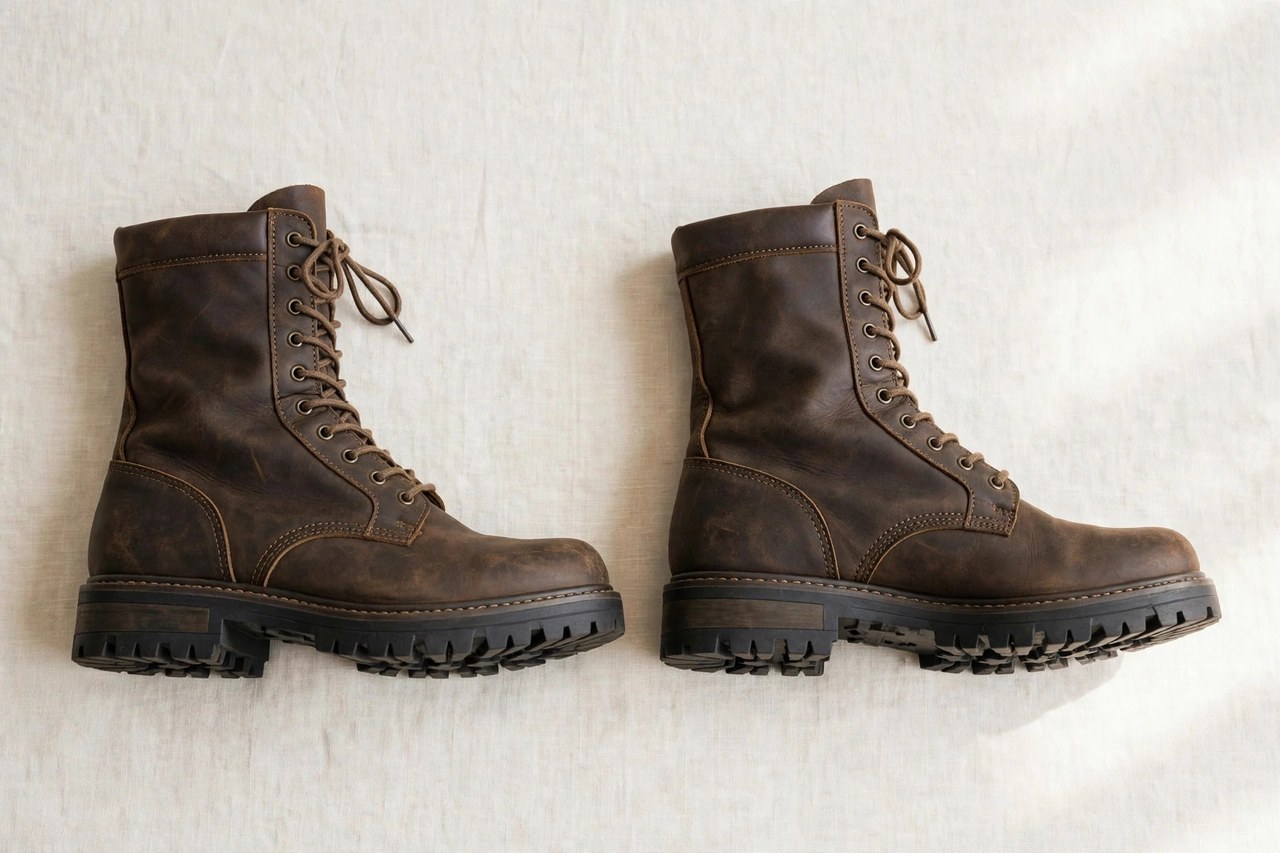
Military boots are footwear built to an armed force's specification - and the combat boot at their center is designed to be worn by soldiers during combat or combat training, as opposed to during parades and other ceremonial duties. Modern combat boots are designed to provide a combination of grip, ankle stability and foot protection suitable for a rugged environment, traditionally in hardened and sometimes waterproofed leather. This guide covers the genuine article, its climate and duty variants, and the civilian life the style leads - the boots are also worn by the non-military as a functional and sometimes fashionable shoe. This guide is built around the questions buyers actually ask: which style, which size, which fabric, and what will it look like after a year of real use - answered in order, with the trade-offs stated plainly.
Climate and Duty Variants
Sort by climate and duty, because the variants barely overlap. The temperate combat boot is the generalist: leather and breathable panel construction, a lugged sole, ankle support for load carriage. Jungle boots drain and dry - vents, nylon uppers, soles that shed mud - for hot wet ground. Desert boots run lighter in color and build for heat and sand. Cold-weather boots insulate, sometimes with a vapor-barrier build for extreme cold. Tanker boots close with straps rather than laces that could snag or burn, and jump boots add the reinforced ankle support of parachute landings. Civilian-made 'military style' boots copy silhouettes with fashion soles and linings; the genuine specifications - and the surplus and contract-made boots that meet them - are a different durability class, and the price difference is the tell. Technologies from civilian hiking, such as waterproof-breathable membranes and nylon side panels, now run through the modern military lines.
Judge footwear by attachment and compound: cemented soles are light and affordable, stitched or welted constructions cost more and can be repaired, and the outsole rubber decides grip against longevity - soft compounds bite, hard compounds endure. Linings decide comfort over hours, removable insoles decide whether your own supports can come along, and honest weight decides whether the pair disappears on the foot or taxes every mile of the day.
Fit for Load and Distance
Fit a military boot for the load and the distance: a thumb's width beyond the longest toe, room for the thick sock system the climate demands, and a heel and ankle held firmly enough that the foot does not swim - blisters are a fit failure before they are a toughness failure. Lace for the day's work: snug at the ankle for support under load, with the instep secure and the toe free. New leather combat boots have an honest break-in measured in short wears over days, not one long march - the boot that is marched twenty miles on day one will teach the lesson on your feet instead. Sizes in surplus and contract boots follow their nations' systems; convert carefully and trust measured foot length over any printed equivalence.
Fit footwear late in the day in the socks you will actually wear, with roughly a thumb's width beyond the longest toe, the heel held without lift, and the foot's widest point meeting the shoe's widest point. Sizes are unstandardized between makers - trust your measured length and width over the printed number, and require no break-in argument: a shoe that needs excuses in the shop delivers them on the road.
Field Care, Civilian Reward
Field care is simple and strict: brush off the day, let the boots dry at ambient temperature - never baked by a heater, which cracks leather and kills adhesives - and rotate pairs where the duty allows, because a boot worn daily without rest dies young however it was built. Condition leather as the specification directs (some military leathers take only specific products), reproof waterproofing when water stops beading, and watch the sole's lugs: a combat boot's grip is its contract with the ground, and worn smooth is worn out. Civilian owners inherit the same rules and the same reward - a boot built for the worst use case in footwear, kept to its care standard, outlasts fashion footwear by years.
Rotation is the first care rule: a day of rest between wears lets linings dry and cushioning rebound, and it doubles a rotation's life compared with daily wear of one pair. Clean after use, dry at room temperature away from radiators, hold shape with trees or paper, and condition leather on a schedule rather than when it looks thirsty. Reproof weather finishes when water stops beading, and resole stitched footwear before the wear reaches the welt.
Common Questions
What is the difference between combat boots and parade boots?
Duty. Combat boots are designed for combat and combat training - grip, ankle stability and foot protection in a rugged environment, with variants for jungle, desert and cold-weather conditions. Parade and ceremonial boots are finished for appearance: high shine, dress profile, and no pretense of field performance. That distinction is the first sort to make when buying, surplus or new.
Why do people wear military boots as fashion?
The adoption is plain: combat boots became popular in goth, punk, grunge, heavy metal, industrial and other subcultures, and have grown more mainstream since - worn for durability, comfort and utility as much as for the look. It is a rational fashion: few civilian boots are built to a harder specification, and a boot designed to be comfortable for long durations in changing conditions serves a city day as faithfully as a field one.
How should military boots be broken in?
Gradually. Wear new leather combat boots for short periods over several days, increasing distance as the leather forms to your foot and ankle, with the sock system you will actually use. A single long first march is the classic mistake - it produces the blisters and hot spots that the gradual method avoids. Fit helps: a thumb's width at the toe, a firmly held heel and ankle, and lacing matched to the day's load.
More in Men's Clothes Guide M
Combat Boots, Defined and Adopted
Combat boots are military boots designed to be worn by soldiers during combat or combat training, as opposed to during parades and other ceremonial duties; modern combat boots are designed to provide a combination of grip, ankle stability and foot protection suitable for a rugged environment, traditionally made of hardened and sometimes waterproofed leather, and today often incorporating technologies from civilian hiking boots, such as waterproof-breathable nylon side panels. They are specialized for climates and conditions — jungle boots, desert boots, cold weather boots — and for uses such as tanker boots and jump boots. Combat boots also have a second life: they are popular as fashion in the goth, punk, grunge, heavy metal, industrial and other subcultures, and increasingly mainstream, chosen by many simply for durability, comfort and utility over long durations in changing conditions. The boots definition, hunting boots and hunting apparel are linked below.
Looking for Men's Clothing Stores?
This guide explains men's military boots. To browse where to buy, visit our men's clothing store directory, where you can find retailers that carry them.