Men's Military Uniforms Guide
A military uniform is the standardized dress of an armed force - the clothing system by which a service identifies its members, their branch, their rank and their role at a glance. A uniform remains exactly that: not a garment but a code, in which every element - cut, color, insignia, headwear, footwear - carries information. This guide explains how the system is organized, what its main orders of dress are, and what civilians buying military-style or surplus clothing should understand about what they are wearing.
Shop Men's Military Uniforms Now
Shop Men's Military Uniforms on Amazon Shop Men's Military Uniforms on eBayThe Amazon and eBay links on this page are affiliate links. If you make a purchase through them, Apparel Search may earn a commission.
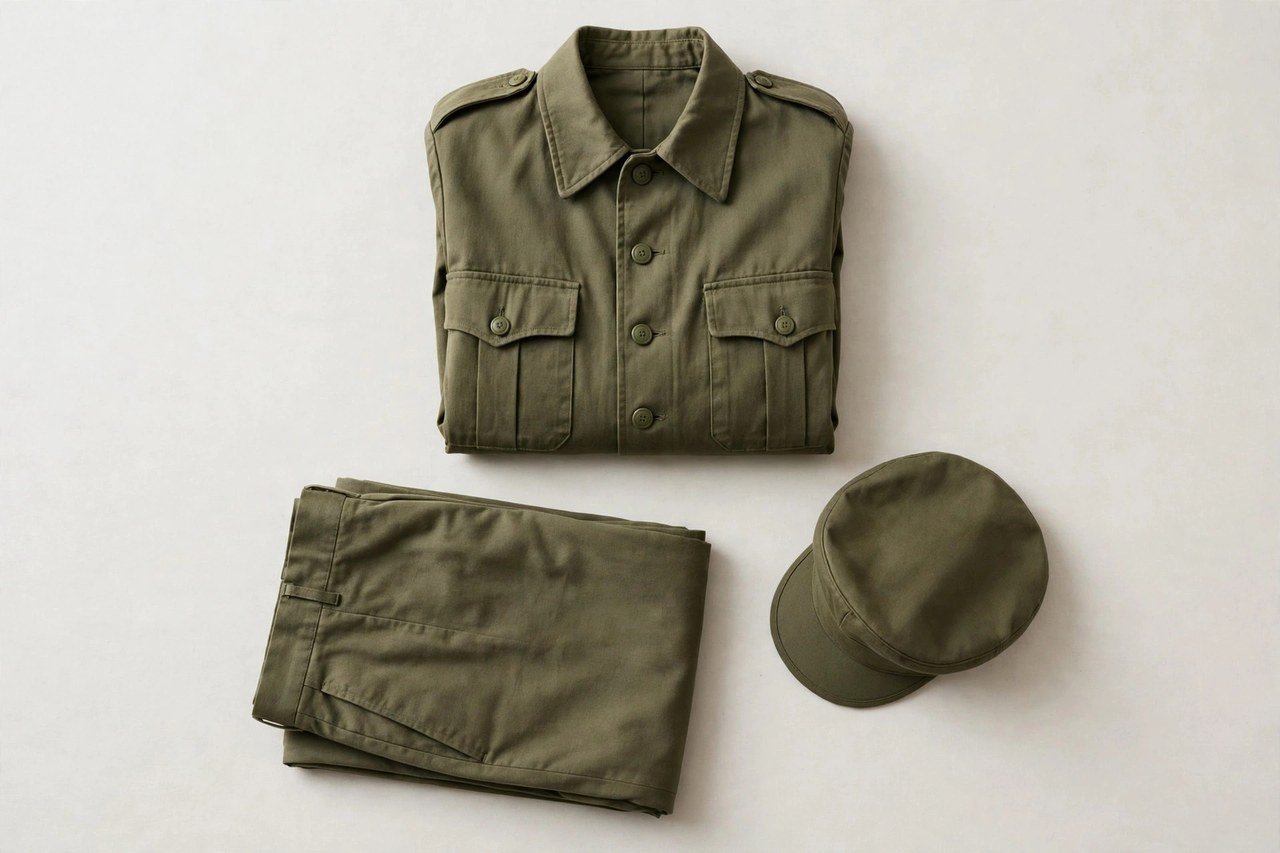
A military uniform is the standardized dress of an armed force - the clothing system by which a service identifies its members, their branch, their rank and their role at a glance. The system runs from the uniform factories that produce the clothing to the military boots that ground it; and a uniform remains exactly that: not a garment but a code, in which every element - cut, color, insignia, headwear, footwear - carries information. This guide explains how the system is organized, what its main orders of dress are, and what civilians buying military-style or surplus clothing should understand about what they are wearing. This guide is built around the questions buyers actually ask: which style, which size, which fabric, and what will it look like after a year of real use - answered in order, with the trade-offs stated plainly.
Orders of Dress
The system sorts into orders of dress. Full and ceremonial dress is the formal face: tailored, decorated, built for parades and state occasions. Service dress is the office and formal-duty uniform - jacket, tie, insignia - the uniform of headquarters and ceremonies short of parade. Field and combat dress is the working system: camouflage utilities cut for load carriage and movement, layered for climate, worn with the boots of our military boots guide and the webbing and packs that are equipment rather than clothing. Physical training dress, mess dress for formal dining, and the specialized clothing of aircrew, tank crews and cold-weather units complete the set. Camouflage patterns themselves are national signatures - each service's pattern is engineered for its terrain and jealously identified with it, which is why surplus patterns read as instantly as flags.
Workwear is judged at the stress points, because the job finds them first: bar-tacked pocket corners and belt loops, double or triple-stitched main seams, reinforced knees, elbows and seats, and hardware - zippers, snaps, rivets - rated for daily cycling rather than occasional wear. Fabric weight is a specification, not a brag: heavier cloth resists abrasion and holds shape, lighter cloth breathes and dries, and the right answer is the one matched to the actual shift, climate and laundry the garment will live in.
Regulation Fit, Coded Sizes
Fit in a military uniform is regulation fit: the garment is sized and tailored to a standard silhouette, not to fashion. Utilities are cut generously for movement and layering - the room is for insulation and load, not slack - while service and ceremonial dress are fitted and often tailored to the individual, with the jacket closing cleanly, trousers breaking once, and headwear sitting at the regulation angle. Civilians buying surplus should know that military sizing is honest but coded: sizes run by chest, waist, height and build in national systems, and the garment that fits by those numbers will fit as designed - boxy where the design is boxy, because concealment and layering, not silhouette, were the brief.
Fit workwear in the postures of the job: reach overhead, bend, kneel, climb, sit through a charting session or a cab ride. Seams should never be the thing that stops a movement, waistbands should stay where they were put without a belt doing structural work, and lengths should clear the floor and the machinery. Work garments are sized generously by design - buy your measured size and let the cut do its job, rather than sizing down into a uniform that fights every task.
Condition Is Inspected
Care is part of the code: a uniform's condition is itself inspected. Field clothing is laundered hard and often, with the caveat that some modern uniforms carry insect-repellent and flame-resistant treatments that specific washing preserves or destroys - follow the garment's own label, because the treatment is part of the specification. Service dress is pressed to regulation creases, boots are maintained to the standard of the order of dress, and insignia are kept correct and current. The civilian surplus owner inherits a simpler version: wash field pieces as workwear, store the set together, and wear the uniform's elements with the respect due to a code that other men earned - decorations and rank insignia, in particular, are not costume jewelry.
Work garments earn a laundry system, not a laundry day: wash by the employer's or the label's hygiene rules, treat stains before heat can set them, and inspect as you fold - a pocket corner letting go, a hem fraying, a button hanging by a thread are all two-minute repairs now and garment failures next month. Keep the rotation honest: a spare set washed and ready is what makes daily laundering possible without wearing any single set to death.
Common Questions
What are the main types of military uniform?
By order of dress: ceremonial or full dress for parades and state occasions; service dress, the tailored office and formal-duty uniform; field or combat dress - camouflage utilities built for movement, layering and load; and the specialized sets around them, from mess dress for formal dining to PT kit and the clothing of aircrew and armored crews. Each order is a complete system of garments, insignia, headwear and footwear.
Why do military uniforms use camouflage patterns?
Concealment engineered by terrain: a pattern breaks up the wearer's outline against the environments the force expects to fight in - woodland, desert, urban, and now multi-terrain patterns that compromise across them. Patterns are also national and service signatures, designed, tested and issued as identity as much as concealment, which is why genuine surplus in a current pattern is both recognizable and, in some countries, restricted.
Can civilians wear military uniforms?
Military-style and surplus clothing is widely and legally worn as civilian dress in many places - the boots, field jackets and utilities in this guide's family are fashion staples. The line is impersonation: wearing a complete current uniform with rank, decorations or insignia to pass as a service member is restricted or illegal in many jurisdictions and disrespectful everywhere. Wear the garments; leave the earned insignia off.
More in Men's Clothes Guide M
The Uniform and Its Makers
The uniform factories that produce such clothing, the military boots guide beside this one, and the camo hunting clothes guide that carries the camouflage story into civilian dress are all linked from this page. The letter’s only outside references — to Military.com and its guide to joining the armed forces — are in the References list below.
More to Explore on Apparel Search
References & Further Reading
Looking for Men's Clothing Stores?
This guide explains men's military uniforms. To browse where to buy, visit our men's clothing store directory, where you can find retailers that carry them.