Men's Cowboy Boots Guide
Men's cowboy boots are the Western boot: a tall, pull-on leather boot with a pointed or rounded toe, an angled riding heel and a stitched shaft, evolved on the American range for stirrup work. The design is a tool that became an icon - the toe slides into a stirrup, the heel keeps the foot from sliding through it, the tall shaft guards the calf against brush, rope and stirrup leather - and every element of its look is one of those jobs made handsome.
Shop Men's Cowboy Boots Now
Shop Men's Cowboy Boots on Amazon Shop Men's Cowboy Boots on eBayThe Amazon and eBay links on this page are affiliate links. If you make a purchase through them, Apparel Search may earn a commission.
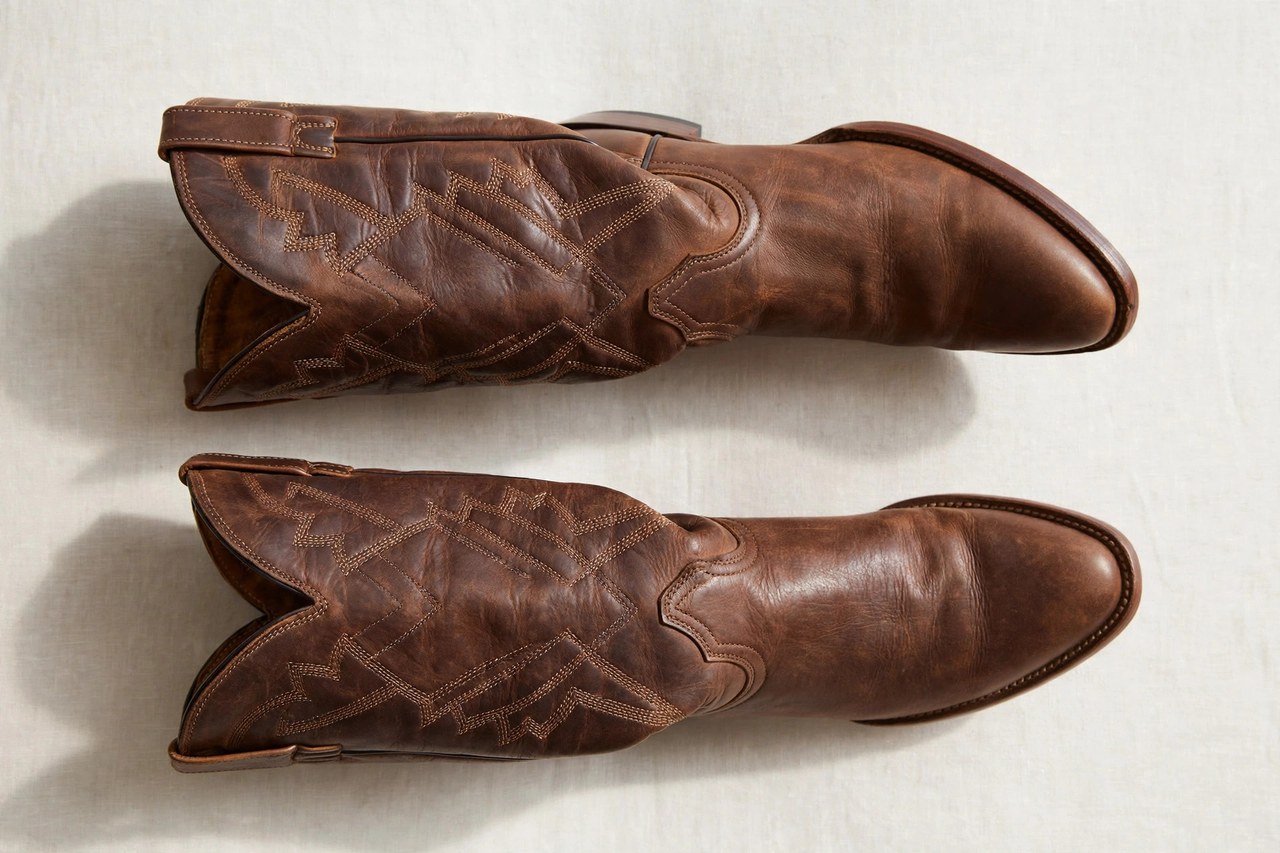
Men's cowboy boots are the Western boot: a tall, pull-on leather boot with a pointed or rounded toe, an angled riding heel and a stitched shaft, evolved on the American range for stirrup work. The design is a tool that became an icon - the toe slides into a stirrup, the heel keeps the foot from sliding through it, the tall shaft guards the calf against brush, rope and stirrup leather - and every element of its look is one of those jobs made handsome. This guide is built around the questions buyers actually ask: which style, which size, which fabric, and what will it look like after a year of real use - answered in order, with the trade-offs stated plainly.
Styles and Construction
The pattern vocabulary is worth learning. Toes run classic pointed, snip, round, and the modern broad square; heels divide into the tall angled riding (cowboy) heel, the lower roper heel for walking and roping work, and stockman variants. Shaft stitching - the rows of decorative thread - is the maker's signature. Leathers run from calf and cowhide through roper-friendly roughouts to exotics: ostrich, lizard, caiman and snake, priced by rarity and care demands. Construction is traditionally a leather insole and a stitched, pegged or welted sole; a well-made cowboy boot is resoleable for decades.
Judge footwear by attachment and compound: cemented soles are light and affordable, stitched or welted constructions cost more and can be repaired, and the outsole rubber decides grip against longevity - soft compounds bite, hard compounds endure. Linings decide comfort over hours, removable insoles decide whether your own supports can come along, and honest weight decides whether the pair disappears on the foot or taxes every mile of the day.
Fit and Sizing
Fit is the famous puzzle: a new cowboy boot should slip at the heel - a quarter to half an inch - because the boot has no laces and the heel seats as the insole molds; the instep, not the toes, holds the boot on, and it should grip snugly without pain. Toes need room to lie naturally - pointed toes extend beyond the toes' ends by design, so judge length by the ball's position in the boot's widest part, not by toe-touching. If the instep is loose, no break-in will fix it; if the heel slips and the instep grips, you have it right.
Fit footwear late in the day in the socks you will actually wear, with roughly a thumb's width beyond the longest toe, the heel held without lift, and the foot's widest point meeting the shoe's widest point. Sizes are unstandardized between makers - trust your measured length and width over the printed number, and require no break-in argument: a shoe that needs excuses in the shop delivers them on the road.
Wearing and Care
Condition the shaft and vamp regularly - tall leather dries and cracks at the ankle flex first - use boot trees or rolled paper to hold the shaft upright, and keep exotics on their own care regime (reptile leathers want specific conditioners and no polish). Pull boots by their straps, remove them with a boot jack rather than the other boot's toe, and resole before the wear reaches the welt. Kept so, a good pair outlasts the truck it rides in.
Rotation is the first care rule: a day of rest between wears lets linings dry and cushioning rebound, and it doubles a rotation's life compared with daily wear of one pair. Clean after use, dry at room temperature away from radiators, hold shape with trees or paper, and condition leather on a schedule rather than when it looks thirsty. Reproof weather finishes when water stops beading, and resole stitched footwear before the wear reaches the welt.
The cowboy boot's working sibling is the roper boot - a shorter heel and a build made for time on the ground as much as in the saddle.
For the other great American boot tradition, see the harness boot and its ring-and-strap hardware.
Common Questions
Why do new cowboy boots slip at the heel?
Because they must: with no laces, the boot is held by the instep, and the stiff leather sole cannot flex with your heel until it breaks in. The slip - about a quarter to half an inch - diminishes as the insole molds to your foot over the first wears. Heel slip with a snug instep is a correct fit; slip with a loose instep is a wrong size.
What toe style should a first-time buyer choose?
A classic or round toe in a roper or traditional heel is the most versatile start: it walks comfortably, works in a stirrup, and reads Western without costume. Square toes maximize toe room and read modern; sharp points are the classic dress statement but add length some men dislike. Match the toe to your feet first and your hat second.
Are cowboy boots suitable for everyday wear?
Yes - millions wear them as daily boots, and the roper pattern exists precisely for men who walk as much as ride. The tall shaft supports the ankle, the leather handles weather and work, and a broken-in pair is all-day comfortable. Choose the sole for your surfaces: leather soles are traditional and slippery on wet pavement; rubber-lugged roper soles are the practical everyday compromise.
More in Men's Clothes Guide C
Westernwear
Cowboy boots are one piece of westernwear as a whole — a working wardrobe that includes the hat, the stores that sell both, and the shoe stores beside them.
More to Explore on Apparel Search
Looking for Men's Clothing Stores?
This guide explains men's cowboy boots. To browse where to buy, visit our men's clothing store directory, where you can find retailers that carry them.