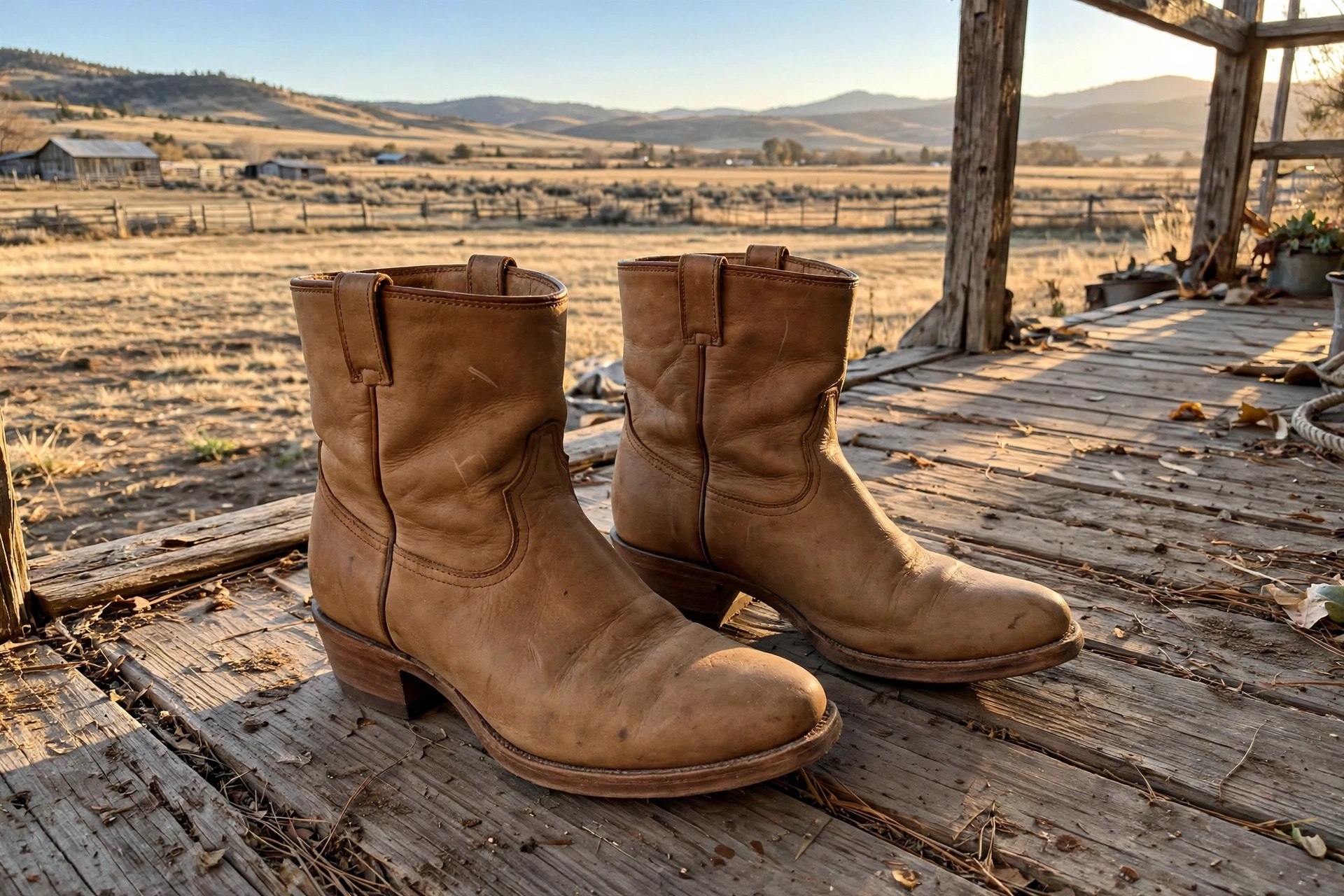
Roper boots are the practical brother of the classic cowboy boot, made for cowboys who work on foot as much as they ride. The shaft is lower, the heel is low and wide instead of tall and underslung, and the toe is rounded rather than pointed. Every change points the same way: a boot that is stable to run in, comfortable to walk in and still safe in a stirrup.
The name comes from calf roping. In that event the rider dismounts while the horse is still moving, runs to the calf and works on the ground - no place for a tall fashion heel or a narrow toe. The roper pattern that developed for that job became the default working western boot, and today it is the style most people choose for everyday wear and a first pair of western boots.
Roper vs Classic Cowboy Boot
Both boots share western DNA - a leather shaft with stitched decoration, a pull-on design with side straps or loops, and a heel made for riding. The proportions are what separate them. A classic cowboy boot stands about 12 inches or taller, with a shaped, angled cowboy heel around two inches high that locks into a stirrup and suits long hours mounted. A roper drops the shaft to around 10 inches and the heel to around one inch, set wider and flatter so the wearer stands level and steady.
| Feature | Roper | Classic Cowboy Boot |
|---|---|---|
| Shaft height | Around 10 inches | 12 inches or more |
| Heel | Low roper or walking heel, around 1 inch, wide and flat | Taller underslung cowboy heel, around 2 inches |
| Toe | Rounded toe | Pointed, snip or varied fashion toes |
| Sole | Often rubber or comfort soles for ground work | Traditionally smooth leather |
| Best for | Working and walking on foot, everyday wear | Riding, traditional western dress |
The wider family of styles is set out in the men's cowboy boots guide, where the roper sits as the work-first branch of the tree.
Why the Design Works
Start with the ground work. At a roping, and in general ranch work, the wearer runs, turns, lifts and stands for long stretches. A low, wide heel gives a stable base for all of it and is far less tiring than balancing on a tall angled heel. The shorter shaft is lighter, cooler, easier to pull on and less likely to catch when climbing, driving or working in close quarters. The rounded toe leaves room for the foot to spread and for thick work socks, where a pointed toe is styling first and comfort second.
None of that gives up the saddle. The roper heel is still a defined heel, high enough to help keep the boot from slipping through a stirrup, and the shaft still protects the lower leg against the saddle and brush. Lace-up roper variants also exist: they keep the low heel, short shaft and rounded toe but add front lacing for riders who want an adjustable fit through the ankle, or extra support after an injury. For the broader boot landscape around them, see the men's boots guide.
Wearing Ropers Today
For most buyers, ropers are the most comfortable way into western boots. They slip under straight or boot-cut jeans, work with chinos and work trousers, and do not demand the commitment of a tall, pointed dress boot. Rubber-soled work ropers handle concrete, gravel and wet yards better than smooth leather soles, while leather-soled dress ropers in a clean finish pair well with casual jackets and western shirts.
Fit should feel snug across the instep, with a small amount of heel slip in a new pair that reduces as the boot settles. Toes should have room to lie flat in the rounded box. Care is standard leather boot practice: brush off dirt, condition before the leather dries and cracks, and rotate pairs when worn daily. Compare them with the strapped style in this series, harness boots, for a different take on the low working boot.
Common Questions
- What makes a boot a roper boot?
- A roper boot has a shorter shaft than a classic cowboy boot, a low and wide walking heel, and a rounded toe. That combination is made for working on the ground as well as riding. Most ropers are pull-on boots, though lace-up versions with the same low profile also exist.
- What is the difference between roper boots and cowboy boots?
- Ropers are shorter, at around 10 inches against 12 inches or more for a classic cowboy boot, and their heel is low, wide and flat at around an inch, against the taller underslung cowboy heel. Ropers also use a rounded toe, while classic cowboy boots often have pointed or shaped fashion toes.
- Are roper boots good for walking?
- Yes. Walking is what the roper design is for. The low wide heel gives a stable, level base, the shorter shaft is lighter, and the rounded toe leaves room for the foot. Rubber-soled work ropers are especially comfortable for long days on concrete, gravel and yard surfaces.
- Why do roper boots have a low heel?
- The low heel keeps the wearer stable when running and working on the ground, as a calf roper must after dismounting. It is still high enough to help stop the boot sliding through a stirrup, so the roper keeps the safety function of a riding heel without the height.
Footwear Guides: The Full Series
This page is part of the Apparel Search footwear series, which covers the classic shoe styles, boot types and construction methods shoppers ask about. Browse the full series below.