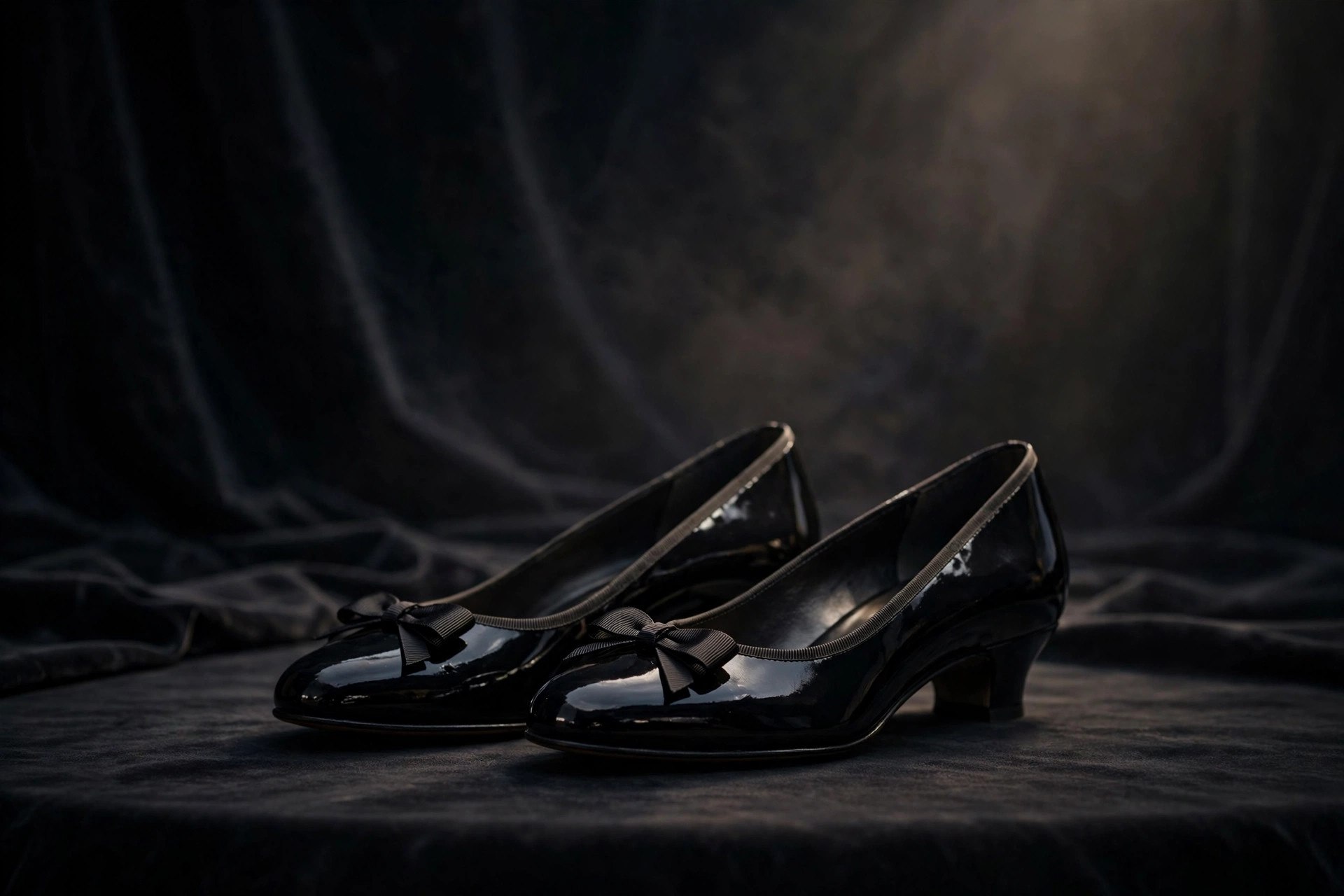
The opera pump is a low-cut slip-on evening shoe with a formal pedigree no lace-up can match. For men, the classic version is black patent leather with a flat grosgrain bow on the front, cut low to show the silk evening sock. It is traditionally the most formal shoe that exists, made for court dress and full evening dress.
The same name also covers the classic women's opera pump - a plain, low-heeled court pump worn for evening. Both share the essentials: a clean slip-on shape, no laces or straps to interrupt the line, and materials chosen for shine and formality rather than daytime wear. They are specialty shoes, bought for a small number of very dressy occasions.
The Men's Opera Pump
The men's pump descends from court dress, where a light slip-on shoe suited dancing and formal reception rooms better than a boot or lace-up. It became part of white tie - full evening dress with a tailcoat - and by tradition it is also the most correct shoe for black tie, the dinner jacket outfit most men know as a tuxedo. The details are fixed: black patent leather, a low-cut throat, a thin leather sole and a pinched grosgrain bow.
So why do so few men own a pair? Because the occasions shrank. White tie is now rare outside state events, some weddings and a few traditional balls, and most black-tie invitations accept polished oxfords. A shoe worn once a year, in patent leather that suits nothing else in the wardrobe, is a hard purchase to justify. Men who attend formal events regularly still value it, and dance hosts appreciate how light it feels. For the lace-up alternative, see the men's oxford shoes guide.
The Women's Opera Pump
For women, an opera pump is the plain court shoe in evening form: a closed toe, a clean vamp with no strap or ornament, and a low to medium heel. In black satin, silk or patent leather it has been the default evening shoe for generations because it supports a long dress without competing with it. Heel heights usually run from a low one-inch heel for comfort to around three inches for a dressier line, with the lower heights closest to the traditional opera pump idea.
The appeal is restraint. A plain pump works with cocktail dresses, evening gowns and formal separates, and in a neutral or black finish it rarely dates. Fit matters more than decoration - a low-cut slip-on must hold the heel without straps - so try sizes carefully and consider a slim insole grip for dancing. Styles, heel shapes and sizing are covered in the women's pumps guide, with current examples in the pumps product guide.
Wearing Them Today
Today the men's opera pump belongs at formal weddings with a white-tie dress code, white-tie events, and very traditional black-tie evenings where the host expects the full classic outfit. Worn with an evening tailcoat, white waistcoat and silk socks, nothing looks more correct. With a dinner jacket it is equally proper, if noticeably more traditional than what most guests will be wearing.
Most men choose alternatives instead, and that is accepted almost everywhere: a plain-toe black oxford polished to a high shine, a patent leather lace-up made for evening wear, or, at the relaxed end, a black velvet loafer for creative black tie. Those options earn their keep at other events too. The opera pump remains the purist choice - specialized, elegant and unmistakable. If you buy one, buy it for love of the tradition, store it with trees, and keep the bow flat and the patent leather dust-free between outings.
Common Questions
- What are opera pumps?
- Opera pumps are low-cut slip-on evening shoes. For men, the classic form is black patent leather with a grosgrain bow, made for white tie and black tie. For women, the name covers a plain low-heeled court pump worn as an evening staple.
- Can you wear opera pumps with a tuxedo?
- Yes. Opera pumps are traditionally the most correct shoe for black tie as well as for white tie. Most men wear polished black oxfords with a tuxedo today, but the patent leather pump with a bow remains the classic, formal choice.
- Why do opera pumps have a bow?
- The flat grosgrain bow is a survival from court dress, where the pump was a light dancing and reception shoe and the bow was its only ornament. It signals evening formality, matches the grosgrain facings on a dinner jacket, and keeps the shoe plain and elegant.
- What is the difference between an opera pump and a loafer?
- An opera pump is a formal evening shoe - low-cut, thin-soled and, for men, usually patent leather with a bow. A loafer is a daytime slip-on with a separate sole and heel, a higher cut and no bow, made for casual and business-casual wear.
Footwear Guides: The Full Series
This page is part of the Apparel Search footwear series, which covers the classic shoe styles, boot types and construction methods shoppers ask about. Browse the full series below.