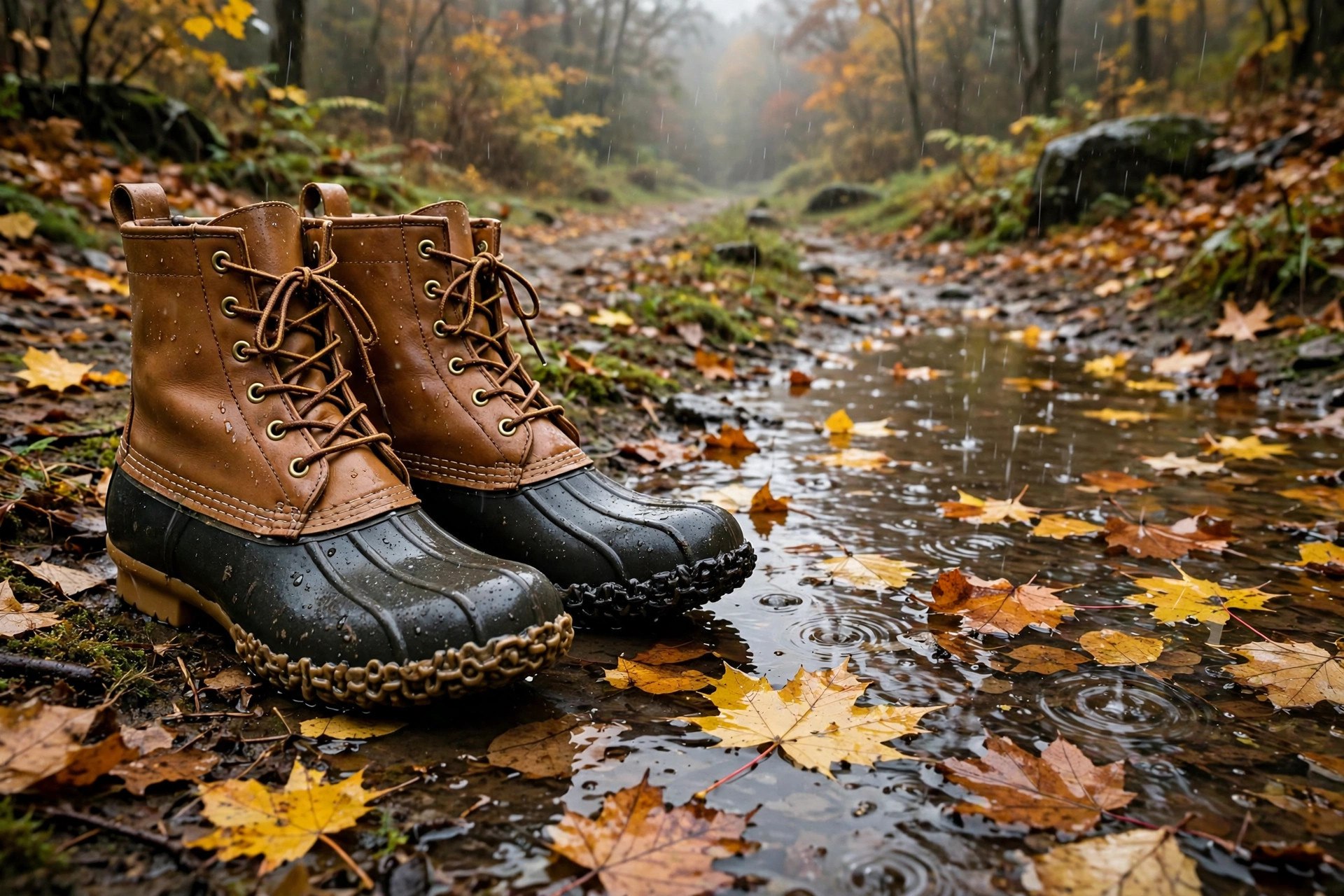
Duck boots are waterproof boots built in two halves: a molded rubber bottom that wraps the foot like a boot within a boot, and a leather upper laced over the top of it. The rubber half keeps out water, mud and slush completely, while the leather half fits and supports the ankle like a regular boot. No seam sits at ground level, which is exactly where ordinary boots leak first.
The design was invented in 1912 by L.L.Bean, who sewed leather uppers onto rubber boot bottoms to make the Maine Hunting Shoe for hunters standing in wet Maine woods. Waterfowl hunters - the source of the name duck boot - made it a cold-weather staple, and the pattern has barely changed since.
The Design
The lower section is true molded rubber, not a coated fabric or a waterproof membrane. It is formed as a single piece around the foot, so puddles, wet grass, mud and melting snow have no stitching to work through. The leather upper is attached above that rubber shell and closes with laces, which lets the wearer pull the boot snug at the ankle - the fit advantage that separates a duck boot from a loose wellington. Water resistance at the join and in the leather itself is good for wet conditions, though the upper is not meant for standing in deep water.
The sole carries a chain or link-pattern tread, a signature of the original, cut to grip on wet ground and slick leaves rather than to dig like a hiking lug. Duck boots come in several heights, from low shoe versions to mid-calf boots, and in unlined models as well as insulated, fleece-lined versions for winter. The wet-weather alternatives are surveyed in the men's rain boots guide.
Duck Boots vs Rain Boots
A rain boot is usually a single material - rubber or plastic - from sole to top, with no laces and a loose fit around the leg. That makes rain boots simple, fully waterproof to their full height and generally cheaper, but the foot slides inside them, support is minimal and they can feel cold and clammy. A duck boot is only fully waterproof up to the top of its rubber bottom, yet in return it gives a laced, fitted upper, better ankle support and a more secure stride, which is why people walk distances in duck boots and mostly splash to the car in rain boots.
Snow boots are a different tool again. They are built around insulation, with thick linings, higher shafts and deep lug soles for traction in snow and ice. An insulated duck boot handles slush, wet snow and cold rain very well, and slush - a mix of water and snow - is arguably its best conditions. For deep snow and severe cold, a dedicated snow boot with real insulation and aggressive tread is the warmer and grippier choice. Shoppers weighing wet-weather options will also find winter styles in the women's all-weather boots guide.
Fit, Sizing and Care
Duck boots are worn with socks that suit the weather, and the fit should allow for them. Many wearers find their usual size works with medium socks, while thick winter socks may call for a half size up or an insole removed - lasts vary by maker, so check the fit with your heaviest socks on. The laced upper helps fine-tune the fit across seasons. The full boot family context is in the men's boots guide.
Care splits by half. Rinse mud and salt off the rubber bottom - rubber needs little else. The leather upper needs the attention: clean it, dry it away from radiators, and condition it so it stays supple where it meets the rubber shell. Worn this way, a pair covers autumn rain, winter slush and muddy spring ground - just do not ask an unlined pair to do a deep-snow job. For how boots like these are put together, see stitchdown construction.
Common Questions
- Why are they called duck boots?
- The name comes from duck hunters, who were among the first and most loyal users of the rubber-bottom, leather-upper boot. Standing in wet blinds and marshy ground, waterfowl hunters needed waterproof feet with a fitted boot's support, and the style became associated with them.
- Are duck boots good for snow?
- Duck boots are good for slush, wet snow and cold rain, and insulated versions handle ordinary winter weather well. They are not a dedicated deep-snow boot: for deep snow and severe cold, choose a snow boot with thicker insulation, a higher shaft and a deep lug sole.
- What is the difference between duck boots and rain boots?
- A rain boot is all rubber or plastic, loose fitting and waterproof to its full height. A duck boot has a molded rubber bottom with a laced leather upper, so it fits closer, supports the ankle better and walks more comfortably, but it is only fully waterproof up to the top of the rubber section.
- How should duck boots fit?
- They should fit with room for the socks you will wear in them - many people wear thick socks, so some go up a half size or adjust with insoles. The foot should feel secure once the leather upper is laced, without the toes pressing the end of the rubber bottom.
Footwear Guides: The Full Series
This page is part of the Apparel Search footwear series, which covers the classic shoe styles, boot types and construction methods shoppers ask about. Browse the full series below.