Women's Pumps Guide
The pump is the classic closed-toe heeled shoe with no fastenings at all — slipped on, held by its fit, and polished enough to anchor everything from a suit to an evening dress.
Shop Women's Pumps Now
Shop Women's Pumps on Amazon Shop Women's Pumps on eBayThe Amazon and eBay links on this page are affiliate links. If you make a purchase through them, Apparel Search may earn a commission.
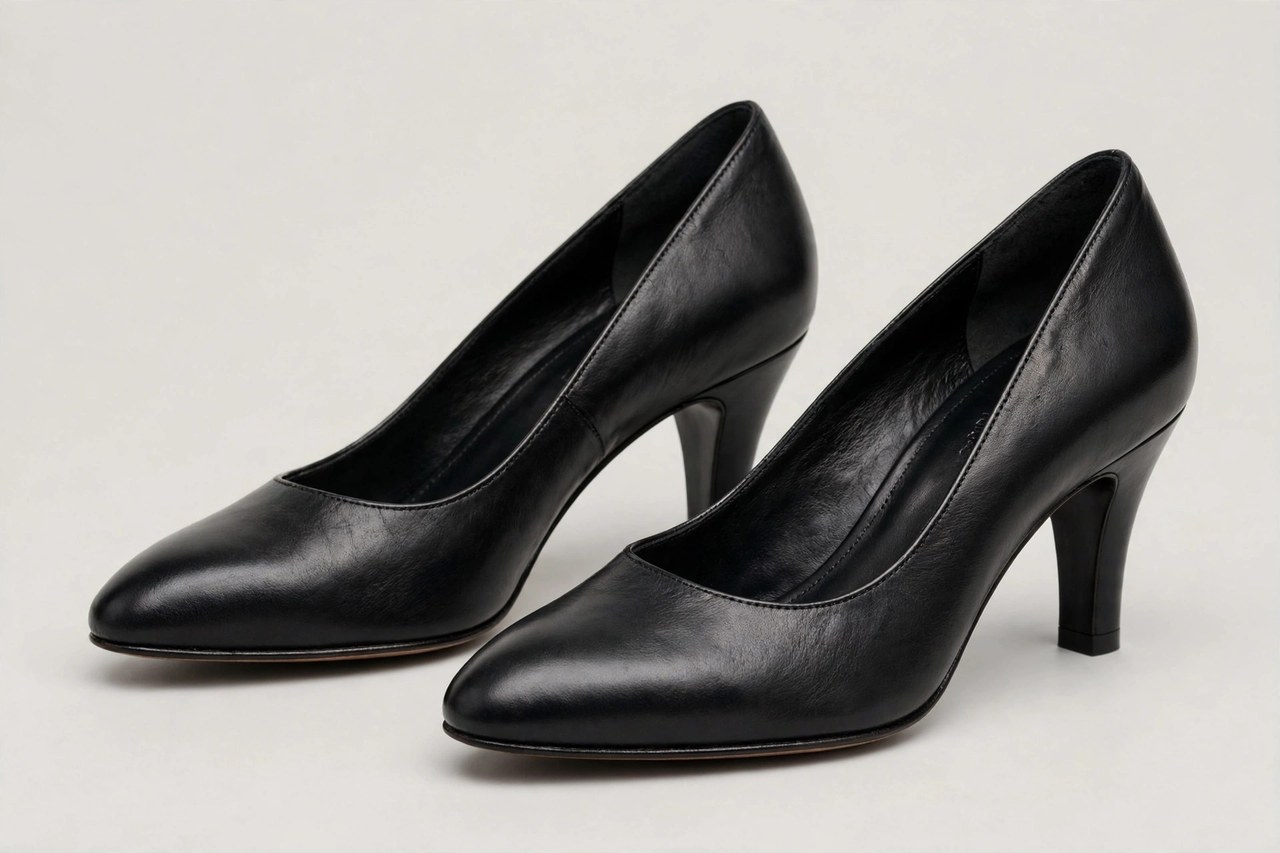
A pump is a low-cut, closed-toe heeled shoe with no laces, straps or fastenings of any kind: you slip your foot in, and the shoe stays on purely because its shape fits your foot. That simplicity has made the pump the defining dress shoe of the modern wardrobe — the shoe of boardrooms, weddings and evening dresses, in continuous fashion for a century. If a wardrobe owns one pair of heels, it owns pumps.
This guide covers the pump as a construction: heel heights from kitten to stiletto, toe shapes and the vamp, the fit discipline a fastening-free shoe demands, and how the same shoe crosses from working day to evening — the pump's oldest trick.
Heel Heights: Kitten to Stiletto
Pump heels form a ladder, and each rung has a job. The kitten heel, under about two inches with a slight curve, gives a dressed lift with near-flat walkability — the training heel, the long-day heel, and a retro silhouette in its own right. The mid heel, around two to three inches, is the working standard: enough height to change posture and line, sustainable through a full day on your feet with a well-cut shoe. The high heel and stiletto, three inches and up on a narrow stem, are occasion territory: maximum effect, minimum mileage, and a walking surface (grates, cobbles, lawns) that must be reckoned with.
Heel shape matters as much as height. The stiletto concentrates weight on a point; the block heel spreads it and is the stable modern workhorse. Platform pumps hide height in the front sole, so a four-inch shoe walks like a three-inch one. Choose height by the day's actual walking, not the outfit's photograph: a pump's reputation for discomfort is mostly heels chosen one rung too high.
Toe Shapes and the Vamp
The toe sets the pump's era and formality. The pointed toe is the sharpest and most formal, lengthening the leg line and leading fashion in most decades; it needs a fit that lets the toes lie straight rather than squeeze into the point. The almond toe, a softened, tapered oval, is the comfortable classic — nearly the pointed toe's polish, with room to live in. The round toe reads softer and younger and suits mid heels and retro styling. The square toe cycles through fashion periodically and offers the roomiest front of all. None is more correct than the others; the test is that your toes are not doing the shoe's shaping work.
The vamp — the upper covering the top of the foot, whose edge is the pump's neckline — controls both look and hold. A low vamp cuts close to the toes, shows the line called toe cleavage, and holds the foot least; a high vamp covers more, holds more securely, and reads more retro. The d'Orsay pump cuts the vamp's sides away entirely — the pump at its most decorative and least forgiving.
Fit and Comfort in a Shoe With No Fastenings
Because nothing ties, straps or buckles a pump on, its fit is its fastening, and the standards are strict. The shoe should feel snug at the heel and midfoot without pinching the toes: the heel stays seated as you walk without your toes clawing to hold the shoe, and the widest part of your foot meets the shoe's widest part exactly. Fit pumps in the afternoon, in the hosiery you will wear — a pump fitted barefoot and worn with tights will slip, because hosiery is a lubricant, and the standard fix (a heel grip or a half insole) is better planned than improvised.
Comfort is engineered, not wished for. Look for a padded insole with real cushioning under the ball of the foot, and an arch that meets yours rather than bridging empty space. Break pumps in at home before a long day, and address a rub point with moleskin early. Remember leather pumps give a little across the width and none in length — a pump tight in the toes will not become kind, and one that slips badly will not become secure.
The most formal member of the pump family is the opera pump - the low-cut evening shoe with a grosgrain bow, worn with everything from evening dresses to white tie.
Work to Evening, and Care
The pump's party trick is range. In black or nude leather at a mid heel, it is the working shoe of suits, sheath dresses and tailored trousers. The same silhouette in patent, satin or a jewel color is evening wear, the standard partner of cocktail dresses. Nude-to-you pumps lengthen the leg under any hemline; a colored pump is the single deliberate accent in a plain outfit. One well-chosen neutral pair does most of this work, which is why pumps reward quality over quantity.
Care is leather care with heel discipline. Rotate pumps rather than wearing one pair daily, rest them on shoe trees to hold the vamp's line, and wipe them down after wear. Keep patent away from other shoes, since it picks up dye. Above all, replace the heel tips before they wear down to the nail: a worn tip makes the heel wobble, damages floors, and changes the shoe's pitch enough to strain your feet. A cobbler visit twice a year keeps a good pair in service for a decade.
Related Women's Guides
Photos

More to Explore on Apparel Search
Women’s Clothes Guide by Letter: Women's Clothes Directory O
Looking for Women's Clothing Stores?
This guide helps you choose women's pumps. To browse where to buy, visit our women's clothing store directory, where you can find retailers that carry them.