Men's Cufflinks Guide
Men's cufflinks are the fasteners of the French (double) cuff: paired ornaments that pass through both layers of a folded-back shirt cuff and hold it closed, replacing the button a barrel cuff sews on. They are the smallest complete statement in menswear - a few grams of metal, enamel, stone or silk that carry more personality per ounce than anything else in the outfit, and the one accessory a man can collect across a lifetime of gifts and occasions.
Shop Men's Cufflinks Now
Shop Men's Cufflinks on Amazon Shop Men's Cufflinks on eBayThe Amazon and eBay links on this page are affiliate links. If you make a purchase through them, Apparel Search may earn a commission.
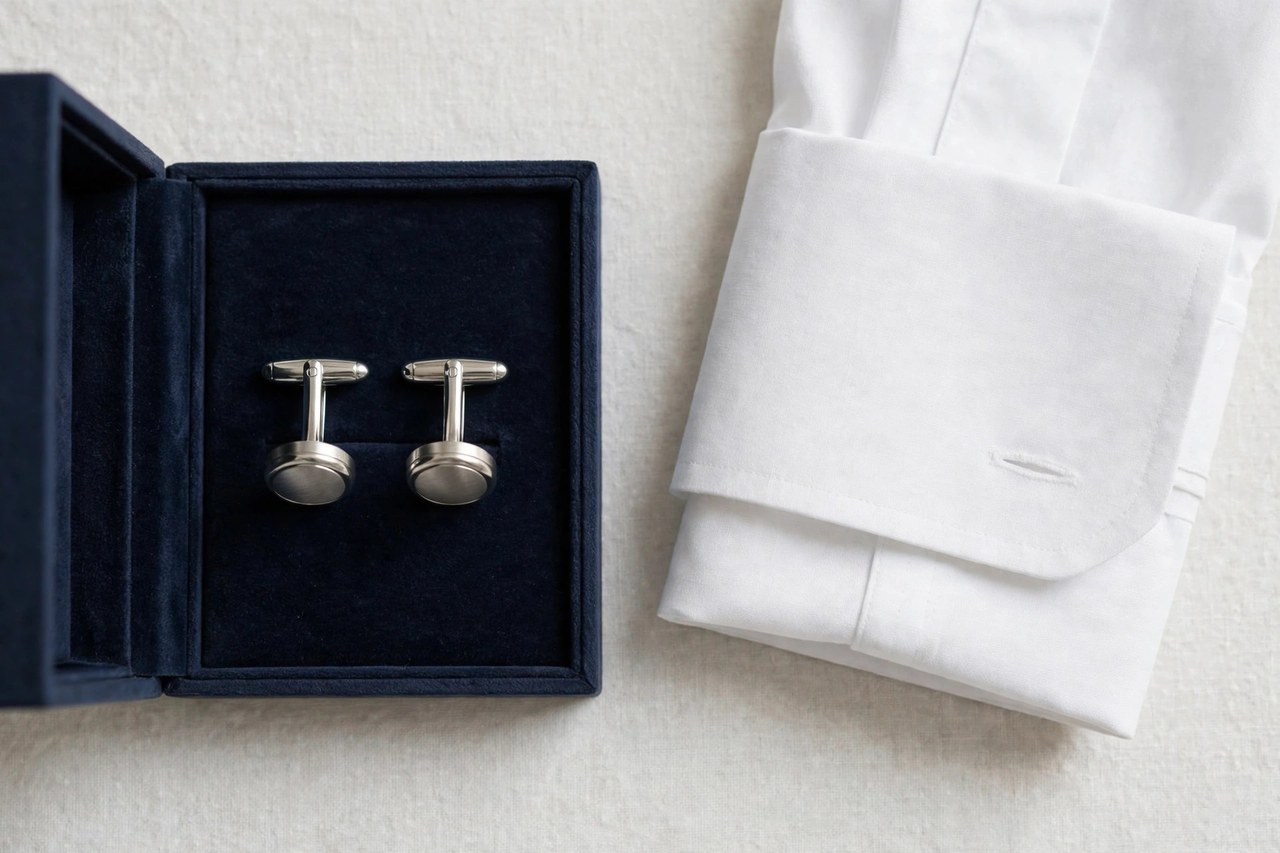
Men's cufflinks are the fasteners of the French (double) cuff: paired ornaments that pass through both layers of a folded-back shirt cuff and hold it closed, replacing the button a barrel cuff sews on. They are the smallest complete statement in menswear - a few grams of metal, enamel, stone or silk that carry more personality per ounce than anything else in the outfit, and the one accessory a man can collect across a lifetime of gifts and occasions. This guide is built around the questions buyers actually ask: which style, which size, which fabric, and what will it look like after a year of real use - answered in order, with the trade-offs stated plainly.
Styles and Construction
Closures divide the field. Toggle (bullet-back) links - a bar that flips through the cuff and locks across - are the easiest and most common. Chain links join two faces with a short chain, drape softest, and show a finished face on both sides. Fixed studs and silk knots - the knotted cord ovals - are the lightest and the traditional partner of evening dress. Materials run precious (sterling, gold, onyx, mother-of-pearl) to playful (enamel novelty, sports and hobby motifs). The rule of register: the simpler and smaller the link, the dressier; novelty links are for festive settings and known audiences.
Accessories reward material honesty: solid metal over plated base metal, full-grain leather over bonded scraps, stitching over glue wherever fabric or hide is joined. Work every moving part through its full travel before paying - clasps, hinges, springs, adjusters - because small hardware fails before large materials do. And budget the care with the purchase: conditioner, the right cloth, a dry drawer; an accessory you can maintain will outlast a finer one you cannot.
Fit and Sizing
Fit is about the cuff, not the wrist: a cufflink should close a French cuff snugly enough that the cuff's kiss - the two layers just meeting - holds without gapping, and the face should sit centered without dragging the cuff askew. If your cuffs are loose, a smaller-post link or a tailor's adjustment to the cuff hole serves better than a bigger face. Keep proportion: large faces on narrow cuffs overwhelm; the classic face is roughly the size of a shirt button writ slightly larger.
Accessories have exact fits and exact measures: belt length to the middle hole of a belt you own, hat size as head circumference, a watch case within the wrist's width. Makers' accessory charts vary more than apparel charts, so measure and use the chart rather than ordering a habitual letter - ninety seconds with a tape prevents the most avoidable returns in menswear.
Wearing and Care
Store links paired, in a compartmented box or roll, away from humidity that tarnishes silver and dulls enamel; polish metal with the cloth for its kind, wipe stones and enamel with a damp cloth only, and check toggles and chains for fatigue each season - a cufflink lost at an event is almost always a worn mechanism ignored. Silk knots are consumables: replace them when the knot frays, and keep spares, since they cost little and fail without warning.
Store accessories deliberately: leather away from sun and plastic, metal dry, belts rolled or hung by the buckle rather than folded at the same crease forever. Condition leather a few times a year, polish metal with the cloth meant for its finish, and repair hardware early - a loose screw today is a lost cufflink or a failed clasp next month. Rotate daily pieces in pairs and both will outlast a single workhorse.
Common Questions
What shirts do cufflinks require?
French cuff (double cuff) shirts, whose cuffs fold back and are pierced on both layers without buttons. Convertible-cuff shirts - with both a button and a link hole - accept either. A standard barrel cuff cannot take links without alteration, which a tailor can sometimes make by removing the button and adding a hole.
How do you put on cufflinks?
Fold the cuff back, align the holes, and push the link through all four layers from the outside (for toggle links, with the bar vertical), then flip the toggle horizontal to lock. The decorative face sits on the outside of the wrist, and the cuff edges should just meet - the 'kiss'. Dress the cuff you can see (the far wrist) first if you are doing it alone and in a hurry.
Are cufflinks appropriate for the office?
At the classic end, yes: small metal, onyx or mother-of-pearl links with a French-cuff shirt are standard business dress in many professions. Novelty and oversized links shift the register to social - read the room the way you would a tie. Silk knots are the safe understated choice everywhere a suit is worn.
More in Men's Clothes Guide C
The French Cuff Pairing
The cufflink and the shirt are one subject — see the French cuff shirt guide — because a cufflink without its cuff is a fastener in search of a job. Choose the cuff and the link together, or expect to own orphans of both kinds.
Looking for Men's Clothing Stores?
This guide explains men's cufflinks. To browse where to buy, visit our men's clothing store directory, where you can find retailers that carry them.