Men's Accessories Guide
Men's accessories are the finishing layer of an outfit — belts, ties, cufflinks, watches, hats, gloves, sunglasses, jewelry and bags — the details that decide whether clothes look dressed or merely worn.
Shop Men's Accessories Now
Shop Men's Accessories on Amazon Shop Men's Accessories on eBayThe Amazon and eBay links on this page are affiliate links. If you make a purchase through them, Apparel Search may earn a commission.
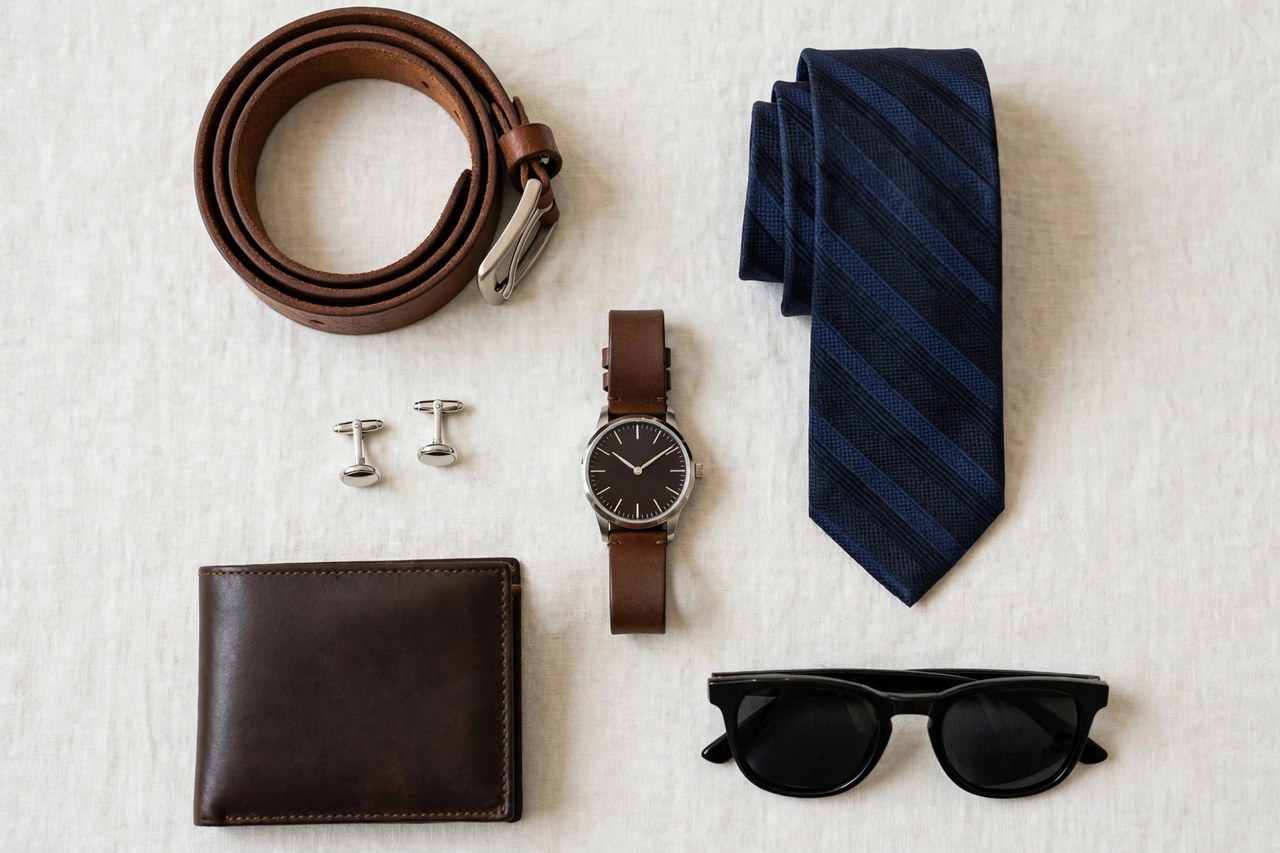
What are men's fashion accessories? The category is defined by its list: belts; ties, bow ties and tie clips; cufflinks; watches; hats; scarves; gloves; eyewear and sunglasses; jewelry, including men's bracelets and necklaces; and bags, briefcases and backpacks. Everything on it shares one job — none of it is the outfit, and all of it changes the outfit. This guide covers how to choose accessories and how to combine them without letting the details argue with each other.
Accessories are where a man's wardrobe becomes personal at the lowest cost per change. The same suit reads formal with a silk tie, cufflinks and a leather-strap watch, and relaxed with a knitted tie, no cufflinks and a canvas bag. Learning the category is learning those levers.
The Dressed Details: Belts, Ties and Cufflinks
A belt is both a fastening and a dividing line: dress belts are narrower, smoother and matched to the shoe leather in color and finish, while casual belts run wider, textured and braided. Ties and bow ties carry pattern and color into the center of a plain suit or sport coat; a tie clip keeps the tie against the shirt, positioned between the third and fourth buttons, and should never be wider than the tie itself.
Cufflinks are the smallest formal signal in menswear: they require French-cuff shirts, and they range from quiet silk knots and plain metal to enamel and novelty designs. The buying rule across all three is restraint — one piece may speak, and the others should support it.
Time, Weather and Sun: Watches, Hats, Scarves and Gloves
The watch remains the most collected men's accessory: dress watches are slim and simple on leather, sport watches larger and water-resistant on metal or rubber, and the strap is half the style. Match leather straps to belt and shoes for dressed occasions; bracelets and NATO straps belong to casual dress.
Hats divide into structured dress styles and casual caps, and fit is crown size, not guesswork. Scarves are warmth with a knot vocabulary — the drape, the once-around and the Parisian loop cover most days — and gloves divide into dress gloves in thin leather, often lined, and insulated casual pairs. Eyewear and sunglasses are the one accessory chosen by face shape first and fashion second: frame width should match face width, and lens darkness is not the same as UV protection, which is the specification that matters.
Jewelry and Carry: Bracelets, Necklaces and Bags
Men's jewelry — bracelets, necklaces, rings beyond a wedding band — works best kept to one or two pieces in a single metal family. A bracelet beside a watch should be slimmer than the watch; a necklace should sit at a deliberate length and disappear under a collar when the day turns formal.
Bags complete the list because carrying is dressing: a briefcase for formal work, a messenger for the middle ground, a backpack for casual and travel days. Leather ages into the role; technical fabrics signal the active wardrobe. Whichever you choose, an accessory should look chosen — the category succeeds when every piece appears deliberate, and fails only when it looks accidental.
Combining Without Clashing
Three working rules cover most mistakes. Match leathers to leathers and metals to metals in formal dress, and relax both rules only as the outfit gets casual. Repeat one color from the outfit in one accessory — a tie that picks up the shirt stripe, a pocket square echoing socks — rather than matching everything exactly, which reads as a set. And count the statement pieces: watch, patterned tie, hat, bright bag — pick one hero per outfit.
Build the collection in order of use: a black and a brown dress belt, one versatile watch, sunglasses that fit your face, a navy and a burgundy tie, plain cufflinks, a leather bag suited to your commute. Those few pieces, well chosen, accessorize nearly everything a man owns.
Common Questions
What counts as a men's fashion accessory?
The category covers belts; ties, bow ties and tie clips; cufflinks; watches; hats; scarves; gloves; eyewear and sunglasses; jewelry such as bracelets and necklaces; and bags, briefcases and backpacks. None of them is the outfit itself - all of them change how the outfit reads, which is why accessories are the cheapest way to change a wardrobe's range.
Should a belt match the shoes?
For dress wear, yes: a dress belt should match the shoes in color and roughly in finish - black smooth leather with black dress shoes, brown with brown. The rule relaxes as dress gets casual: braided, suede and canvas belts pair by tone rather than exact match, and casual outfits can contrast belt and shoes deliberately.
How many accessories should one outfit include?
As many as look deliberate, with only one statement piece. A watch, belt and sunglasses are a normal everyday count. Add a patterned tie or a hat and one of them becomes the hero - let it be the only loud piece, keep metals in one family for formal dress, and repeat one outfit color in one accessory rather than matching everything exactly.
More in Men's Clothes Guide A
What Are Men’s Fashion Accessories?
The category, listed in full: belts; ties, bow ties and tie clips; cufflinks; watches; hats; scarves; gloves; eyewear and sunglasses; jewelry, including men’s bracelets and necklaces; and bags, briefcases and backpacks. That list remains the working definition of men’s accessories — everything a man wears or carries that finishes an outfit without being the outfit itself.
Photos

Looking for Men's Clothing Stores?
This guide explains men's accessories and how to combine them. To browse where to buy, visit our men's clothing store directory, where you can find retailers that carry them.