Men's Aprons Guide
A men's apron is an outer protective garment worn over the front of the body — for hygiene, to protect clothes from wear and tear, and as the uniform of more trades than almost any other garment.
Shop Men's Aprons Now
Shop Men's Aprons on Amazon Shop Men's Aprons on eBayThe Amazon and eBay links on this page are affiliate links. If you make a purchase through them, Apparel Search may earn a commission.
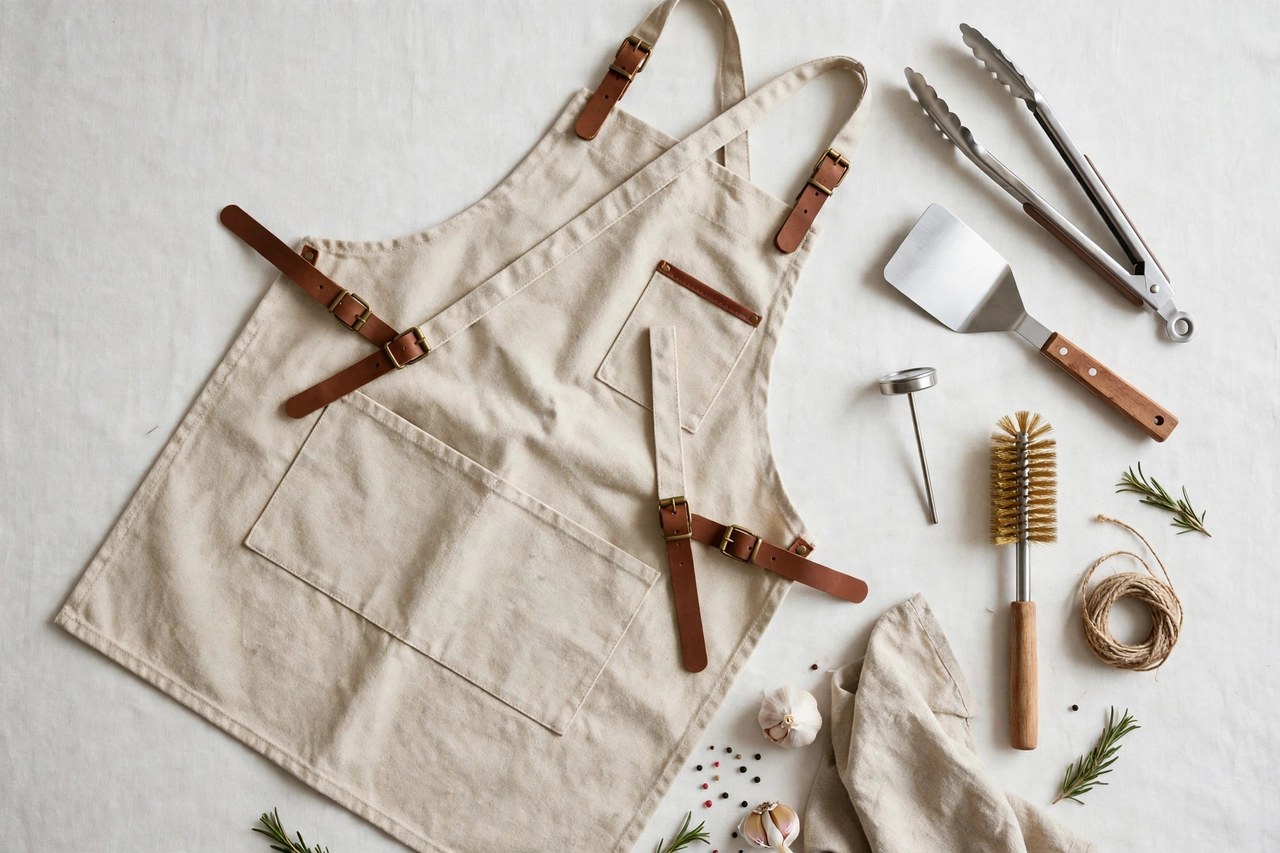
An apron is an outer protective garment that covers primarily the front of the body. It may be worn for hygienic reasons as well as in order to protect clothes from wear and tear, or else due to a symbolic meaning. That three-part definition — hygiene, protection, symbolism — explains the apron's whole career. This guide covers the styles, the fabrics, and how a man chooses an apron for the kitchen, the grill or the workshop. And yes: stop crying and put your apron on — it will help keep your other clothing more clean.
Few garments are older or more honest. The apron does not pretend to be anything but a shield with pockets, and it has been part of working dress for centuries.
Styles: Bib, Waist and Work Aprons
The bib apron covers chest to knee with a neck strap and waist ties — the chef's and grill cook's standard, because splashes land high as well as low. The waist apron, or half apron, ties at the waist and covers the thighs: servers and gardeners choose it for freedom of movement and pocket access. Cobbler and split-leg aprons extend coverage for seated work and pottery, while cross-back straps, which avoid a neck strap entirely, are the comfort upgrade for long sessions in any style.
Pockets are the working detail to shop for: divided pockets sized to the tools of the specific job — thermometer and towel at the grill, notebook and pen for service, calipers and pencils at the bench. A single wide pocket collects everything and organizes nothing.
The Uniform and the Symbol
The apron is commonly part of the uniform of several work categories, including waiters and waitresses, nurses, and domestic workers, and aprons are often worn by chefs when preparing food. That uniform role is the symbolic strand of the definition: an apron announces a role and a readiness to work, which is why it appears in trade dress from butchers and bakers to baristas and blacksmiths, each trade's version cut and weighted for its hazards.
For home use the symbolism simplifies to something practical: the apron is the boundary between cooking clothes and good clothes. Barbecue smoke, fryer spatter, sauce and sawdust all stop at the apron, and the clothes under it walk straight from grill to table.
Fabrics and Choosing
Cotton twill and canvas are the kitchen and garden standards — absorbent, washable, and improved by every wash. Denim adds abrasion resistance for workshop use. Waxed canvas sheds water and shop grime and wipes clean. Leather is the heavyweight answer for heat, sparks and sharp work — welding, smithing, serious woodworking — heavy on the neck in cheap versions, so cross-back or padded straps matter. PVC and waterproof aprons serve dish pits, fish cleaning and wet work where cloth would soak through.
Choose by coverage first (what reaches you: splashes, heat, edges, water), then by fabric, then by strap comfort, then by pockets. Wash kitchen aprons hot and often; treat leather with conditioner and keep it dry. An apron is cheap insurance worn daily — buy the one fitted to your actual mess, and it will pay for itself the first time the sauce jumps.
In the professional kitchen the apron is one piece of a complete uniform system. The chef uniform, explained covers where bib, waist and cross-back aprons sit alongside the toque, the double-breasted coat and the checkered pants — and why each piece is built the way it is.
Common Questions
What is an apron, exactly?
An apron is an outer protective garment that covers primarily the front of the body. It may be worn for hygienic reasons, to protect clothes from wear and tear, or due to a symbolic meaning - it is commonly part of the uniform of several work categories, and aprons are often worn by chefs when preparing food.
Which apron style is best for grilling and cooking?
A bib apron, which covers chest to knee, because splashes and spatter land high as well as low. Look for divided pockets sized to a thermometer and towel, an adjustable neck strap or cross-back straps for long sessions, and cotton twill or canvas that washes hot. Waist aprons suit serving and gardening better than the grill.
What apron fabric suits workshop work?
Denim or heavy canvas for general bench work and abrasion, waxed canvas where grime and water are involved, and leather for heat, sparks and sharp work such as welding or smithing. Leather is heavy, so choose cross-back or well-padded straps. Coverage first, then fabric, then strap comfort, then pockets is the right choosing order.
More in Men's Clothes Guide A
Why Wear an Apron?
An apron is an outer protective garment that covers primarily the front of the body, worn for hygienic reasons as well as to protect clothes from wear and tear, or else due to a symbolic meaning. The apron is commonly part of the uniform of several work categories, including waitresses, nurses and domestic workers, and that aprons are often worn by chefs when preparing food. The closing advice: stop crying and put your apron on — yes, it will help keep your other clothing more clean.
Looking for Men's Clothing Stores?
This guide explains men's aprons for the kitchen, grill and workshop. To browse where to buy, visit our men's clothing store directory, where you can find retailers that carry them.