Apparel Search Workwear Guides
The Chef Uniform, Explained
Piece by piece: why the toque is tall, why the coat reverses, why the buttons are cloth — the function behind every part of the most recognizable uniform in the working world.
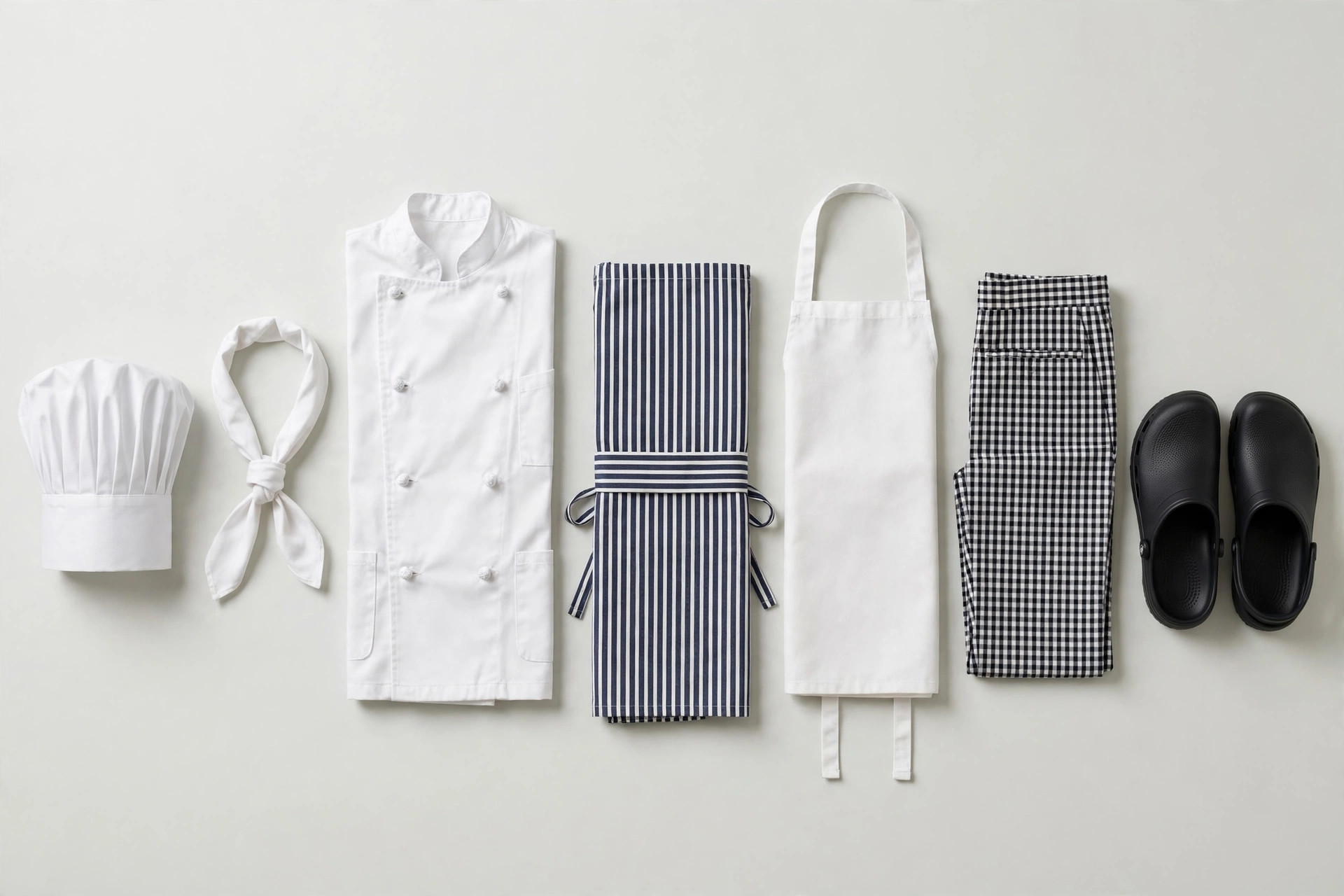
Almost nothing on the chef uniform is decoration. The uniform took its shape in nineteenth-century French kitchens and has been edited ever since, but the logic of each piece still traces to a working problem: heat, stains, long hours on wet floors, and the need to look clean in front of guests at a moment's notice. This page walks the uniform piece by piece. It is part of our Chef Clothing Guide; for how the uniform should fit and be washed, see the fit and care guide, and for assembling a kit, the buying guide.
The Toque
The tall white hat — the toque blanche — is the symbol of the profession. Its height traditionally marked the chef's rank, and its pleats are the subject of the profession's favorite legend: that a great chef's toque once carried a hundred pleats, one for each way the chef could cook an egg. The legend is told as a legend, but the hat's real functions are plain. A hat contains hair — a basic requirement wherever food is prepared — and the tall, hollow crown absorbs sweat and lets air circulate above the head in a hot kitchen. The full history is in our toque definition.
Modern alternatives
Many working kitchens have traded the tall toque for lower-profile headwear that does the same two jobs: skull caps that sit close to the head, kitchen baseball caps, often in house colors with the restaurant's name, disposable paper caps in high-turnover settings, and hairnets or beard nets where rules call for them. The toque survives wherever tradition is part of the product — fine dining, hotels, culinary schools — and the alternatives rule everywhere else.
The Neckerchief
The knotted triangle at the neck is the piece most often mistaken for pure ceremony. Its original job was sweat: tied at the throat, the neckerchief catches sweat running down the neck before it can reach the coat or, worse, the food, and it can be swapped for a dry one mid-shift. It also completes the uniform's silhouette and absorbs the gap between collar and skin where hot air and splashes travel. Modern kitchens keep it in traditional settings and drop it in casual ones — it is the most optional piece of the classic kit.
The Coat
The chef coat is the uniform's engineering centerpiece, and three of its features exist for reasons.
Why double-breasted
Two reasons are traditionally given, and both are practical. The doubled cloth across the front insulates the chest from the radiant heat of ovens and ranges. And the coat is reversible in service: when the front is stained, the chef unbuttons it and re-fastens it to the opposite side, presenting the clean panel underneath — the quick change that lets a cook leave the kitchen and greet a guest looking spotless.
Why cloth knot buttons
Traditional coats fasten with knotted cloth buttons rather than plastic or metal. Cloth knots stand up to industrial laundering and pressing, they do not crack under heat the way some plastics can, and they release fast: pull the coat and the knots slip through, which matters when a coat needs to come off in a hurry. Modern coats also come with stud, snap and zip fronts, and short-sleeve and mesh-back versions for hot kitchens — but the knot-button coat remains the reference design.
The details
Look for the sleeve thermometer pocket — the narrow pocket on the upper arm that holds a probe thermometer and pens where they cannot fall into food — split or turned-back cuffs, and in contemporary coats, mesh back panels and underarm vents that let heat escape. Coat colors have widened beyond white to black, grey and house colors, though white keeps its one advantage: it can be bleached.
The Coat in One Line
A chef coat is a reversible, bleachable heat shield with its own tool pocket. Every traditional feature — the doubled front, the cloth knots, the white cotton — is an answer to heat, stains or the laundry, and modern versions keep the answers while changing the cloth.
The Apron
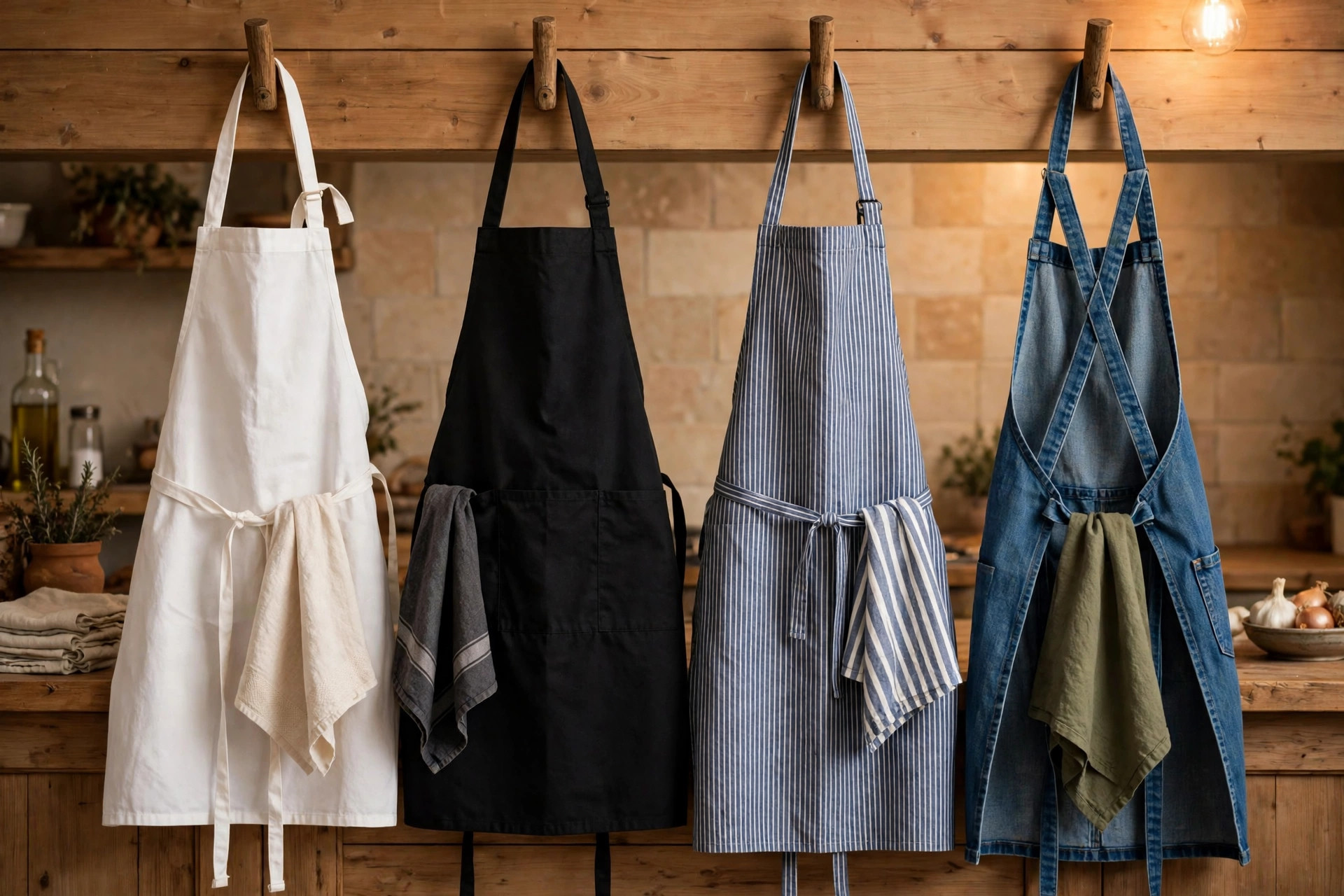
The apron is the uniform's sacrificial layer: it takes the splashes, wipes and contact stains of the shift so the coat underneath stays presentable, and it is changed the moment it is heavily soiled. Kitchen aprons come in three working families.
Bib aprons
The full-coverage default: a neck loop and waist ties, covering chest to knee. The bib apron is the most-used apron in professional kitchens precisely because it protects the most clothing. Long bib aprons often carry a split front so the legs can move freely.
Waist and bistro aprons
Waist aprons tie at the waist and cover the lap; the longer bistro version reaches toward the shin. Both are common for lighter-duty stations and for the front-of-house crossover styles in our server uniforms guide. Divided pockets hold tickets, pens and thermometers.
Cross-back aprons
The modern arrival: straps cross at the back and hang the apron's weight on the shoulders instead of the neck — a comfort difference across a long shift that has made the style a favorite in open kitchens and cafés. The wider apron world — materials, work aprons, choosing — is covered in our aprons guide, heavy-duty waterproof styles in protective aprons, and the factories that make them in the apron factory directory.
The Pants
Chef pants are cut loose and tapered, with drawstring or elastic waists, because the job is movement in heat: bending, squatting, pivoting, standing. The famous small black-and-white check — baggy "baggy checks" in kitchen slang — is traditionally explained as camouflage: a dense small-scale pattern makes splashes and stains hard to read at a distance, so the pants look cleaner longer than a solid cloth would. Solid black pants are the modern alternative and dominate casual kitchens; the check survives because it works, and because nothing else says "kitchen" faster.
The Shoes
Kitchen shoes are safety equipment at the garment level: fully closed toes, slip-resistant tread patterned for wet and greasy floors, and uppers that shed water rather than absorbing it. The two common forms are the kitchen clog — roomy, easy to kick off, with a thick sole for standing — and the lace-up work shoe in a kitchen-specific build. General work-shoe construction and fit are covered in our work shoes guide. Whatever the form, the tread is the feature: when it wears smooth, the shoe is done, however good the upper looks.
Side Towels and the Small Kit
Two side towels complete the working uniform, hung from the apron strings or the waist. One stays dry and works as the cook's pot holder for pan handles; the other handles wiping and spills, and both are rotated to the laundry as they soil through the shift. Around them sits a personal small kit — thermometer in the sleeve pocket, pens, a notebook in some kitchens — all of it carried on the uniform, which is why the coat and apron pocket layout matters more than it first appears.
Common Questions
Why is the chef coat double-breasted?
For two practical reasons traditionally given: the double layer of cloth across the chest adds insulation against the heat of stoves, and the coat can be re-buttoned to the other side, presenting a clean front when the first side is stained — useful when a chef steps out of the kitchen to meet guests.
Why do chef coats have cloth knot buttons instead of plastic ones?
Knotted cloth buttons tolerate commercial laundering and heat better than many plastic buttons, they do not crack or melt the same way, and they can be unfastened quickly by pulling the coat open — the set of reasons kitchens have kept them for generations. Many modern coats offer snap or stud alternatives.
Do chefs still wear the tall toque?
In traditional, hotel and fine-dining kitchens, yes — and culinary schools usually require it. Many modern kitchens have switched to skull caps, kitchen baseball caps, disposable caps or hairnets, which cover hair with less height. The tall pleated toque remains the symbol of the profession and of rank in the brigade.
Why are chef pants checkered?
The small black-and-white check is the traditional explanation made cloth: a busy small-scale pattern disguises splashes and stains between washes, and the loose, tapered cut keeps hot fabric off the legs and lets air move. Plenty of modern kitchens wear solid black pants instead — the check survives because it works and because it reads instantly as "kitchen."
The Chef Clothing Guide
The whole kitchen wardrobe — the pieces, the brigade that wears them, and the standards behind the uniform.
Related Guides
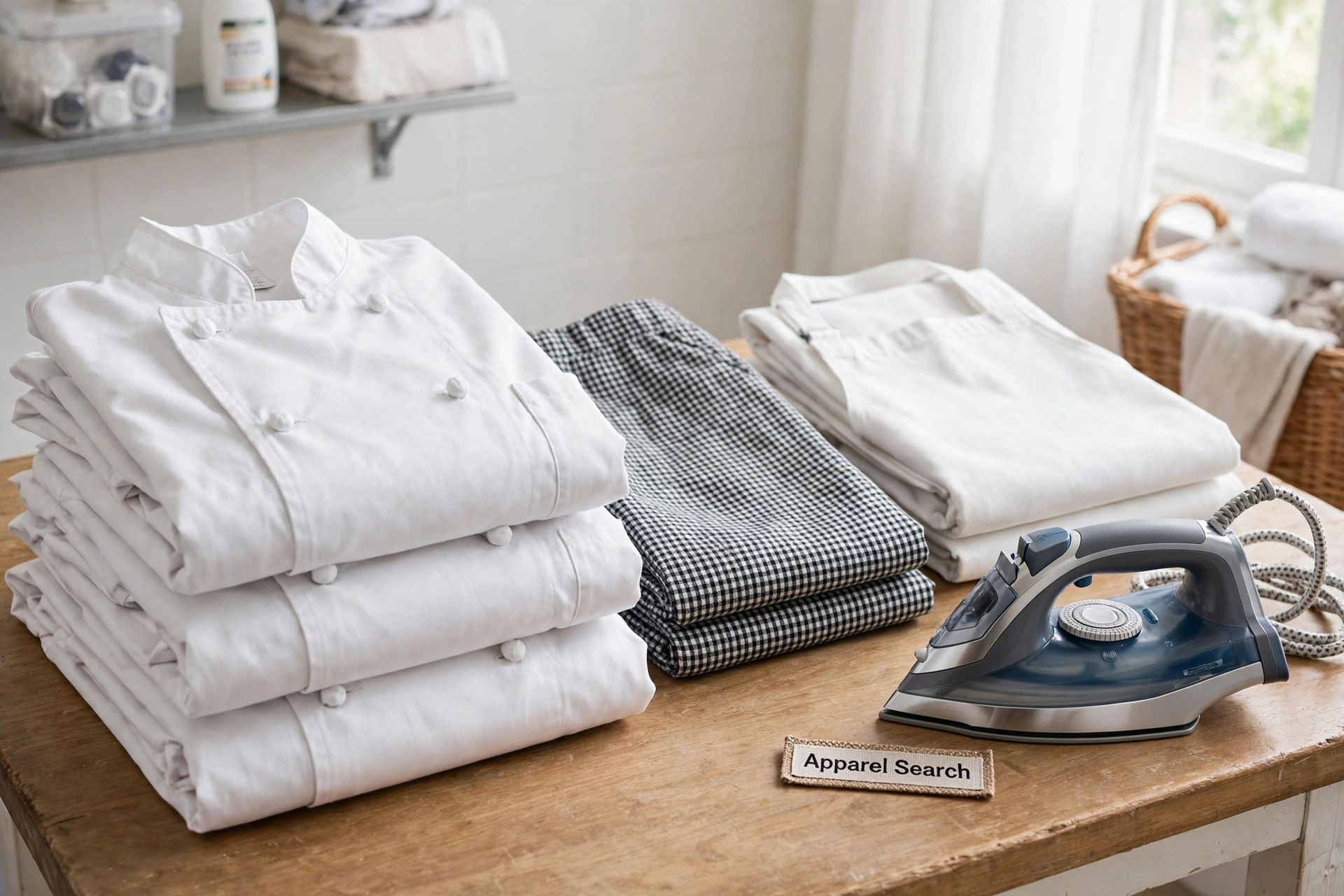 Chef Clothing Fit & CareHow the uniform should fit for work, and the laundry routine that keeps it white.
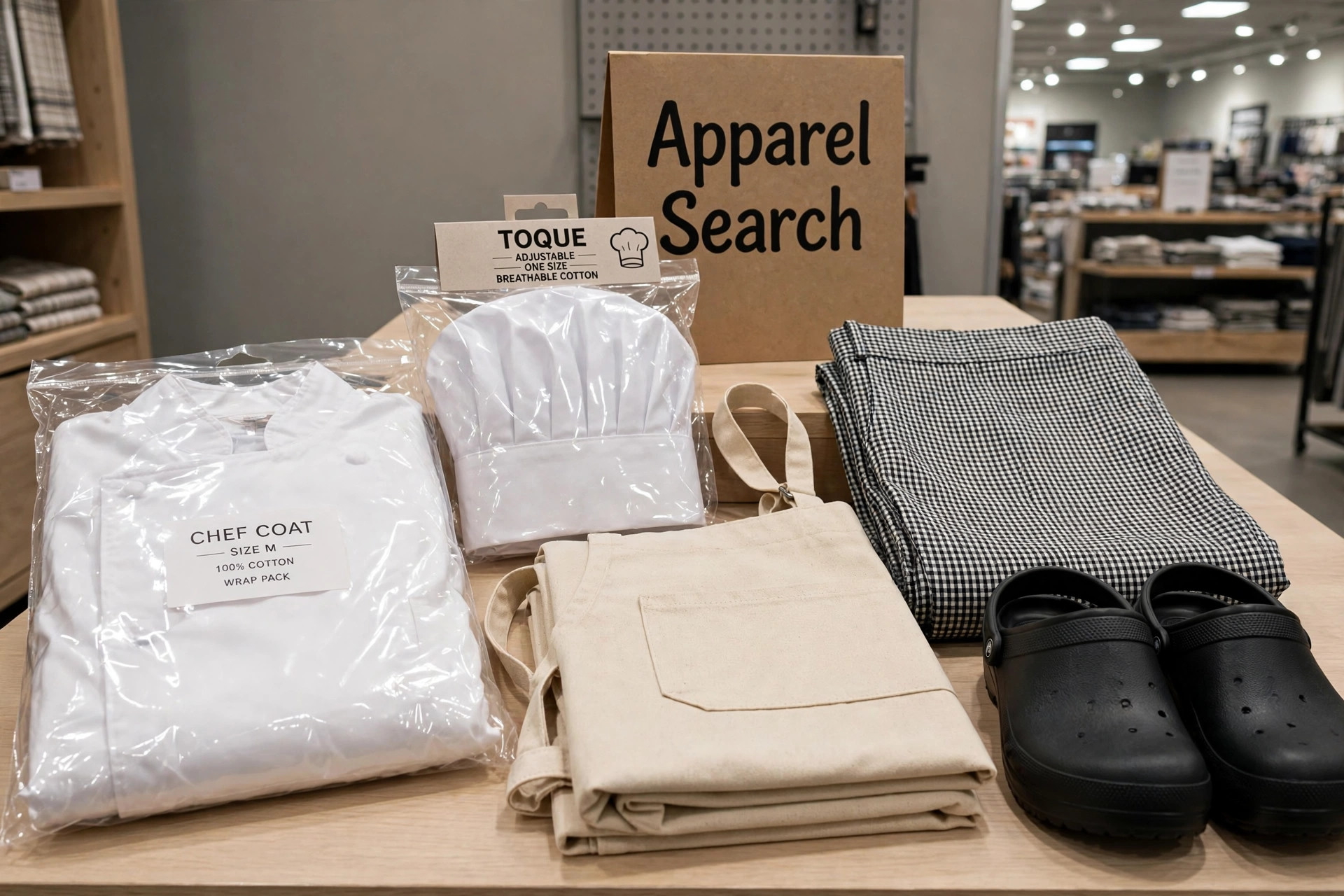 Chef Clothing Buying GuideThe starter kit in order, quality markers, and where to find every piece.