Apparel Search Workwear Guides
Chef Clothing Fit & Care Guide
A working fit for reaching, bending and lifting; fabrics that handle kitchen heat; and the laundry routine — sorting, stains, bleach matched to fiber — that keeps whites white shift after shift.
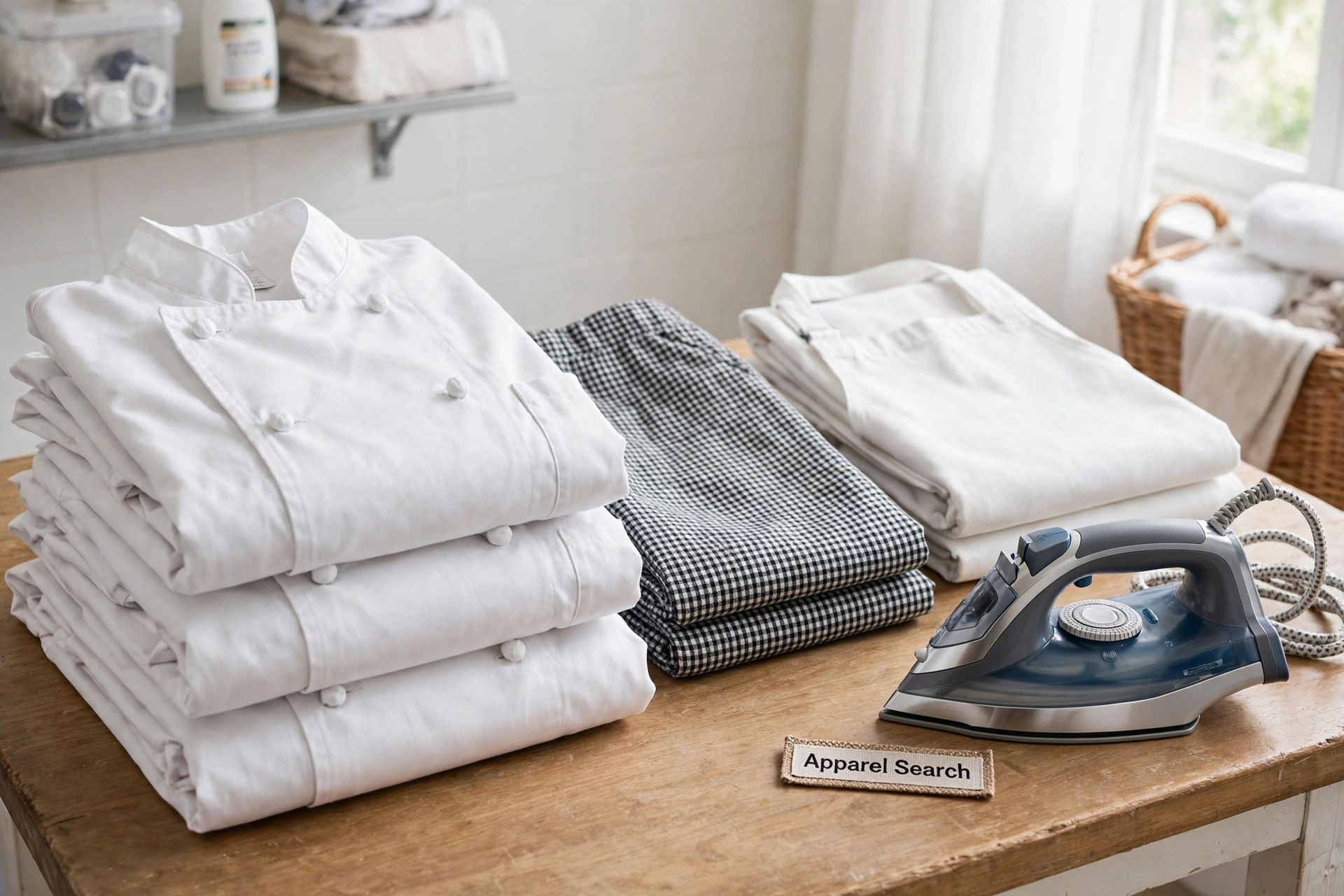
A chef uniform has two working lives. On the shift, it has to move — overhead reaches into lowboys and ovens, deep bends, pans lifted at arm's length — in the hottest room in the building. In the laundry, it has to surrender a day's grease and come back white, because a clean uniform is the kitchen's visible hygiene claim. This guide covers both lives: fit and fabric for the work, then the washing system that keeps the kit presentable. It follows the uniform anatomy in our Chef Clothing Guide.
Fit: Room to Work, Nothing to Catch
Kitchen fit follows two rules that pull in opposite directions, and the uniform's traditional cuts are the compromise between them. The garment must be loose enough to move and breathe — and close enough that nothing dangles near flames, blades and machinery.
The coat
A working coat fits with ease through the shoulders and chest: raise both arms overhead and twist, and the coat should follow without pulling the tails out of the apron strings. Sleeves end at the wrist — long enough to shield the forearm when reaching into ovens, short enough to stay out of the food; many cooks push or roll sleeves for prep work, which is what turned-back cuffs are built for. A coat that binds across the back will be unbuttoned by mid-service, and an unbuttoned coat does neither of its jobs.
The pants
Chef pants fit loose through the seat and thigh and taper toward the ankle, so hot fabric stands off the skin and air can move. The drawstring or elastic waist is functional, not casual: it adjusts through the shift and releases fast. Length should break just at the shoe — dragging hems collect the floor.
Apron and hat
Apron ties should wrap and knot at the front, where the knot can be reached and released quickly, and the bib should cover the coat's button line. Hats fit close enough to stay put through a service; a toque that needs re-seating is a toque that ends up touched by food-side hands. Women's cuts and plus sizes exist across the main makers now — the general sizing landscape is covered in the women's uniforms guide — and a coat cut for the body wearing it beats a unisex coat two sizes up on every measure in this section.
Fabric and Heat
The classic coat fabric is cotton twill: breathable, comfortable against skin, and able to take hot washing and bleach. Its costs are weight when wet and slower drying. Poly-cotton blends trade a little breathability for strength, wrinkle resistance and faster drying — and they change the laundry rules, as the bleach section below explains. Modern performance coats add mesh back panels, vented underarms and lighter weaves that move heat off the back while keeping a traditional front; in genuinely hot kitchens these details matter more than any other buying decision, a point the buying guide returns to. Under the coat, most cooks wear the lightest layer that the house allows, because the coat itself is the insulation.
Change at Work
Many kitchens have cooks change into the uniform on site and out of it before leaving, and the tip our chef clothing retailers page has given for years still holds: the uniform is washed and ironed before it is worn again, and it does not do the commute. A kit bag with a separate compartment for the worn set makes the habit easy to keep.
Laundering Whites: The System
Chef whites are the hardest-working load in anyone's laundry, and the general method is the one in our laundry guide — with kitchen-specific pressure at three points: grease, stains and bleach.
Sort hard
Whites wash alone, full stop — the discipline in how to sort and wash clothes matters doubled here, because a single dark sock in a whites load greys every coat in it, and kitchen whites are judged as a set. Aprons with heavy soil get their own pre-soak rather than dragging the whole load down.
Treat the stains that kitchens make
- Grease and oil — the constant one. Work a drop of dish detergent or a dedicated degreasing pretreater into the spot before washing; grease left through a hot dryer sets.
- Tomato, beet and berry — rinse cold first, never hot, which cooks the pigment in. Treat with oxygen bleach soak before the wash.
- Turmeric and curry — the stubborn yellows. An oxygen-bleach soak is the main tool; sunlight on line-dried cotton genuinely helps fade what remains.
- Chocolate, coffee and wine — blot, cold rinse, pretreat, wash. The full stain-by-stain method lives in the garment care guide.
Match the bleach to the fabric
This is the rule that keeps whites white instead of yellow. Chlorine bleach is the traditional tool for pure cotton whites and tolerates the hot wash cotton likes — but it can yellow or weaken synthetic fibers. Oxygen bleach is the safer default for poly-cotton blends and any colored kit, and it works as a soak for stains as well as in the wash. The care label outranks every general rule, including this one.
Dry, iron, present
Coats come out of the dryer — or off the line — while very slightly damp for the easiest pressing. A pressed coat is not vanity: the crease down the sleeve and the flat front are how the uniform reads as maintained, and the method is the one in our ironing guide. Knot buttons survive pressing better when the coat is buttoned and pressed from the inside at the placket.
Rotation and Replacement
The uniform is washed after every shift, so the kit is a rotation, not an outfit. A workable personal rotation is three coats, three pants, and aprons enough to swap mid-shift — one set on, one in the wash, one clean and ready. Employer laundry and rental programs run the same rotation at kitchen scale, as the uniforms guides describe.
Replace pieces on condition, not age:
- Coats — when stains survive the full treatment cycle, the cloth thins at the elbows and button line, or knots fray.
- Aprons — when ties fray or the cloth goes thin; aprons are the cheapest piece and the first line of defense.
- Pants — when the seat and inner thigh wear smooth and thin.
- Shoes — when the tread pattern wears smooth. The upper can look new while the shoe's main feature is gone; check soles, not tops.
The care habits that stretch every work garment's life — wash inside out, mend early, rotate rather than repeat — are collected in our garment care guide, and the fit philosophy here matches the wider workwear world's, covered for the trades generally in the men's workwear guide.
Common Questions
How often should chef whites be washed?
After every shift is the common kitchen standard — the uniform is food-work clothing, and coats and aprons pick up grease, moisture and odors in a single service. That is why working cooks own several sets and rotate them; the rotation advice in this guide is built around washing after each wear.
Can you bleach poly-cotton chef coats?
Check the care label first. Chlorine bleach is a cotton tool and can yellow or weaken some synthetic blends; oxygen-based bleach is the safer default for poly-cotton and colors. Pure cotton whites tolerate the traditional hot wash and chlorine bleach better — the fabric decides, and the label has the final word.
How many chef coats does a working cook need?
Enough to cover your shifts between washes, plus a spare: three coats is a common working minimum for full-time schedules, with the same logic for pants and aprons. If your employer runs a laundry or rental service, they set the count instead — personal kits matter most for students and cooks in small kitchens.
Why do white chef coats go grey or yellow over time?
Usually a laundry cause, not a fabric failure: washing whites with colors, detergent under-dosing against kitchen grease, or bleach used on the wrong fiber. Sorting whites on their own, treating grease spots before washing, and matching the bleach to the fabric keeps coats bright far longer.
The Chef Clothing Guide
The whole kitchen wardrobe — the pieces, the brigade that wears them, and the standards behind the uniform.
Related Guides
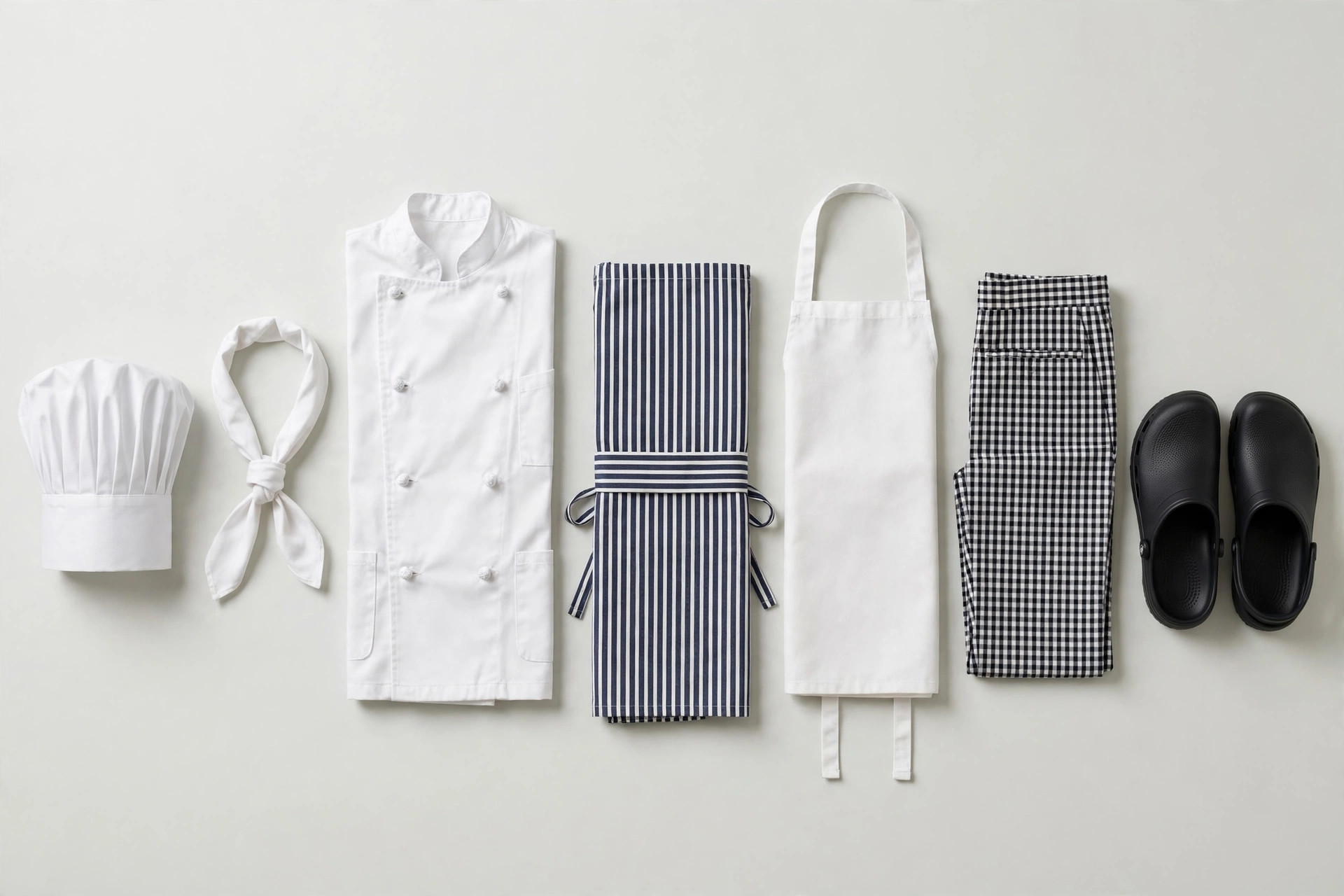 The Chef Uniform, ExplainedWhy each piece of the uniform is built the way it is.
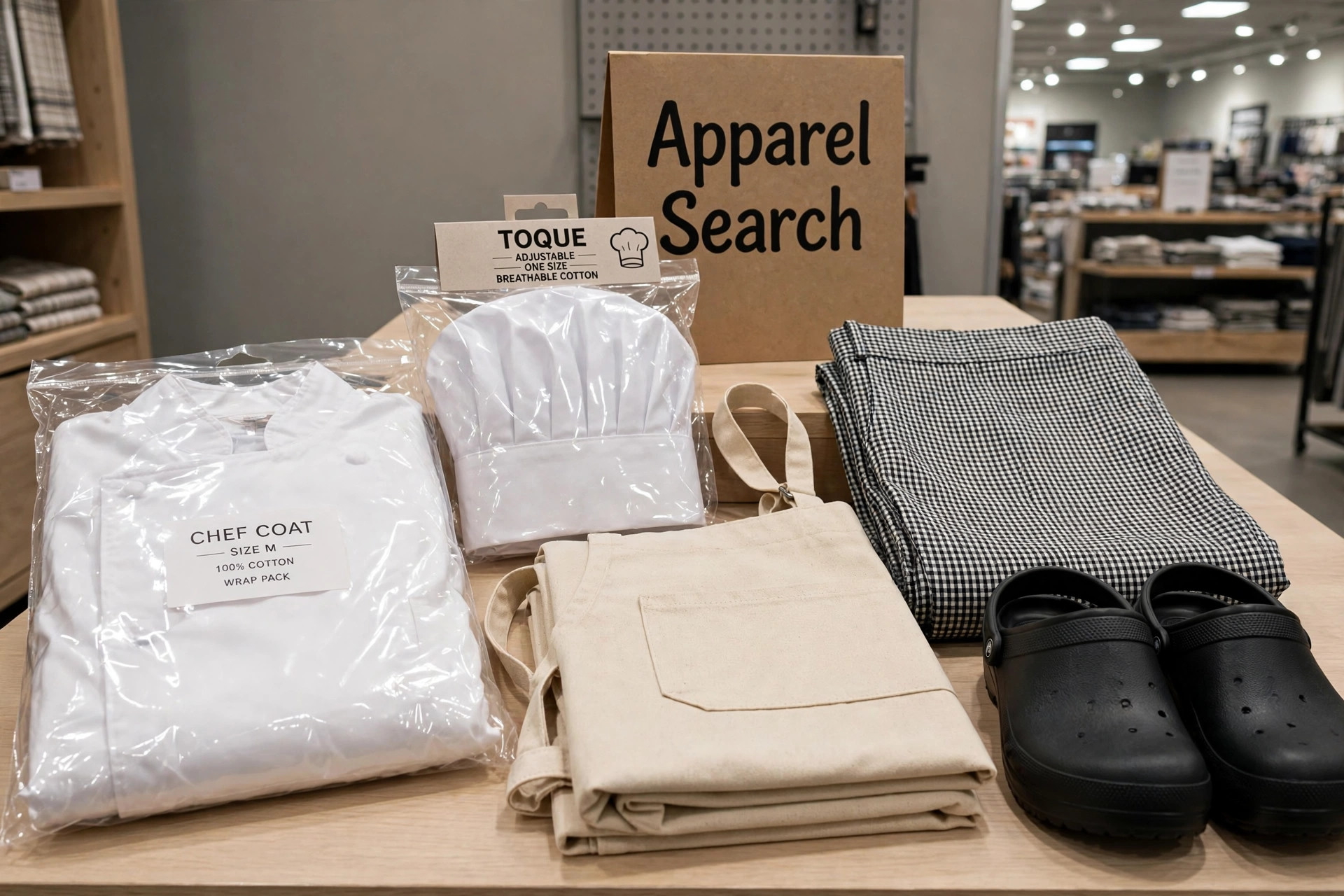 Chef Clothing Buying GuideThe starter kit in order, quality markers, and where to find every piece.