Laundry & Dry-Cleaning Workers Job Description
Washing, drying, finishing and returning clothing — the cleaning trades behind the garment industry
Laundry and dry-cleaning workers clean and finish clothing and other textile articles for customers, retailers, hotels, uniform services and the garment trade itself. They receive and sort items, treat stains, operate washing and dry-cleaning machines, dry, press and finish garments, and package or hang them ready for return. The work ranges from the neighbourhood dry cleaner's shop to large commercial laundries serving hospitals, hotels and clothing companies — and wherever it is done, it is hands-on textile work that depends on knowing fabrics, cleaning agents and finishing equipment.
More Job Descriptions by Letter:
Start Here: Laundry & Cleaning Work
Receiving, Sorting and Treating Garments
The job begins at the counter or the loading dock. Workers check garments in, record the customer's instructions, note existing damage or missing trimmings, and attach identification tags so each item can be traced through the plant and returned to its owner. Sorting follows: by colour, fabric, cleaning method and degree of soiling. A silk blouse, a wool suit and a load of cotton workwear cannot share a process, and the sorter's fabric knowledge decides which machine, solvent or wash programme each pile receives.
Stain treatment — spotting — is the skilled heart of the intake stage. Spotters examine garments under light, identify stains where they can, and treat them with steam, water, detergents and specialised chemicals before or after the main clean, working carefully because the wrong agent sets a stain permanently or strips a dye. Workers also empty pockets, protect buttons and embellishments, and place delicate items in mesh bags before they go anywhere near a machine.
Operating Washing and Dry-Cleaning Equipment
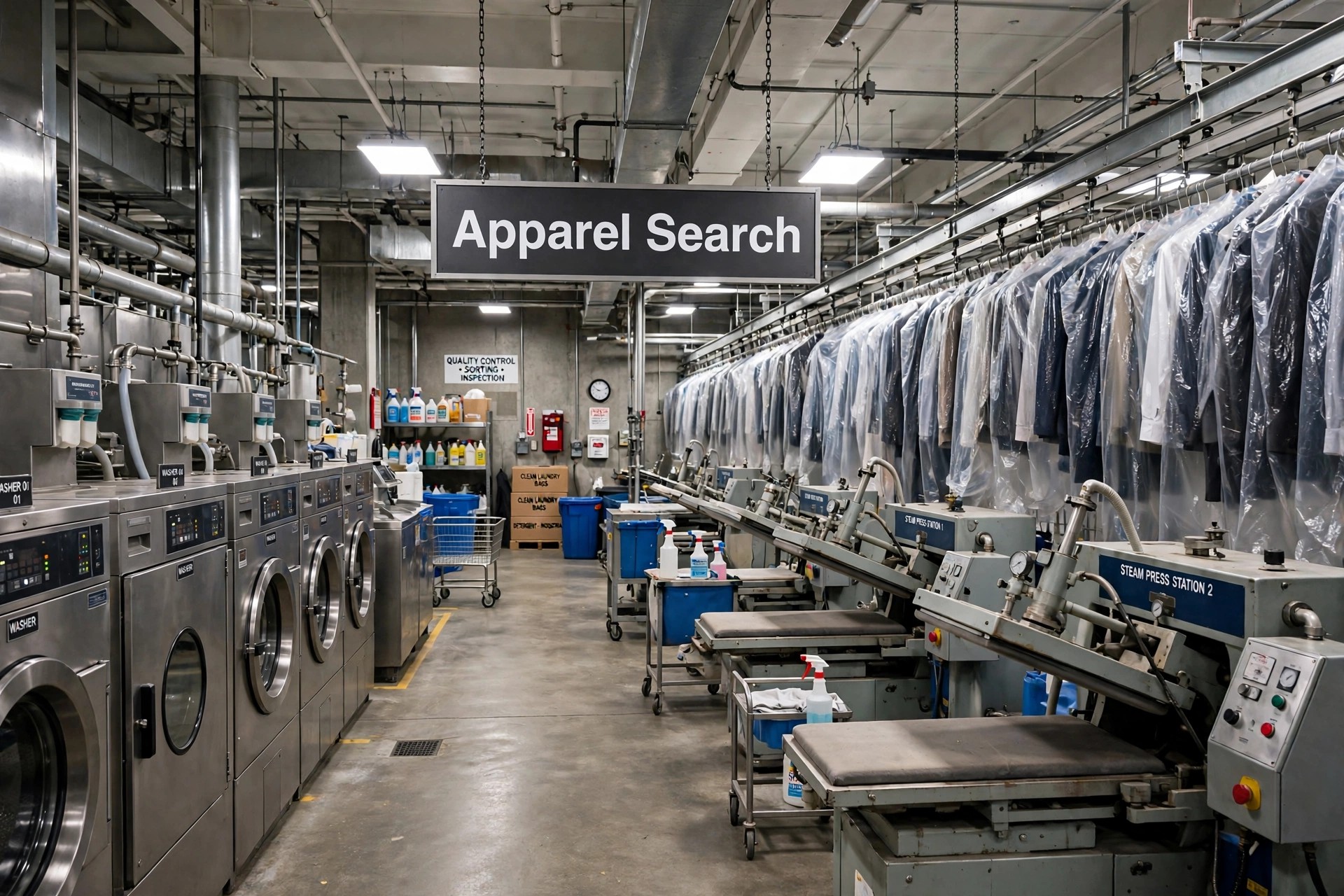
Production workers load and run the plant's machines: commercial washers and washer-extractors for water-washable goods, and dry-cleaning machines that wash in solvent rather than water for garments that water would damage. They weigh loads, select cycles, measure detergents and solvents, monitor machines through the cycle, and unload, moving work steadily from station to station. In a commercial laundry the same rhythm runs at scale — continuous-batch washers, tumble dryers, and flatwork ironers processing linen and uniforms by the hundredweight.
The equipment side of the job carries real responsibility. Workers keep machines clean and report faults early, handle cleaning chemicals safely, follow the plant's rules for solvent storage and ventilation, and keep loads moving so the finishing department is never starved or flooded. Laundry machinery is heavy, hot and wet; a worker who respects its routines — guards in place, no reaching into moving drums, correct lifting of wet loads — is protecting both the garments and the crew.
Finishing, Pressing and Returning Work
Cleaning is only half the occupation; finishing is the other half. Washed items are dried, then finished on steam presses, form finishers and hand irons — shirts shaped on formers, trousers creased on trouser presses, dresses and blouses steamed and touched up by hand. Dry-cleaned garments are pressed and inspected under light for remaining stains, solvent odour or pressing faults, and re-processed if they fail inspection. Finishing is where the customer judges the whole firm, and experienced finishers are valued accordingly.
Finished work is assembled back into its orders: garments matched to their tags, hung in sequence, covered in protective film, and counted ready for the counter, the delivery route or the dispatch rail. Workers may also handle the return side directly — taking payment, explaining a stain that would not move, and recording complaints — especially in small shops, where the same person who pressed a suit may hand it back to its owner an hour later.
Skills, Training and Career Paths
Most laundry and dry-cleaning workers learn on the job, starting on simpler stations — sorting, loading, folding flatwork — and moving to spotting, machine operation and finishing as their fabric knowledge grows. Employers look for stamina for standing, warm and physical work, careful handling, colour vision for sorting and stain work, and the reliability a same-day service depends on. Formal qualifications are rarely demanded, though experience with particular machines, solvents or garment types commands better pay, and spotting and finishing skill is genuinely scarce. The working environment deserves an honest word: plants are warm, humid and noisy, the work is standing and physical throughout the shift, and the day's rhythm is set by turnaround promises — the hotel's linen, the customer's suit for Saturday — that the whole crew feels when a machine goes down.
Career paths run in several directions: to senior finisher or spotter, to plant supervisor and manager roles in larger laundries, into route and customer-service work for commercial laundries, or into opening a shop of one's own — dry cleaning remains one of the garment trades where a skilled worker can realistically become a proprietor. The occupation also neighbours the pressing trade: the general guide to pressers in clothing is linked from this page, and warehouse finishing is covered in the Transportation & Warehouse category.
Common Questions
What is the difference between laundry work and dry cleaning?
Laundry work cleans with water and detergent in washing machines; dry cleaning uses solvent instead of water, for garments that water would shrink, distort or bleed. Most plants do both, and workers sort each garment to the process its fabric and construction require.
Do laundry and dry-cleaning workers need qualifications?
Usually not formal ones. Training is given on the job, station by station, and advancement depends on fabric knowledge and skill — above all spotting (stain treatment) and finishing (pressing), the two crafts the trade finds hardest to replace.
Where do laundry and dry-cleaning workers work?
In neighbourhood dry-cleaning shops, commercial laundries serving hotels, hospitals and uniform services, hotel and institutional laundries, and the cleaning departments of large retailers and garment firms that process returns and display stock.