Pressers Job Description — Clothing
Steaming, pressing and finishing garments — the general guide to the clothing presser's occupation
Pressers finish clothing with heat, steam and pressure. They press garments during manufacture and after it — shaping seams, setting creases, removing wrinkles and giving finished clothing the smooth, deliberate appearance customers expect — working with steam presses, hand irons, form finishers and steam tunnels in factories, laundries, dry cleaners, alteration workrooms and warehouses. This page is the general guide to the occupation as a whole: the craft of pressing clothing, wherever it is practised. Related pages cover the same craft in two specific settings, and the differences are explained below.
More Job Descriptions by Letter:
Start Here: Pressing Work
The Pressing Craft: Heat, Steam, Pressure and Timing
Pressing looks simple and is not. Every garment asks four questions — how much heat, how much steam, how much pressure, for how long — and the answers change with fibre, weave, construction and finish. Cotton and linen take heat and moisture generously; wool is shaped by steam and pressure and keeps the shape it is pressed into; synthetics glaze, shine or melt at temperatures natural fibres shrug off; delicate and embellished garments may be steamed only, from the inside, or finished entirely by hand. The presser's knowledge is that matrix, learned garment by garment until it is reflex.
Technique distinguishes pressing from ironing. The presser works a garment in sections, lifting and placing the iron or closing the press rather than dragging it, shaping as they go: seams pressed open or to one side as construction demands, darts flattened without imprinting, creases set where the design puts them and nowhere else, collars and cuffs rolled to their natural curve. Under-pressing during sewing — pressing each seam as it is made — is part of the same craft, and garments made with it keep their shape in a way final pressing alone cannot achieve.
Equipment: Steam Presses, Form Finishers and Hand Work
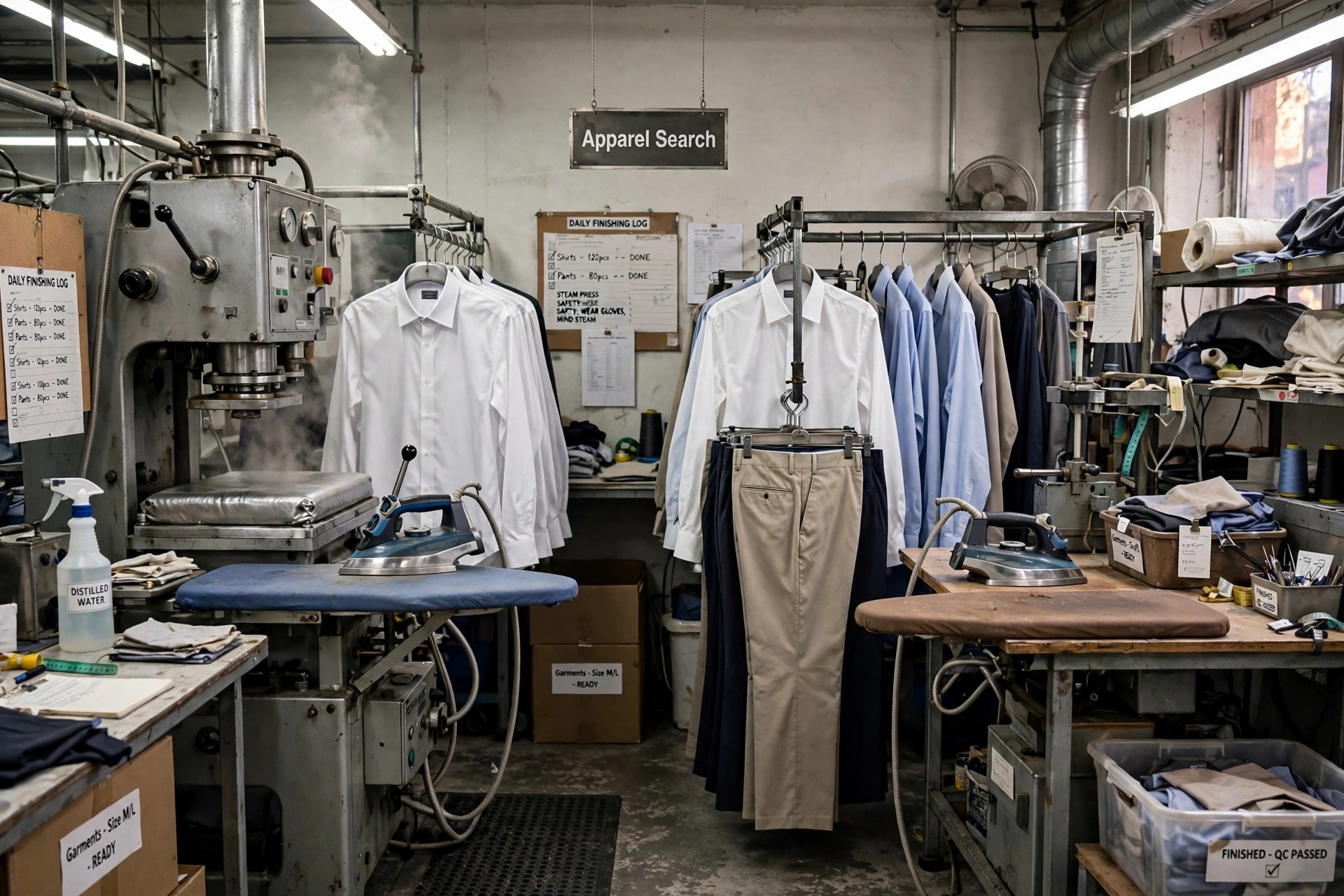
The occupation's machinery ranges from the hand iron and sleeve board of the alteration workroom to the production press line. Utility and legger presses shape garment parts between heated bucks; form finishers blow steam and air through garments on inflatable forms, finishing jackets and dresses without press marks; shirt units press bodies and sleeves in sequence; steam tunnels finish hanging garments at volume. Pressers operate, feed and monitor this equipment, adjust its settings by fabric, and keep it clean and safe — boiler-fed steam equipment is unforgiving of carelessness.
Setting decides the equipment mix. A factory presser works production equipment at line pace, finishing garments as they are made. A laundry or dry-cleaning presser handles finished garments of every type in sequence, changing settings constantly. A workroom presser in tailoring or alterations does the finest hand work, shaping individual garments to individual bodies. The machinery directories linked from this page — pressing, ironing and heat-transfer equipment — show the tools in trade terms, but the occupation's constant is the judgement that operates them.
Pressing Across the Trade — and the Two Related Pages
Because pressing is needed wherever garments are made, cleaned, altered or distributed, the presser appears in more corners of the industry than almost any other craft worker, and this section of Apparel Search describes the occupation in three places that should not be confused. This page is the general treatment — the craft itself, across all its settings. The Production category carries the factory press operator's page, written for the production line where pressing is one station in garment manufacture. The Transportation & Warehouse category carries a pressers page for the distribution centre, where already-made garments arrive creased from transit and are finished against shipping deadlines and retailer presentation standards.
The distinctions matter to anyone researching the work, because employers, pace and standards differ by setting even though the craft transfers between all three. A presser moving from a factory to a distribution centre keeps the fabric judgement and gains a shipping calendar; one moving into dry cleaning gains every garment type and the customer's own clothes. Reading the three pages together gives the full picture of a single occupation practised across the trade, and each page links the others.
Skills, Training and Career Paths
Pressers are usually trained on the job, beginning on simple garments and equipment under supervision and taking on delicate, tailored and high-value work as judgement develops. Employers look for a feel for cloth, patience, an eye for finish — the ability to see a shine mark, an imprint or a missed crease before a customer does — steady hands, and stamina for standing work in the warmth pressing stations generate. Prior experience from any pressing setting is welcomed in the others, precisely because the core craft is portable.
Progression runs to senior presser for the finest work, to finishing-team supervision in larger plants and laundries, and sideways into quality inspection, sample-room finishing and training roles. Pressing also supports self-employment more readily than most garment crafts: alteration and pressing services, and the finishing side of dry-cleaning shops, are commonly run by the pressers who do the work. In an industry that increasingly values garment care, repair and resale presentation, skilled pressing is a durable trade.
Common Questions
What does a presser do in the clothing industry?
Finishes garments with heat, steam and pressure: pressing seams and shaping during manufacture, and removing creases and setting the final appearance of finished clothing, using steam presses, form finishers, steam tunnels and hand irons chosen and set for each fabric.
What is the difference between pressing and ironing?
Ironing smooths a garment's surface, usually at home. Pressing is the trade craft: controlled heat, steam, pressure and timing applied in sections to shape construction — seams, darts, creases and collars — as well as to smooth, with settings judged by fibre and garment type.
Why are there three presser pages in this section?
Because the occupation is practised in three distinct settings. This page is the general guide to the craft; the Production category page covers the factory press operator, and the Transportation & Warehouse page covers distribution-centre finishing. Each treats its own setting and links the others.