Production Management & Engineering Job Description
Running and improving the making of clothing — the broad management and engineering occupation overview
Production management and engineering is the discipline of making clothing manufacture work: planning what a factory produces and when, organising lines, people and machinery to produce it, measuring the work, and improving the methods by which garments are made. Production managers run the operation day to day; production and industrial engineers study it — timing operations, balancing lines, specifying machinery and methods — so the operation gets faster, cheaper and more consistent without breaking its people or its quality. This page is the broad overview of that occupation across the apparel industry.
More Job Descriptions by Letter:
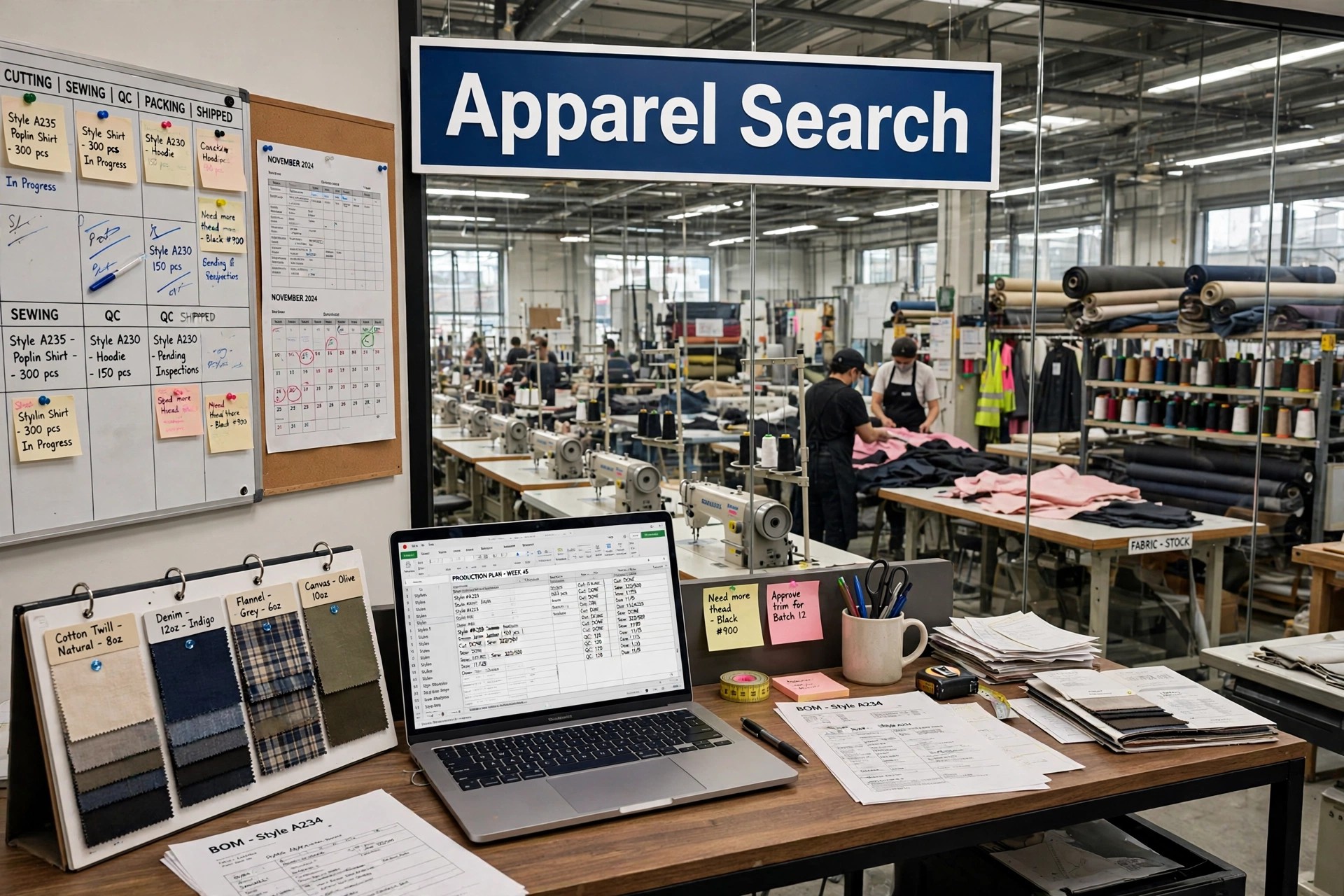
Start Here: Production Management Work
Production Management: Planning and Running the Floor
The production manager's first responsibility is the plan: converting orders into a production schedule that loads cutting, sewing and finishing capacity in sequence, with fabric and trims arriving before each stage needs them and delivery dates honoured at the end. That plan is a living negotiation with reality — a late fabric delivery, a broken machine, an absent line of machinists — and managing it means re-sequencing work, moving styles between lines, and telling merchandisers early and honestly what the factory can and cannot do.
Day to day, management is supervision at scale: line supervisors and their teams, output against hourly and daily targets, quality checkpoints that catch faults while they are cheap, and the discipline of a floor where hundreds of people and thousands of garments move together. The production manager owns the factory's key numbers — efficiency, output, defect and rework rates, on-time delivery — and answers for them to owners and customers alike. It is the most operationally accountable role in garment manufacture.
Production Engineering: Methods, Time and Line Balancing
Where management runs the system, engineering improves it. The production engineer — in apparel often called an industrial engineer or work-study officer — breaks each garment into its operations, times them with stopwatch or predetermined motion systems, and calculates the standard minute value on which line loading, costing and incentive pay all depend. From those times the engineer balances the line: distributing operations among machinists so each station's work matches, no station starves or drowns, and the line's output is set by design rather than by its slowest accident.
Methods engineering is the creative half: redesigning how an operation is done — a folder, a guide, a template, a different machine or a resequenced step — to remove seconds and strain together. Engineers specify and justify machinery, plan line layouts for new styles, run changeovers, and train supervisors in the improved method. The discipline is quantitative but its material is human: a method that times well and exhausts or injures machinists is a bad method, and good engineers measure both.
Quality, Cost and the Engineer's Wider Remit
Management and engineering share the factory's economics. Labour is the largest controllable cost in garment making, and the standard minutes engineering sets become the labour costs merchandising quotes from — an inaccurate standard quietly poisons every price the factory gives. Quality systems sit in the same remit: setting inspection points, analysing defect patterns back to their operations, and deciding whether a fault is a training problem, a method problem or a machine problem. Production leadership that cannot read its own numbers is managing by anecdote.
The remit keeps widening. Compliance and safety — machine guarding, needle policies, fire and building safety, buyer codes of conduct — are administered on the production floor. Sustainability measures land there too: fabric utilisation, energy per garment, waste handling. And the role now works alongside planning software, production tracking systems and increasingly automated cutting and handling, which engineers evaluate and managers must make pay. The Production & Sourcing category of this section describes the individual posts around this occupation — managers, engineers and coordinators in their specific workplaces; this page is the overview of the field they belong to.
Skills, Qualifications and Career Paths
Production managers most often rise from the floor — line supervision, quality, work study — adding planning and people leadership as they climb; engineering entrants more often arrive with industrial engineering, clothing technology or textile qualifications, then learn the garment trade's specifics on its lines. Both halves need numeracy that survives contact with a real factory: capacity arithmetic, cost per minute, efficiency calculation. Both need the authority that comes from understanding the work — a production leader who has never watched a difficult operation performed will not be believed by those who perform it.
Careers run to factory manager and general manager posts, to multi-factory and sourcing-office production leadership, and into consultancy, where experienced engineers sell method and layout improvements to factories they do not run. The occupation also exports well: its skills — planning, work measurement, line design, quality systems — transfer across every labour-intensive manufacturing industry, though apparel specialists carry the added craft of fabric, fit and style changeover that general industry never demands at fashion's pace.
Common Questions
What is production management in apparel manufacturing?
Planning and running garment production: scheduling orders across cutting, sewing and finishing, supervising lines and supervisors, and owning the factory's output, efficiency, quality and on-time delivery figures.
What does a production engineer do in a clothing factory?
Studies and improves the work itself: timing operations to set standard minutes, balancing sewing lines, designing methods and workplace layouts, specifying machinery, and analysing quality and cost data back to the operations that produce them.
How do people enter production management or engineering?
Managers usually rise from line supervision, quality or work-study roles inside factories. Engineers often enter with industrial engineering or clothing-technology qualifications. Both routes demand strong practical numeracy and credibility earned on the production floor.