Sales & Selling Job Descriptions
Fashion sales careers — territory selling, showroom selling, product specialisms and the sales management ladder
Selling is how a fashion collection becomes a business. Factories can produce and designers can create, but until a salesperson presents a range to a retail buyer, agrees sizes, prices and delivery dates, and writes the order, nothing moves. This directory collects the Apparel Search descriptions of the people who do that work — forty-eight roles, from the showroom floor and the road territory to the national sales office — organised by letter below. Each description explains what the role actually involves: its duties, skills, qualifications, work environment and career path, so you can research a direction before you search for vacancies. One page, all forty-eight roles, listed exactly once under the letter each title begins with.
Browse Sales & Selling Job Descriptions by Letter:
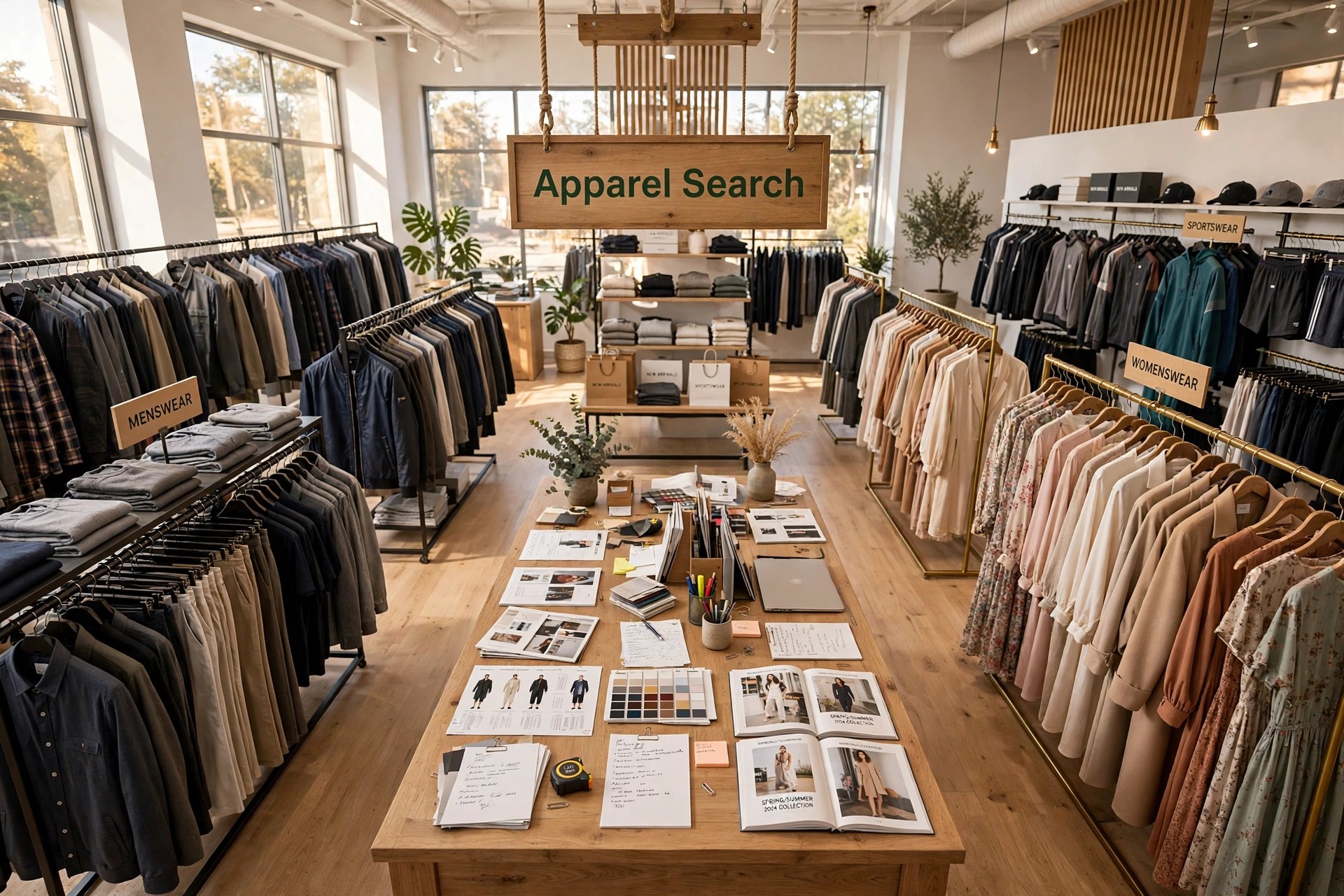
Fashion Sales Careers
A selling career in fashion usually begins close to the product. Sales assistants support showrooms and representatives, learning how samples are prepared, how line sheets are priced and how an order is written without errors. From there the ladder widens in two directions at once. One direction is scope: a representative takes a territory, then key accounts, then a region, and the strongest sellers eventually run national programmes or step up to vice president of sales. The other direction is depth: sellers concentrate on one product world — menswear tailoring, womenswear dresses, footwear, handbags, textiles by the yard — until their product knowledge itself becomes the reason buyers take their calls.
The twenty-three titles under S show how employers name this work. That letter holds the generalist roles — sales assistant, sales executive, sales manager and sales person — alongside specialisms named for what is sold: branded apparel, licensed apparel, maternity, plus size, kidswear and sportswear among them. The showroom titles sit there too, because the showroom is where wholesale selling happens during market weeks, when buyers travel to see ranges and place orders.
Choosing a Direction in Sales & Selling
Start with how you like to work. Road selling suits people who enjoy autonomy, driving a territory and building long relationships with independent store owners. Showroom selling suits people who thrive on intensity in short bursts — market weeks when dozens of appointments are packed into days — and on presentation craft. Product specialisms suit people who love one category enough to know its fabrics, fits and size scales better than anyone. Management roles, from regional manager to the vice president under V, suit sellers who discovered they were just as good at forecasting, coaching and negotiating terms as they were at presenting a rail.
Textiles, under T, are the quiet exception worth noticing: textile salespeople sell fabric rather than finished garments, to the manufacturers and brands who will cut it, and their world runs on swatches, yardage, minimums and lead times instead of seasons on a rail. Reading a neighbouring description or two before choosing is time well spent — menswear sales and the menswear overview under M, for example, describe overlapping ground from different depths, and the womenswear pages under S and W do the same.
All Sales & Selling Job Descriptions by Letter
Every sales and selling role description in this category, listed under the letter its title begins with. Letters without a linked entry have no established role title in this category.
C — Sales & Selling Roles
F — Sales & Selling Roles
I — Sales & Selling Roles
M — Sales & Selling Roles
N — Sales & Selling Roles
R — Sales & Selling Roles
S — Sales & Selling Roles
- Sales Assistant — Fashion
- Sales — Big & Tall Sizes
- Sales — Branded Apparel
- Sales — Childrenswear
- Sales Consultant
- Sales Executive
- Sales Forecaster / Sales Forecasting
- Sales — Kidswear
- Sales — Licensed Apparel
- Sales — Major Accounts
- Sales Manager
- Sales Manager — Knits
- Sales Manager — Menswear
- Sales Manager — Womenswear
- Sales Manager — Wovens
- Sales — Maternity Fashion
- Sales — Menswear
- Sales Person — Fashion Industry
- Sales — Plus Size Apparel
- Sales — Womenswear
- Showroom Sales
- Showroom Sales Manager
- Sportswear Sales
T — Sales & Selling Roles
V — Sales & Selling Roles
W — Sales & Selling Roles
Common Questions
How are these sales job descriptions organised?
Alphabetically by role title, in ten letter sections — C, F, I, M, N, R, S, T, V and W — covering 48 descriptions. The alphabet bar at the top jumps to each section on this page, and every role page carries the same bar for moving between letters.
What kinds of selling roles does this category cover?
Three families: territory and account selling to retailers, showroom selling during market weeks, and product-specialist selling — menswear, womenswear, footwear, textiles, sportswear, plus size and more — together with the regional, national and vice president roles that manage them.
Are these job listings or job descriptions?
Descriptions. Each page explains what a role involves — duties, skills, qualifications, work environment and career path — so you can research a fashion sales career before searching current vacancies through the employment agencies and search engines linked below.