Women's Lingerie Sales Job Description
Selling intimate apparel as a product range — construction, sizing systems, fabrics and continuity replenishment
Women's lingerie sales is the selling specialism for intimate apparel: bras, briefs, shapewear and related undergarments, sold to department stores, lingerie specialists and clothing chains. It is among the most technical selling roles in fashion, for a product reason: a bra is an engineered garment of many components, sold across one of the widest size matrices in any store, and much of the range is continuity stock replenished continuously rather than bought once a season. This page describes the role in product terms throughout — construction, sizing, fabrics and the replenishment systems the category runs on.
More Sales & Selling Job Descriptions by Letter:
Construction: Selling an Engineered Garment
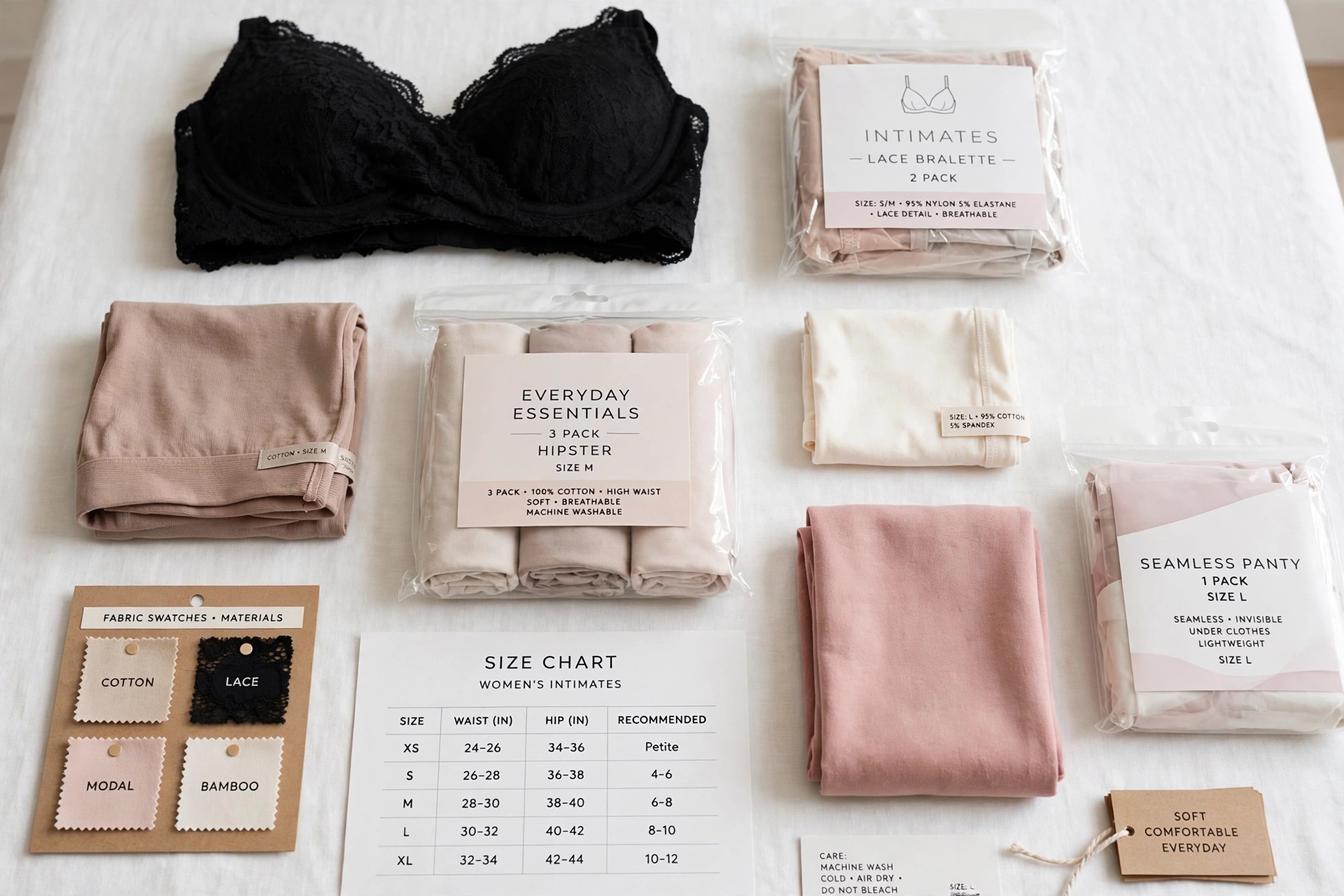
The salesperson's core knowledge is how the product is built. A bra combines cups — moulded, padded, wired or soft — with a centre gore, wings whose fabric power and elastane content provide most of the support, straps, hook-and-eye fastenings of varying depth, and underwires whose gauge and casing change with size. Briefs are specified by rise, leg line and fabric; shapewear by compression level and panel construction. Buyers assess samples construction first, because fit failures in this category are construction failures, so the salesperson presents a range the way an engineer would: component by component, size by size, explaining how a construction scales from the smallest band and cup to the largest rather than showing a single sample size.
Fabrics carry the same specification discipline. Elastane content and recovery in wings and brief fabrics, lace that stretches without losing its pattern, smooth microfibres for seamless finishes under clothing, cotton and modal blends for everyday briefs, and satin and silk at the premium end — each is quoted with its performance, not its romance. The category's language stays practical in a good sales appointment: support, recovery, skin comfort, wash performance. Salespeople who can discuss a range at that level are the ones buyers trust with a department where a wrong construction decision returns in carrier bags.
Sizing Systems and the Size Matrix
Bra sizing combines a band number with a cup letter, and a single style can run to dozens of band-and-cup combinations, each needing stock depth in proportion to its demand. Building that matrix with each account — where the range starts and ends, which sizes carry depth, which are presence-only — is the lingerie salesperson's defining arithmetic, shared with the lingerie buyer on the other side of the desk. Briefs, hosiery and shapewear carry their own sizing systems alongside, and the salesperson keeps those systems consistent and intelligible across the brands an account stocks, because customers move between brands inside one department.
Fit services are part of the selling system the salesperson supports. Stores sell this category with trained fitting staff, and the supplier side contributes fitting training, size-conversion charts between brands and systems, and honest guidance on how a given construction fits — firm or generous in the band, full or shallow in the cup. Return reasons are read as product data: a style returned across sizes for the same strap or wire fault is a construction problem to take back to the maker, and the salesperson who carries that feedback loop diligently improves the range they will sell next season.
Continuity Ranges, Seasonal Ranges and Replenishment
The department runs two ranges at once. Continuity styles — proven bras, everyday briefs, basic shapewear — are kept in stock permanently and replenished on regular cycles, planned from size-level sales history; the salesperson monitors availability size by size, agrees replenishment quantities, and guards the rule that a popular size must never break, because a customer replacing a favourite style buys the department's whole offer only while her size is reliably there. Seasonal ranges — new colours, lace stories, fashion shapes and gift-oriented sets — refresh the department on the apparel calendar and are sold with the same size-matrix discipline applied to a shorter life.
Peaks are planned, not discovered. The holiday and gifting season multiplies demand for boxed sets and sleepwear-adjacent lines; promotional events drive brief and hosiery volume; and the salesperson sequences deliveries so those peaks are served without draining the core sizes everyday customers depend on. End-of-season conversations are equally structured: which seasonal colours clear, which earn a place in continuity, and what the return and sell-through data says the next season's matrix should look like. In this category the spreadsheet is a selling tool, and fluency with size-level data is what separates its senior salespeople.
Skills, Qualifications and Career Path
Employers look for precision before flair: experience selling sized, technical product; fluency with band-and-cup matrices and replenishment cycles; and the matter-of-fact, professional manner the category's fitting-room and vendor conversations require. The usual routes in are assistant and sales roles in lingerie, hosiery or underwear departments — the lingerie buyer page in this directory describes the same product world from the buying side, and movement between the two is common — or trained fitting experience moving into wholesale. Garment-technology knowledge is a genuine advantage and is tested in interviews with samples, not certificates.
Progression runs to larger intimate-apparel accounts and department-store groups, sales management across lingerie, hosiery and sleepwear portfolios — the three are routinely carried together — and into product and technical roles with lingerie brands, where construction and sizing knowledge is used to build ranges rather than sell them. Because fit-driven categories accumulate expertise slowly, experienced lingerie salespeople are specialists in the full sense: their size-level knowledge of what a department sells, returns and reorders is an asset no generalist can quickly replace.
Common Questions
What does a women's lingerie salesperson sell?
Intimate apparel as a technical product range — bras, briefs, shapewear and related undergarments — sold to department stores, lingerie specialists and chains, with orders built across each style's full band-and-cup size matrix and much of the range replenished continuously.
Why is lingerie described as an engineered garment in sales terms?
Because a bra is assembled from many components — cups, gore, wings, straps, fastenings and underwires — that must perform together across dozens of sizes. Buyers and salespeople discuss construction, fabric power and recovery and size scaling as specifications, because fit failures are construction failures.
What does replenishment mean in lingerie sales?
Core styles are not bought once a season; they are kept in stock and reordered on regular cycles, size by size, from sales history. The salesperson monitors size-level availability and protects popular sizes from breaking, while seasonal colours and styles refresh the department around that continuity core.