Lingerie Buyer Job Description
Buying bras, underwear, hosiery and sleepwear — construction, sizing accuracy and dependable replenishment
A lingerie buyer selects the bras, briefs, hosiery, shapewear and sleepwear a store sells. It is one of the most technical buying desks in apparel, because the products are engineered garments: a bra is a structured piece of construction with dozens of components, sold across one of the widest size ranges in the store, and bought by customers on fit and comfort far more than on fashion alone. Much of the range is never out of stock by design — core styles are replenished continuously rather than bought seasonally — which makes this buyer's planning discipline closer to a supply operation than to most fashion categories. This page explains the role in those practical terms: construction, fabrics, sizing, fit and replenishment.
More Buying Job Descriptions by Letter:
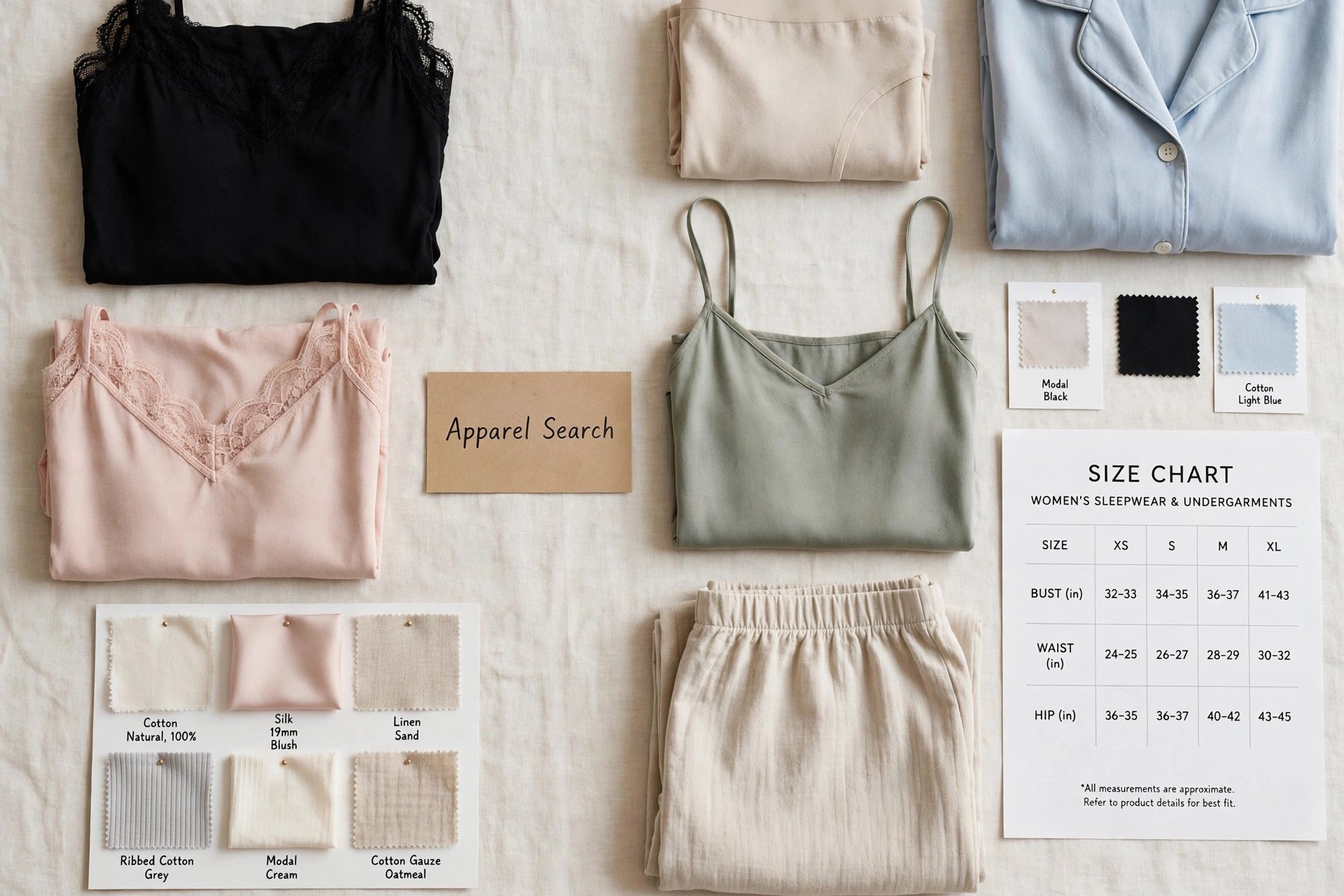
What a Lingerie Buyer Does
The lingerie buyer builds and maintains two ranges at once. The first is the continuity range: proven bra styles, everyday briefs, hosiery and basic sleepwear that customers replace like for like, often for years. These lines are planned by size-level sales history and replenished on regular cycles, with the buyer's attention on never breaking a popular size. The second range is seasonal: new colours, lace and fabric stories, gift-oriented sleepwear and fashion shapes that refresh the department and follow the apparel calendar. Balancing dependable continuity stock against seasonal newness — in budget, space and vendor capacity — is the structural decision of the job.
Day to day, the buyer reviews size-level availability, approves replenishment quantities, meets vendors to assess new constructions and fabrics, fits samples with technical colleagues, and agrees the size range each style will carry. Bra fitting data and return reasons are read closely: a style returned across sizes for the same strap, wire or cup problem is a construction fault to fix with the vendor, not a sales problem. The buyer also plans the department's promotional and gifting peaks, when sleepwear and boxed hosiery sell in multiples, without letting those events drain the core sizes everyday customers depend on.
Construction, Fabrics and Sizing: The Product Knowledge
Bra construction is the buyer's core literacy: cup shape and moulding, underwire gauge and casing, strap width and adjustment, hook-and-eye depth, wing fabric power and stretch, and how each element scales as cup and band sizes increase. A construction that works in a small cup can fail in a large one, so the buyer assesses samples across the size range, not at a single sample size. Fabrics are judged on support, recovery and skin comfort — elastane content and power in wings and briefs, lace that stretches without losing pattern, cotton and modal blends for everyday briefs, and smooth microfibres where a seamless finish under clothing is the point.
Sizing accuracy is the department's promise. Bra sizes combine a band number with a cup letter, and the full matrix — bands crossed with cups — can run to dozens of combinations per style, each needing depth proportional to its demand. The buyer sets that size architecture style by style, using fitting feedback and sales data to decide where the range should start, end and carry its deepest stock. Briefs, hosiery and sleepwear carry their own sizing logic, including hosiery height and weight variants, and the buyer keeps those systems consistent across vendors so customers can move between brands in the department without relearning their size.
Skills and Abilities the Role Requires
Precision is the defining skill. Size matrices, replenishment cycles and multi-component constructions all punish approximation, so the lingerie buyer works from detailed size-level data and keeps exact records of fit approvals and construction changes. Analytical strength matters more here than trend-chasing: the buyer must spot a size quietly going out of stock across stores, read return-reason patterns, and forecast continuity demand that fashion buyers would consider background noise. Numeracy covers margin across a very wide size range, where the extremes sell slowly but their availability brings customers to the whole department.
The buyer also needs a practical, matter-of-fact communication style. The work involves fitting sessions, vendor technical discussions and coordination with store fitting specialists, all conducted as straightforward product business. Good lingerie buyers build strong relationships with those fitting teams, because fitters hear — daily and specifically — which constructions customers praise, which they return, and which sizes they ask for that the range does not carry. Feeding that intelligence back into size ranges and construction briefs is how the department improves season over season.
Qualifications, Training and Career Path
Lingerie buyers typically develop from assistant buyer roles in lingerie, hosiery or underwear departments, where the size systems and replenishment routines are learned on live ranges. Technical training is a genuine advantage on this desk: garment technology, pattern or fitting qualifications, and experience as a trained bra fitter all give a buyer the construction vocabulary the role uses daily. Fashion buying or business qualifications support entry to assistant roles, but employers promoting to the lingerie desk weigh demonstrated fit and construction judgement above general credentials.
Progression runs to senior buyer for intimate apparel, and on to divisional roles covering lingerie, hosiery, sleepwear and related categories together. The expertise also transfers into product development and technical management with lingerie brands and manufacturers, where the same construction and sizing knowledge is used to design and grade ranges, and into specialist intimate-apparel retailers where this category is the entire business. Because fit-driven categories reward accumulated knowledge, experienced lingerie buyers are among the most specialised — and hardest to replace — buyers in apparel.
Common Questions
Why is lingerie buying more technical than other apparel buying?
Because the products are engineered for fit and support. A bra combines many components, must perform across a wide band-and-cup size matrix, and is judged by customers on comfort and construction. The buyer therefore needs construction, fabric and sizing knowledge that most garment categories do not demand to the same degree.
What does replenishment mean in lingerie buying?
Core lingerie styles are kept in stock continuously rather than bought once per season. The buyer forecasts demand size by size and reorders on regular cycles, so a customer replacing a favourite bra finds her size available. Managing that continuity, alongside seasonal ranges, is central to the job.
How do you become a lingerie buyer?
Usually by progressing from assistant buyer roles within lingerie, hosiery or underwear departments, building construction and sizing knowledge on live ranges. Fitting experience and garment-technology training are strong advantages, because fit judgement is the skill the desk depends on.