Women's Underwear Buyer Job Description
Buying women's briefs, bras and everyday undergarments — fit, fabric and never-out-of-stock basics
A women's underwear buyer chooses the briefs, bras, camisoles and everyday undergarments a store sells to women, and then keeps those essentials available week after week. This is a basics business: customers wear these garments daily, replace them regularly, and judge them on comfort, fit and wash survival rather than novelty. The buyer's range therefore rests on a core of proven styles that are restocked continuously, refreshed with new colours and fabrics, and protected at size level — because a customer who cannot find her usual brief in her usual size has been let down by the department's most basic promise. This page sets out the duties, product knowledge and planning discipline of the role.
More Buying Job Descriptions by Letter:
What a Women's Underwear Buyer Does
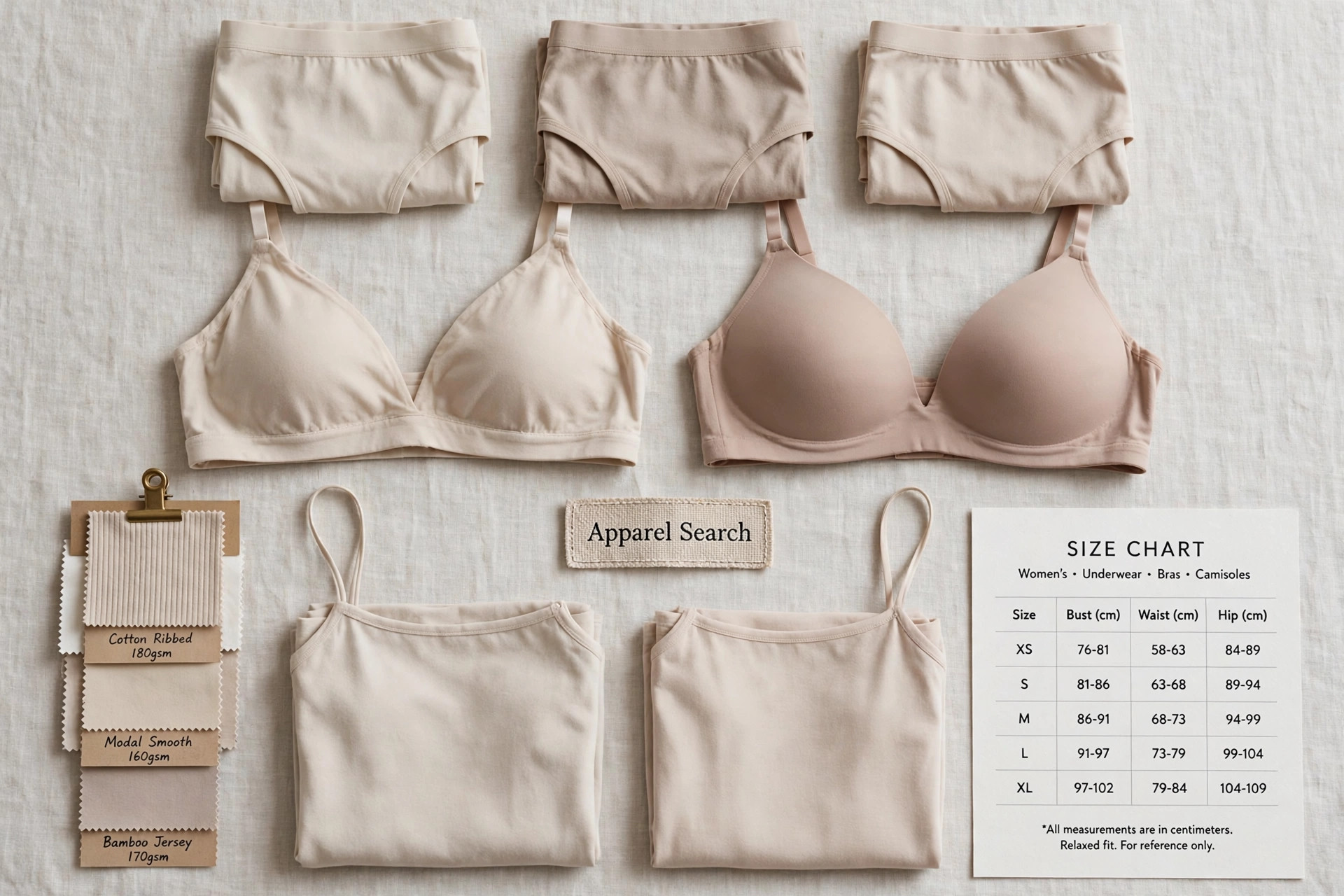
The buyer's first job is range architecture. The department needs briefs in several shapes — fuller briefs, midi and mini cuts, shorts and thongs — because customers are loyal to a preferred shape; bras across everyday, T-shirt, sports and strapless constructions; and camisoles, vests and thermal layers that sit underneath clothing. Around that core, the buyer layers multipacks at value prices, single premium pieces, and seasonal colour stories that give the fixtures newness without disturbing the styles customers rely on. Each line is assigned a role in the range — volume driver, margin contributor or wardrobe staple — and bought to a depth that matches it.
With the range agreed, the buyer orders and then manages availability. Core lines are set up on regular replenishment: sales are reviewed size by size, reorder quantities are calculated from rate of sale and supplier lead time, and buffer stock is held on the fastest sizes so a busy week cannot clear the shelf. New styles go through fit and wear testing before they earn core status, deliveries are checked against the specification, and slow shapes are edited out at range reviews so the department's space stays concentrated on what women actually repurchase. Promotions are planned with enough stock behind them that advertised sizes are genuinely there.
Fit, Fabrics and the Details Customers Feel
Fit in underwear is intimate and unforgiving. Briefs must stay in place without digging in: waistband and leg elastic need enough power to hold and enough softness not to mark the skin, the gusset must be positioned and sized correctly, and the rise must match the shape's promise. Bras add their own engineering — cup shape, wire or wire-free support, strap adjustment and fastening depth — and the buyer works through those points with suppliers at sample stage, checking garments on fit models across the size range rather than approving a single sample size. A style that fits well in the middle sizes but rides up or cuts in at the extremes is not ready to buy.
Fabric choice carries the comfort. Cotton-rich blends dominate everyday briefs because they breathe and wash well; modal and microfibre bring a smoother, lighter hand for garments worn under fitted clothing; lace and mesh appear where appearance matters, provided their stretch and recovery hold up in wear. The buyer reads fibre composition, elastane percentage and fabric weight as working specifications, asks for wash-test results, and checks colourfastness on dyed and printed lines. Seams, labels and trims are judged the same way — flat or bonded edges, printed care information instead of scratchy labels — because in this category the smallest construction detail is felt all day.
Replenishment: Planning Basics That Never Run Out
Most apparel buying is seasonal; underwear buying is continuous. Demand for core briefs and bras runs steadily through the year, lifted by replacement cycles and multipack promotions rather than by fashion moments, so the buyer's calendar is built around stock flow instead of collection drops. Rates of sale are tracked by style, colour and size; lead times from each supplier are built into reorder points; and the size curve — which sizes sell fastest in each shape — is reviewed constantly, because replenishment bought to an average size profile will overstock the extremes while the popular middle sizes sell out.
Continuity lines stay with factories that can repeat a specification exactly, reorder after reorder, because a replacement brief must feel identical to the one it replaces. The buyer audits that consistency — elastic tension, sizing, shade — on incoming deliveries, and keeps a second source or a safety stock on the highest-volume lines so a delayed shipment does not become an empty fixture. Fashion-led underwear is bought in smaller, separate quantities, so experimentation never risks the basics.
Skills, Qualifications and Career Path
The role calls for precision and stamina more than trend instinct. The buyer must be comfortable with size-level data, rate-of-sale arithmetic and lead-time planning, and methodical enough to keep dozens of continuity lines healthy at once. Product judgement is tactile and practical: assessing elastic, fabric recovery, seam comfort and wash performance on samples, and translating customer feedback — returns comments, store reports of digging waistbands or straps that slip — into specification changes a supplier can act on. Negotiation focuses on continuity value: price, consistency and reliable re-supply across a long relationship, not a single season's deal.
Women's underwear buyers usually progress from assistant buyer posts in underwear, lingerie or hosiery departments, where replenishment routines and size curves are learned on live ranges; garment-technology or fitting experience is a real advantage, and general fashion buying qualifications support entry at assistant level. From this desk, buyers move to senior roles across intimate apparel, into the neighbouring lingerie brief, or towards continuity and basics buying in other departments, where the same availability discipline applies. The best-run underwear ranges are the ones customers never have to think about.
Common Questions
How is a women's underwear buyer different from a lingerie buyer?
The desks overlap and are sometimes combined, but the emphasis differs. The underwear buyer concentrates on everyday essentials — briefs, basic bras, camisoles and multipacks — bought for continuous availability and repeat purchase. The lingerie buyer typically carries the wider intimate-apparel brief, including fashion-led bras, lace stories, hosiery and sleepwear. Both depend on fit knowledge and replenishment discipline.
Why does replenishment matter so much in underwear buying?
Because customers replace underwear regularly and expect their usual style and size to be waiting. Core lines are therefore reordered continuously from rate-of-sale data, with reorder points set against supplier lead times and extra depth on the fastest sizes, instead of being bought once a season like fashion clothing.
What fabrics do women's underwear buyers look for?
Cotton-rich blends for breathable everyday wear, modal and microfibre for a smooth finish under fitted clothing, and lace or mesh where appearance counts — always checked for stretch recovery, wash performance and colourfastness, since comfort over a full day of wear is the product's real test.