Sales Manager Job Description
Leading the apparel sales team — territories, targets, coaching and the season's number
A sales manager leads the people who sell a fashion company's lines to the retail trade. The manager carries the season's number — the total the sales organisation must deliver — without personally owning most of the accounts that produce it. Instead the work runs through the team: hiring and developing representatives, drawing territories and assigning accounts, setting targets account by account, riding along on key appointments, and turning a dozen individual pipelines into one reliable forecast. It is the first rung of sales leadership, and in most wholesale fashion companies it is where selling talent is converted, or fails to convert, into management talent.
More Sales & Selling Job Descriptions by Letter:
Territories, Targets and the Season Plan
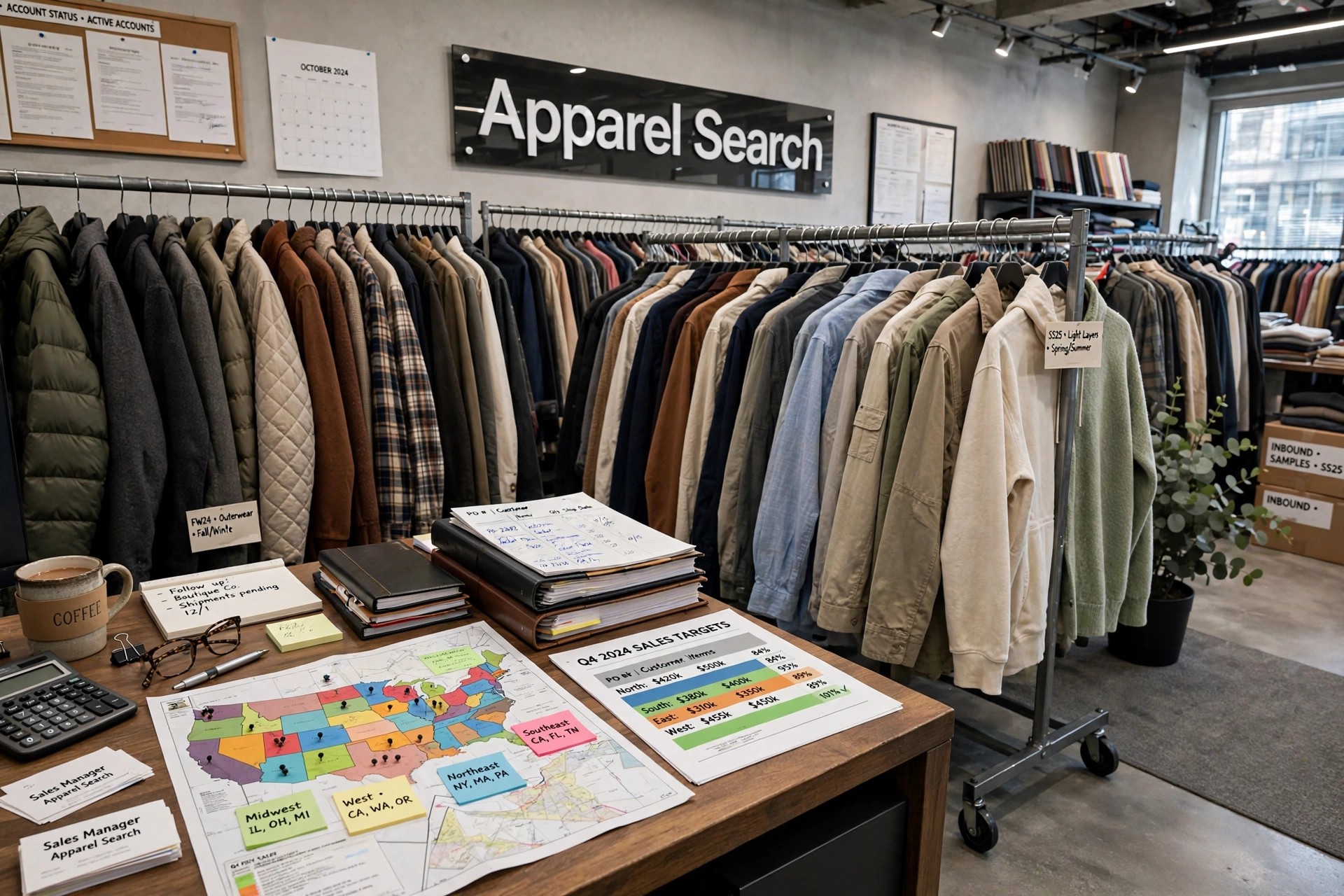
The manager builds the season before the team sells it. Territories are drawn and redrawn as accounts open, close and shift — balancing geography, travel load and revenue potential so that each representative's book can realistically carry its target. Targets themselves are set from the top-line budget downward: the company's required total, divided by account using last season's results, the account's own growth or decline, and the line's strengths this season. A target that ignores an account's lost store group is not ambitious; it is fiction, and the manager's credibility with both the team and senior leadership rests on knowing the difference.
Market weeks and selling seasons are the manager's operational peaks. The showroom schedule, the appointment book for key accounts, sample allocation across the team and the daily order-intake tracking all run through this office. When intake lags, the manager decides where the recovery comes from — additional accounts opened, a reorder push on a proven style, a programme offered to an account that can still take it — rather than simply reporting the gap upward and hoping the season repairs itself.
Coaching Representatives and Key Accounts
Most of the job is other people's performance. The manager reviews each representative's account plans, joins the appointments that matter — the key-account presentation, the difficult negotiation, the account at risk — and debriefs afterwards on what the buyer actually said. New representatives are trained on the line, the order system and the company's terms; experienced ones are coached on the weaknesses their numbers reveal, whether that is an account list padded with easy small orders or a presentation that leads with price instead of product. Difficult conversations about performance are the role's tax: territories that miss twice get restructured, and occasionally representatives get replaced, by the manager who hired them.
Key accounts that are too large or too delicate for a single territory are often co-managed: the manager holds the senior relationship, leads the annual terms conversation, and lets the representative run the seasonal detail. That two-level coverage protects the account when staff change and gives the buyer a route upward when a problem outgrows the representative — a pattern that only works if the manager genuinely knows the account's business rather than appearing for the lunch and the signature.
Forecasts, Reporting and Working With the Rest of the Company
Upward, the manager is the sales forecast made flesh. Weekly intake against target, account-level risks and opportunities, and the season's projected landing are reported to the national sales manager or vice-president in numbers the manager is prepared to defend. Those same figures flow sideways: production plans capacity and fabric from them, finance prices their risk, and the product team hears — filtered through the manager — what buyers praised, rejected and asked for. A sales manager who merely forwards the team's optimism in both directions fails the role's central duty, which is translation with judgement.
The manager also owns the team's commercial discipline: discount authority and its limits, terms exceptions, sample and expense budgets, and the CRM or order-book hygiene that makes the forecast possible. Pricing requests from the field are weighed against margin targets and precedent — an exception granted casually in one territory becomes every buyer's expectation by next season — and the manager says no often enough that the yeses keep their value.
Skills, Qualifications and Career Path
Sales managers are promoted from the road, almost without exception: a strong personal selling record, the trust of major accounts, and evidence of helping colleagues succeed precede the title. The new skills are managerial — planning, coaching, hiring, performance judgement, financial reporting — and employers test for them explicitly, because the industry's classic error is losing a great representative to gain a poor manager. Numeracy is non-negotiable: the role lives in targets, margins, commissions and forecasts, and presents them to senior leadership.
From here the path widens. Category sales management — leading the knits, wovens, menswear or womenswear sales teams described on their own pages in this section — deepens product specialism; national sales management takes the whole country's number, and the vice-president of sales role sits above that. Store-level retail management is a different ladder entirely: the retail sales manager in this directory runs a shop's team and floor, not a wholesale territory force, and the two roles are differentiated here rather than merged because their employers, metrics and daily work barely overlap beyond the shared words in their titles.
Common Questions
What does a fashion sales manager do?
Leads a wholesale apparel sales team: drawing territories, setting and tracking account targets, coaching representatives, co-managing key accounts, running market weeks, owning the sales forecast and reporting it to senior leadership, and enforcing pricing and terms discipline.
How is a sales manager different from a retail sales manager?
The sales manager leads wholesale representatives who sell lines to retail buyers across territories. A retail sales manager runs one store's staff, floor and daily takings. The titles are cousins; the employers, metrics and daily work are different jobs, so this directory gives each its own page.
How do sales managers get hired?
Almost always by promotion from a successful wholesale territory — a strong personal sales record plus evidence of planning, account judgement and helping colleagues succeed. Employers test the new managerial skills explicitly: coaching, hiring, forecasting and reporting.