Regional Sales Manager Job Description
Running apparel selling inside one defined territory — its accounts, its representatives and its number
A regional sales manager runs a fashion company's selling inside one defined territory — a group of states, a part of the country, or a comparable geographic region with its own accounts, climate and retail character. Inside that boundary the role is the whole sales business in miniature: territory representatives and showroom staff to lead, regional chains and department store districts to negotiate with, independent retailers to visit and grow, and a regional target to deliver into the national plan. It is the first true sales management job in most fashion careers, and the one where a great territory seller learns to succeed through other people.
More Sales & Selling Job Descriptions by Letter:
Owning a Territory's Sales Plan
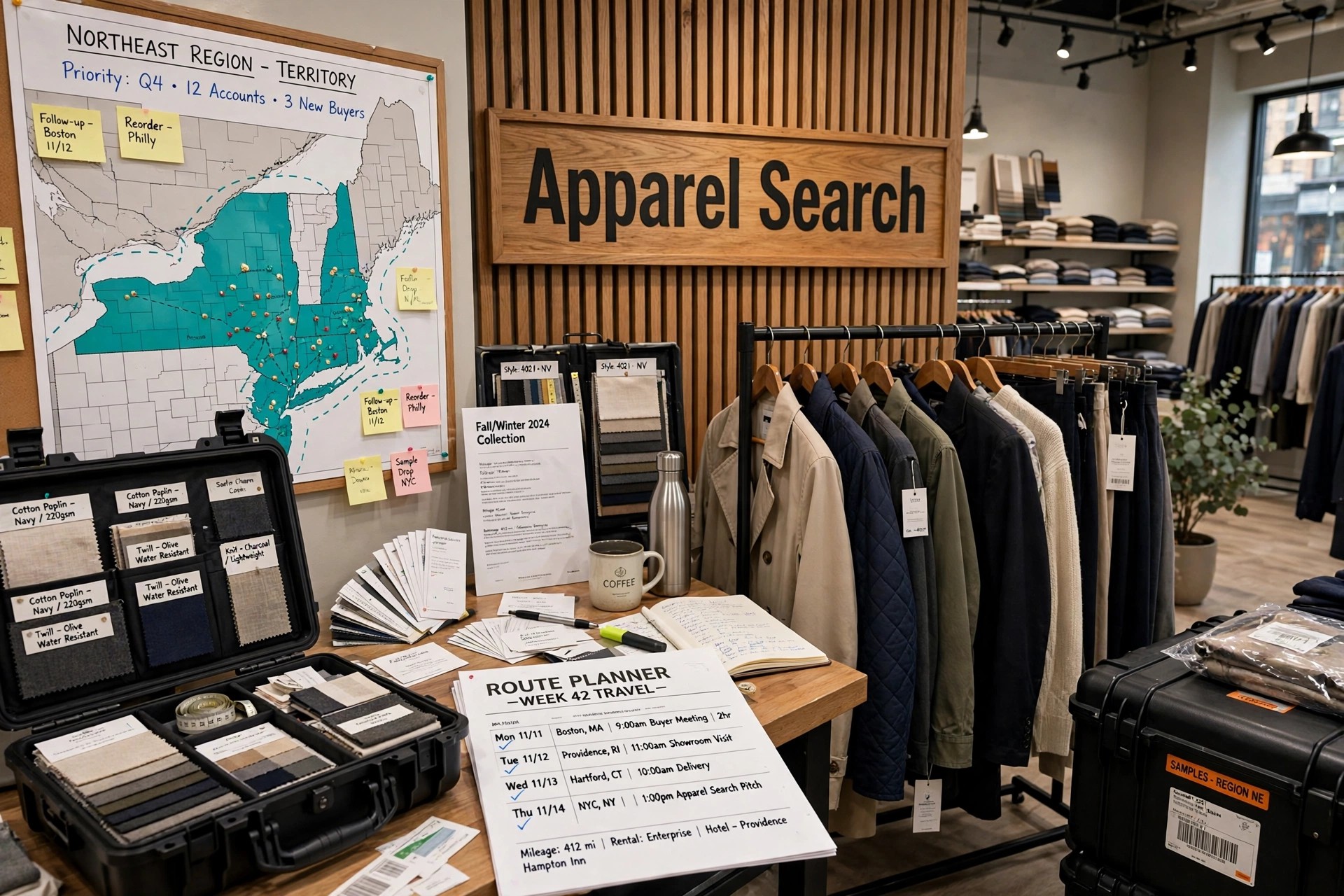
The region starts each season as a plan. The manager breaks the regional target down by representative, account group and category, deciding where the growth is realistically coming from — a regional chain adding doors, an independent base that can take a new category, a city where the brand is under-distributed — and where the plan must instead defend existing business. Store geography shapes everything: distances between accounts decide route patterns, market weeks are chosen for the buyers the region actually has, and the sample ranges are allocated across representatives so no account sees a tired set at the season's end.
Regional knowledge is the manager's edge over head office. Climate shifts delivery needs — a southern region's outerwear weight and a northern region's are different orders from the same line. Local employers, universities and industries shape what a region's stores can sell. Regional chains and buying groups, invisible in a national account list, can carry a territory. The regional manager is expected to know all of this firsthand, to visit the stores rather than manage from reports, and to feed that intelligence upward into the national plan in concrete, account-named terms.
Leading Representatives in the Field
Territory representatives do the region's daily selling, and managing them is field work. The manager sets each representative's account list and targets, reviews their forward bookings and call reports, and works alongside them — joint visits to important accounts, market appointments together, coaching on assortment building and order follow-through. New representatives are inducted into the region's accounts personally; struggling ones get a plan with dates rather than encouragement alone. Where representatives are independent agents carrying several lines, the manager earns their selling time against competing brands in the same sample case.
The manager also carries accounts directly. Regional chains, the district offices of national groups and the region's largest independents are usually managed at this level, both because their negotiations cross representatives' territories and because the manager's presence signals the account's standing. Problem resolution lives here as well: delivery failures, quality complaints and credit issues are settled in the region first, escalated to national management only when the remedy exceeds regional authority — and the manager's reputation with accounts is built on how those moments are handled.
Seasons, Travel and Reporting Upward
The regional calendar is travel-shaped. Selling seasons concentrate into market weeks and regional shows, in-season work into store visits and replenishment rounds, and the manager's diary is planned in circuits that respect the territory's distances. Overnight travel is a standing condition of the job, heaviest in the selling seasons, and the region's representatives are often managed from hotel desks and showroom tables rather than an office — self-organisation is not a preference in this role but its operating system.
Reporting upward is the other half of the circuit. The manager consolidates the region's orders and forecasts for the national sales manager, flags account risks and opportunities early — a chain in difficulty, a competitor leaving a market, a category suddenly moving in the region's stores — and writes the regional sell-through story each season in terms the national plan can use. Good regional reporting is specific: named accounts, real numbers, and honest gaps between forecast and bookings while there is still time in the season to close them.
Skills, Qualifications and Career Path
Regional managers are appointed from senior territory roles, usually with the region's own account relationships already in place. Employers look for a personal selling record, assortment and product fluency across the company's categories, forecast honesty, and the beginnings of management craft — target-setting, joint-visit coaching and difficult conversations handled early. A clean driving record and comfort with constant travel are practical requirements, and the region's buyers, who knew the manager as a representative, watch the transition to management closely.
The path upward is the national sales manager role — the same disciplines widened from one region to the whole country and from some categories to all of them — or, in menswear companies, the menswear national role described in this directory. Regional management is also a recognised route into key-account directorships and, for those who prefer depth to altitude, into managing the largest and most complex regions as a career in itself. Either way, the regional years are where a fashion salesperson's judgement about stores, territories and people is formed.
Common Questions
What does a regional sales manager do in fashion?
Runs a company's selling inside one defined territory: planning the region's sales by account and category, leading its territory representatives, managing regional chains and major independents directly, travelling the region through the selling seasons, and reporting forecasts and results to national management.
How is a regional sales manager different from a national sales manager?
A regional manager owns one territory in depth — its accounts, representatives and local conditions. A national sales manager owns all the regions together, sets countrywide policy and budgets, leads the regional managers, and negotiates the accounts that buy nationally.
How much travel does a regional sales manager do?
A great deal. The role is field-based: market weeks, regional shows, joint representative visits and store rounds across the territory, with overnight travel heaviest in the selling seasons.