Sales — Menswear Job Description
The territory craft of selling menswear — presenting lines, building size scales and keeping basics replenished
This page is about the craft of selling menswear in a territory: the day-to-day work of carrying a men's line from store to store and showroom to showroom, presenting it garment by garment, and writing orders that match each retailer's customers. It is deliberately narrower than the general Menswear Sales overview filed under M in this directory, which maps the whole occupation. Here the focus is method — how a menswear range is presented, how its size scales are built account by account, and how the basics end of the line is kept replenished between seasonal collections.
More Sales & Selling Job Descriptions by Letter:
Presenting the Line, Garment by Garment
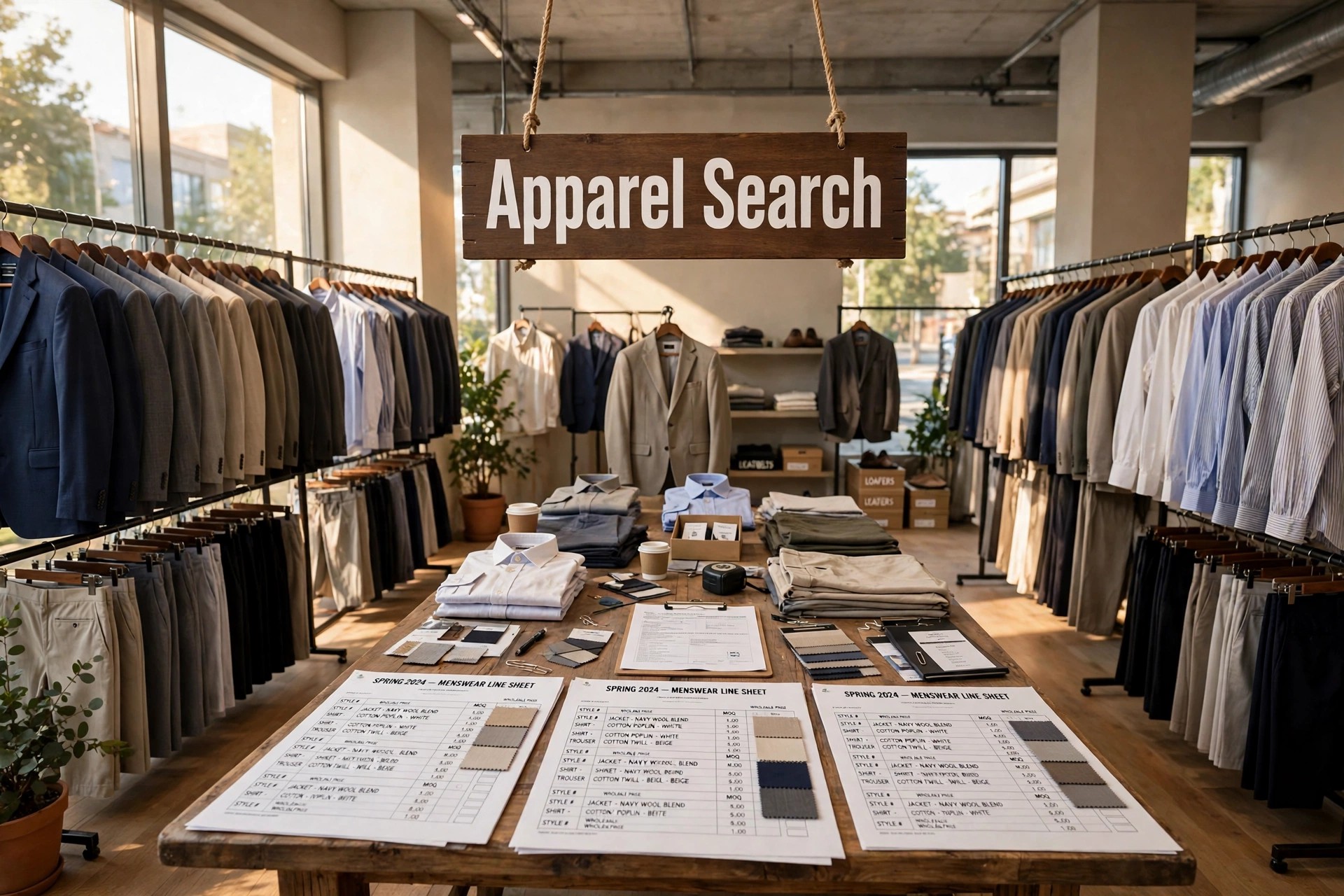
A menswear appointment follows the rail. The salesperson hangs the range in the order a buyer thinks: opening price points first, then the core styles the store already trusts, then the new pieces that need explaining. Each garment is talked through on cloth, fit and construction — why this shoulder, why this trouser block, what the fabric will do after washing. Buyers interrupt, compare against competitors they saw that morning, and test prices against their margin needs, so presentation is a conversation steered by preparation rather than a speech.
Samples carry the argument, so their condition is part of the job. Steamed jackets, correct size runs for fitting, swatch cards for colours not sampled, and line sheets that match what is actually on the rail — a buyer who finds a price discrepancy stops trusting the rest of the presentation. Good menswear sellers rehearse the range before market week the way a tailor studies a pattern: knowing which style answers which objection before it is raised.
Size Scales and Assortment Building
Menswear orders fail in the sizes more often than in the styles. A suit or trouser programme lives on its scale — the proportion of each waist, chest or neck size in the delivery — and scales differ sharply between a city department store, a suburban outfitter and a value retailer. The salesperson builds each account's scale from its own selling history: depth through the middle sizes, honest restraint at the extremes, and enough of the proven fits that the store never advertises what it cannot supply.
Assortment building applies the same discipline across categories. Tailoring, shirting, knitwear and casual trousers must arrive as an outfit story a shopper can buy, not as disconnected bargains. The seller watches the balance — too much novelty starves the core, too much core makes the department look asleep — and uses last season's returns and rate-of-sale figures, account by account, to argue for the mix rather than simply recording what the buyer first suggested.
Basics, Replenishment and the Road Rhythm
Underneath the seasonal collections sits the basics business: core shirts, trousers, underwear and hosiery that a menswear department must never run out of. That part of the territory runs on replenishment rather than range reviews. The salesperson monitors stock positions with the buyer, agrees reorder triggers, and chases the warehouse when a core size gaps — because a customer who cannot find a plain white shirt today buys it from the shop opposite, and may not come back.
The road rhythm organises everything else. Territories are routed so each account is seen at the moments its buying calendar demands: range appointments in market weeks, replenishment checks between them, and sell-through reviews after deliveries land. Notes from every visit — what sold, what was returned, what the owner complained about — become the preparation for the next one. In menswear, where styles change slowly and relationships last decades, that accumulated account memory is the salesperson's real capital.
Skills, Qualifications and Career Path
Employers want menswear product fluency first: cloth weights and weaves, fit blocks, construction quality and the size systems of every category sold. Numeracy follows — margin, rate of sale and scale arithmetic at the appointment table — and then the road skills: route planning, sample care and the stamina for market weeks. Many territory sellers started on menswear shop floors, where fitting customers daily teaches size judgement no catalogue can give.
Progression runs to larger accounts, to the menswear specialisms filed elsewhere in this directory, or into sales management for a menswear brand. Sellers who want the wider map of the occupation should read the Menswear Sales overview under M next; sellers who want depth in one product family will find footwear, outerwear and underwear treated on their own pages there.
A Note on Continuity Lines
Within the seasonal work sits a quieter discipline: continuity lines. Some trousers, shirts and knitwear stay in a range for years with only fabric or colour refreshed, and the territory seller guards those lines carefully. Their samples may look unspectacular beside the new season's pieces, yet their reorder history pays for the appointments. Keeping continuity styles visible in every presentation, defending their price points against cheaper copies, and reporting any fit drift between production runs is slow, unglamorous work that separates order-takers from range managers.
Common Questions
What does a menswear salesperson actually do each week?
Presents men's ranges to retail buyers garment by garment, builds each account's size scales and assortment, writes and follows orders, monitors basics stock for replenishment, and reviews sell-through with accounts between market weeks.
How is this page different from the Menswear Sales page under M?
That page is the general overview of the occupation. This one concentrates on method in a territory — line presentation, size-scale building and basics replenishment — and the two cross-reference each other rather than repeating the same treatment.
Why do size scales matter so much in menswear?
Because menswear is bought in structured size runs — chest, waist, neck and leg measurements. A scale weighted wrong leaves a store full of sizes nobody wears and empty in the sizes everybody wants, whatever the styles are.