Menswear Sales Job Description
The general menswear selling role — an overview of selling men's clothing to retailers, across every category
Menswear sales is the general selling role for men's clothing: the work of presenting men's apparel lines to retailers and turning those presentations into orders. This page is the overview of that occupation — the territory every other menswear selling page in this directory specialises from. A menswear salesperson may represent one brand's full range or a showroom's several lines, selling to department stores, menswear specialty shops, clothing chains and online retailers. The categories cross a man's whole wardrobe, the buyers range from national chains to single-store owners, and the role blends product presentation, assortment advice and order follow-through in roughly equal parts.
More Sales & Selling Job Descriptions by Letter:
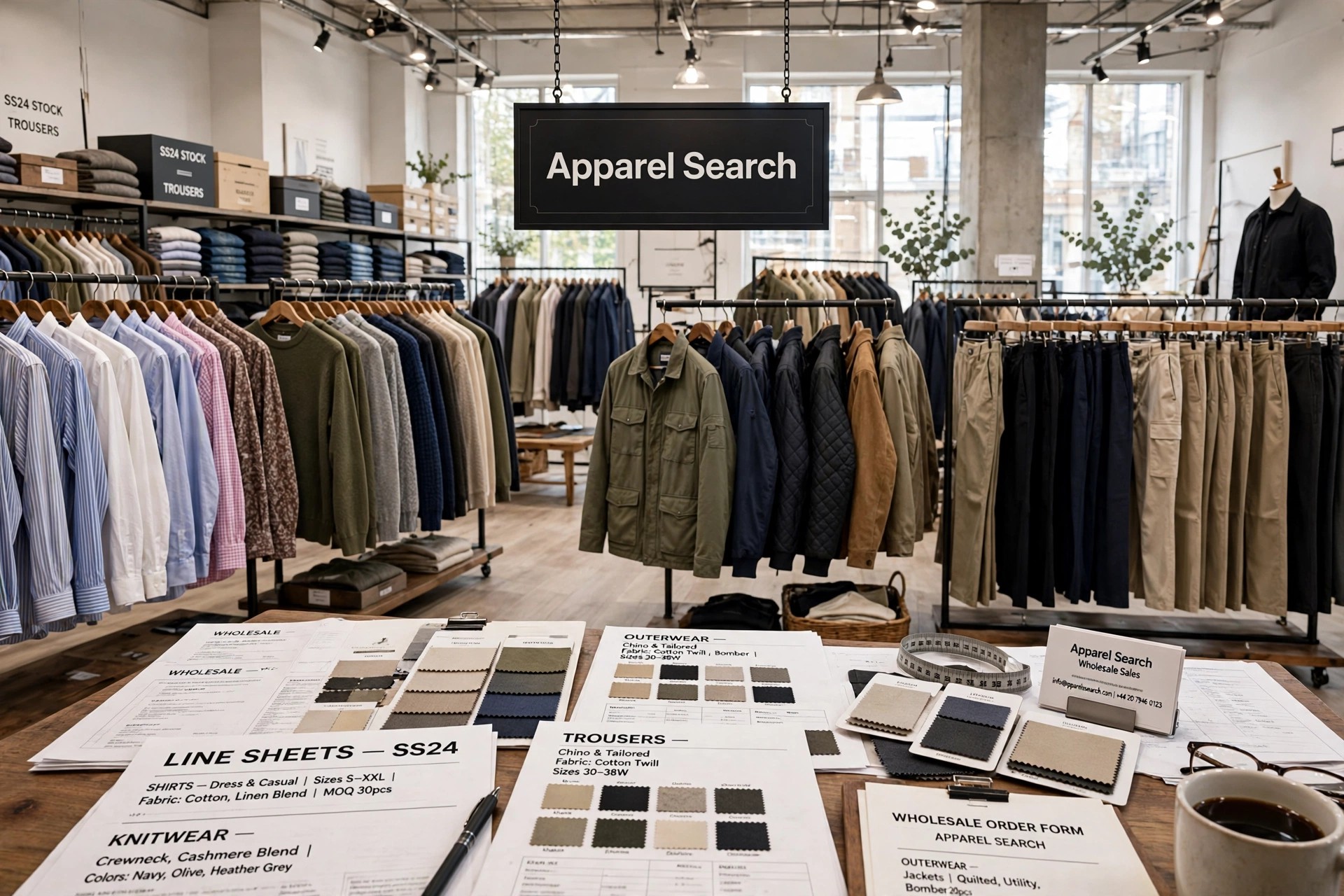
What Menswear Selling Covers
The product scope is the whole menswear department. Tailored clothing — suits, sport coats, dress trousers — sits beside shirting in dress and casual styles, knitwear and sweaters, denim and casual trousers, outerwear, sportswear and the basics programmes of underwear and hosiery. Few salespeople are equally deep in all of it, which is why the directory carries specialism pages for the categories that reward concentration — footwear, outerwear and underwear among them — but the general menswear seller is expected to present a credible range across categories and to know where their own line is strong.
The customers are whoever retails menswear. Department stores buy by department with professional buyers and planned budgets. Specialty menswear stores and independents buy with owners who know their customers personally and expect the salesperson to know them too. Chains buy centrally in volume. Online retailers buy against data. A menswear territory usually mixes several of these, and much of the craft is adjusting the same line to each channel's way of buying without losing the thread of what the brand stands for.
The Selling Day: Showrooms, Roads and Orders
Selling happens in showrooms during market weeks, in buyers' offices, and on the road at stores. The salesperson works samples garment by garment — fabric, fit, construction, price — and builds each account's order as an assortment: the categories in balance, the price points stepped, the size scales set for that store's customers. Orders are written precisely, confirmed in writing, and then followed: production and delivery are chased, shortages and problems are communicated early, and in-season reorders on proven styles are solicited while stock can still move.
Between appointments the job is preparation and record-keeping. Route planning across a territory, sample ranges maintained and steamed, line sheets and price lists current, account histories reviewed before each visit — what the store bought, what sold, what came back. Sell-through conversations after delivery are part of the selling, not an afterthought: a buyer who hears honest analysis of last season's numbers, including the misses, gives this season's proposal a fairer hearing. Menswear's slower fashion cycle rewards exactly this continuity of attention.
How the General Role Relates to the Specialisms
This overview page exists because menswear selling is one occupation with several depths. The men's fashion sales page in this directory treats the same full-assortment work at account level in greater detail — assortment construction, size curves and department planning for buyers who purchase whole men's ranges. The specialism pages narrow the lens: footwear selling works in size runs and fit, outerwear selling in seasonal, high-priced, weather-driven assortments, and underwear selling in replenishment basics. A career often moves between the general role and a specialism more than once, in either direction.
Management is the other direction of travel. Territory experience is the qualification for the regional and national menswear management roles: the menswear national sales manager leads this same selling across a whole country for a menswear brand. Reading the general role first makes those pages clearer — management in menswear is this job, widened to other people's territories and the largest accounts — and it also makes the specialisms clearer, since each is this job narrowed to one product family and deepened.
Skills, Qualifications and Career Path
Employers ask for apparel selling aptitude before menswear specifics: presentation confidence at a rail, honest numeracy with units and margin, order accuracy, and the self-management a road territory demands. Menswear product knowledge — cloth, fit and construction across the main categories — can be built in the job and is often built first in menswear retail, where selling and fitting customers daily teaches the product from the wearer's side. A driving licence and willingness to travel are practical requirements in most territories.
Entry comes through showroom assistant and junior representative roles, through multi-line showrooms that train across brands, and from retail menswear departments. From a first territory, the paths run to larger accounts and key-account work, into a product specialism, or upward into regional and national sales management. The general grounding is the point: a salesperson who has sold across the menswear department carries a map of the whole trade that specialists and managers both draw on for the rest of a career.
Common Questions
What is menswear sales?
The general role of selling men's clothing lines to retailers — department stores, specialty shops, chains and online sellers — across the menswear categories: presenting ranges, building assortments, writing and following orders, and reviewing sell-through with buyers.
How does menswear sales differ from men's fashion sales?
They are close neighbours in this directory. This page is the general overview of the occupation; the men's fashion sales page goes deeper on full-assortment account selling — assortment construction, size curves and department planning. Both are flagged in the directory rather than merged, because readers arrive at the two titles looking for different depths of answer.
How do you start in menswear sales?
Through showroom assistant and junior representative roles, multi-line showrooms, or from menswear retail, where fitting and selling to customers builds the product knowledge wholesale buyers respect. Territories, specialisms and sales management follow from there.