Childrenswear Sales Job Description
Selling the whole children's clothing department — ranges, size spans and seasons for children's stores and departments
Childrenswear sales is the broad children's department selling role: presenting and selling children's clothing ranges — across the whole span of the department, from baby and toddler clothing through to older children's sizes — to the buyers of children's stores, clothing chains and department stores. It is a range-selling job defined by breadth. A single department covers many size groups, several product categories from basics to occasionwear, and sharp seasonal moments such as back-to-school. This page treats the role in product terms throughout: garments, sizes, fabrics, safety standards and orders — the merchandise itself is the subject.
More Sales & Selling Job Descriptions by Letter:
Selling Across the Whole Department
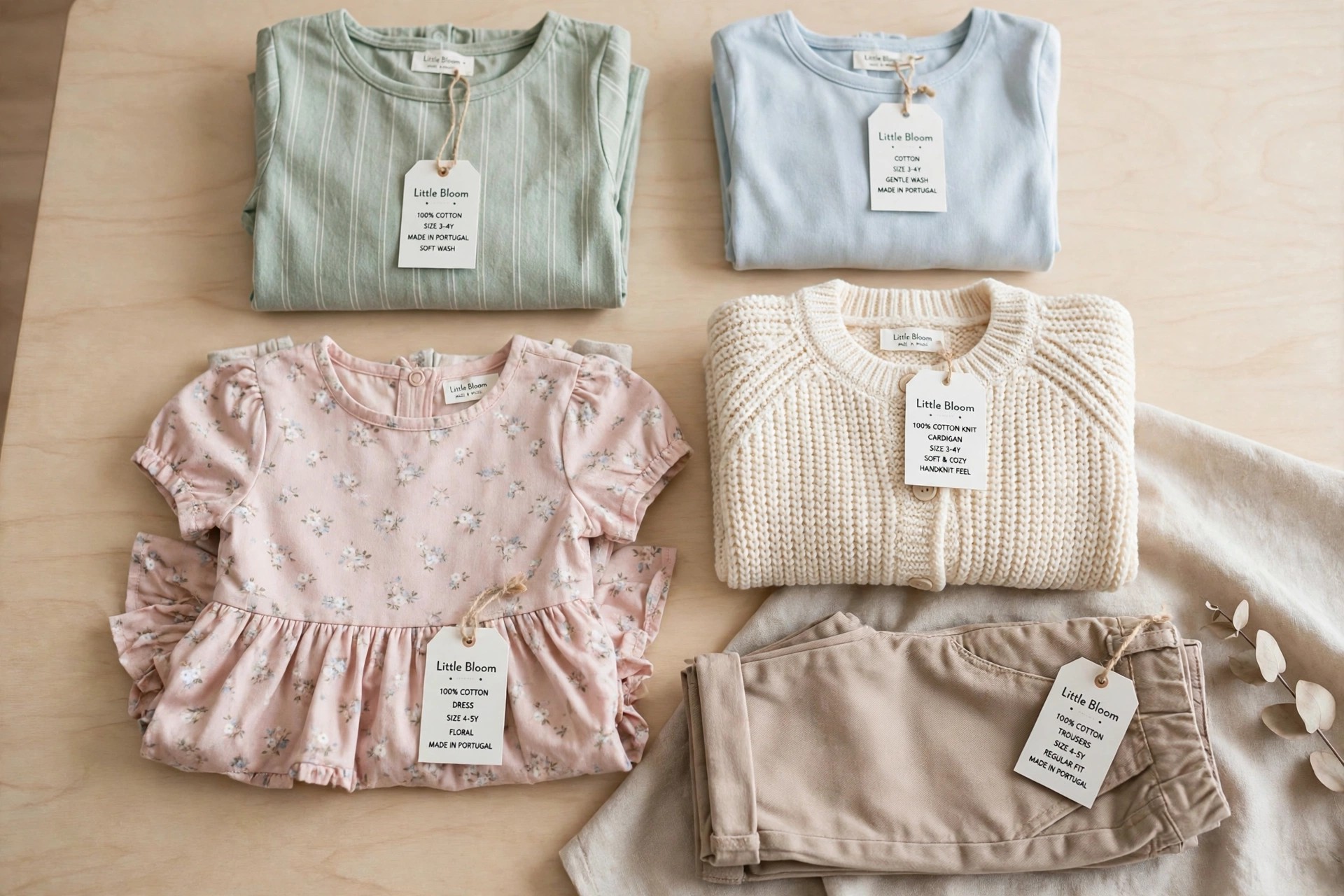
The children's department is really several departments sharing a floor. Baby and layette clothing sells on fabric softness, fastening practicality and gift presentation; toddler ranges on durability and easy dressing; older children's clothing on styling, school requirements and price; and occasionwear on finish and fit for a single important day. The childrenswear salesperson presents a supplier's ranges across all of those groups coherently, helping each buyer see the whole offer and where each part sits in their store's layout. Accounts differ — a specialist children's chain buys the full span, a department store's children's floor has its own group structure, an independent children's shop buys narrowly and deeply — and the assortment conversation is rebuilt for each.
Because the buyer on the other side usually manages the entire children's area, this broad role is the natural counterpart: one salesperson who can talk across the department's groups, coordinate delivery phasing between them, and spot where a range in one group answers a gap in another. That breadth is what distinguishes this page's role from the specialist kidswear role elsewhere in this directory, which concentrates on the younger children's label business in depth; the department role trades that depth for span, and stores use both kinds of supplier relationship side by side.
Size Ranges and Range Planning
Children's clothing is sold in size spans, and range planning is arithmetic before it is fashion. A style may run through many sizes across its age groups, and every order is a spread of quantities across them, weighted by the account's sales history — the middle sizes of each group turn fastest, the extremes need presence without depth. The salesperson builds those spreads with the buyer style by style, checks them against minimums and pack formats, and flags where a proposed spread repeats a pattern that stranded sizes last season. Multiples and pre-packs, common in children's basics, simplify the arithmetic but remove flexibility, and advising which styles suit which format is part of the craft.
Product standards carry extra weight in this category, and the salesperson must know them as specifications. Children's garments are subject to product rules the adult ranges never meet: drawstring and cord restrictions on young children's clothing, flammability standards especially for sleepwear, small-part and fastening security on baby garments, and labelling requirements for fibre content and care. Buyers expect the selling side to state plainly how a range meets the applicable standards, and a salesperson who treats safety specification as part of the product description — accurately, without embellishment — earns the trust the whole account runs on.
Seasons, School and Stock Rhythm
Children's departments run on the most calendar-driven rhythm in clothing retail. Back-to-school is a season in itself, with uniform and school-appropriate ranges ordered early and delivered against a fixed date that cannot slip; holiday and occasion ranges have their own hard deadlines; and the two main spring and autumn ranges anchor the year between them. The salesperson sells delivery dates as firmly as garments, because a school range arriving after term starts is worth a fraction of its order value, and buyers plan their trust in suppliers around exactly those arrivals.
In season, the work turns to replenishment and reading growth. Children's basics — underwear, socks, sleepwear, school staples — reorder continuously, and the salesperson monitors the account's rates and keeps the flow unbroken. Growth itself is the category's built-in demand engine: the customer base outgrows every purchase, which makes range continuity commercially valuable — a store whose supplier keeps a trusted basic in stock across the size span keeps the family returning group after group, and the salesperson's range planning protects precisely that continuity.
Skills, Qualifications and Career Path
Employers look for range-selling experience and fluency with the category's mechanics: size-span planning, pack and minimum structures, the children's seasonal calendar, and the product safety standards that apply to children's garments. Presentation work is garment-led — samples shown by group, fabrics and construction explained, size spreads built live with the buyer — and order accuracy matters more than in most categories because size errors multiply across a span. A background in children's departments in retail, or in childrenswear buying support, is a respected route in; children's product knowledge is specialised enough that employers test it directly.
Career paths run to larger children's accounts and chains, children's sales management, or deeper into the category's specialisms — the kidswear label role in this directory, schoolwear and uniform selling, or baby-products ranges. Others carry the size-planning discipline into general apparel sales, where it is rarer and valued. The department role's breadth makes its holders natural candidates for children's buying and merchandising posts as well: few people in a business understand a children's range's size economics better than the person who has sold it store by store.
Common Questions
What does a childrenswear salesperson sell?
Children's clothing ranges across the whole department — baby, toddler and older children's sizes, from basics and school clothing to occasionwear — sold to children's stores, chains and department store buyers, with orders built as quantity spreads across each style's size span.
How is this role different from the kidswear sales role?
Breadth versus depth. This page describes the broad department role covering the full children's span for an account. The kidswear role in this directory concentrates on the younger children's label business as a specialism. Stores commonly buy from both kinds of salesperson.
Why do product safety standards matter in childrenswear sales?
Because children's garments carry specific product rules — cord and drawstring restrictions, sleepwear flammability standards, fastening security on baby clothing. Buyers expect the salesperson to describe accurately how a range meets those standards; it is part of the product specification, not an extra.