Big & Tall Sales Job Description
Selling extended-size menswear — fit expertise, honest size ranges and some of the most loyal customers in clothing
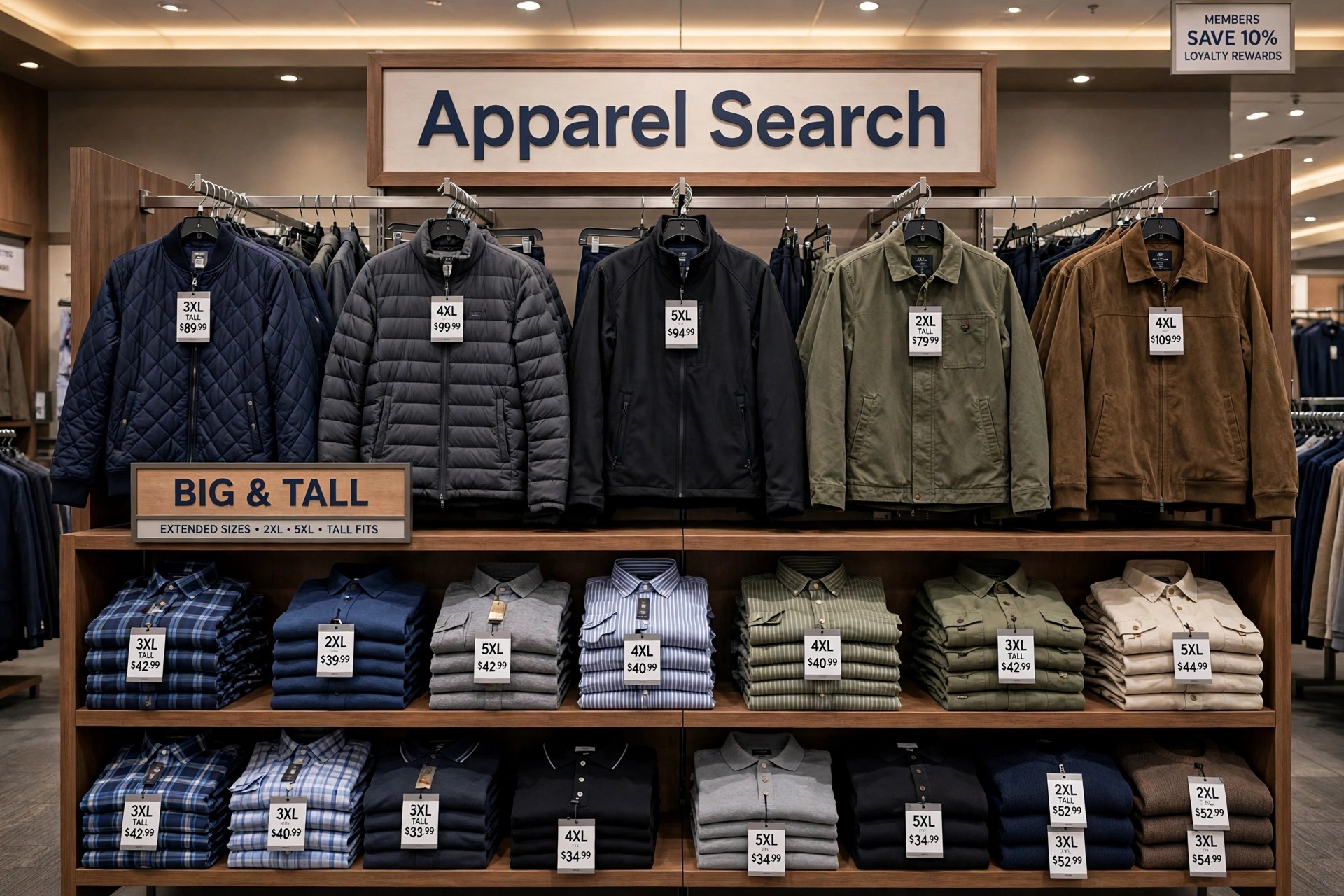
Big and tall sales is the specialism of selling menswear made in extended sizes — the ranges cut for men who are taller, broader, or both, and who are chronically under-served by standard size runs. The role exists on both sides of the counter: wholesale salespeople sell big and tall lines to specialist stores and department sections, and specialist retail staff sell them to the men themselves. What unites both sides is fit expertise. A big and tall customer has usually been failed by clothing that almost fits for years, so the seller who understands proportion, grading and rise — and stocks or orders honestly across the full size range — earns a loyalty most fashion categories never see.
More Sales & Selling Job Descriptions by Letter:
Fit and Proportion: the Product Knowledge
Big and tall product is not standard clothing scaled up carelessly; it is graded differently. Tall ranges add body and sleeve length and adjust rise and proportions, not just inches; big ranges expand chest, waist and seat while keeping lengths sane; and combined ranges serve men who need both. The salesperson has to know how a given brand grades — whether its tall is genuinely longer in the body, where its big sizes stop, how its trousers break down by waist and inseam — because the customer's first question is always whether the garment will actually fit, and a wrong answer is visible the moment it is tried on.
That knowledge extends to construction details that matter more at larger sizes: fabrics with enough substance to drape rather than cling, reinforcement at stress points, seat and thigh room in trousers, neck sizes matched to body sizes in shirts, and footwear-adjacent basics like longer belts and ties. Selling this category well means being able to explain why one garment works for a customer's build and another does not, in plain, respectful language — big and tall shoppers are quick to detect condescension, and the category's best sellers are known for straightforward, knowledgeable service that treats fit as a technical subject, not a personal one.
Ranges, Size Curves and Stock Honesty
The commercial discipline of the category is the size curve. Extended ranges multiply stock-keeping units — every style in more sizes, across two fit families — so buyers and sellers plan depth carefully: strong depth in the core sizes where most customers sit, honest breadth across the extremes, and replenishment routes for the sizes that sell out. Wholesale sellers build that curve with each account, using the store's own size history rather than a national average, because regional build patterns differ and a curve imported from elsewhere strands stock at both ends.
Stock honesty is the category's ethic. Advertising a size range the stock does not actually cover — the full run on the website, three sizes in the store — is the complaint big and tall customers make most often, and specialist accounts guard their reputation against it fiercely. The wholesale salesperson's credibility rests on shipping complete ranges and warning early when a size is cut from production; the retail seller's rests on saying plainly what is available, what can be ordered or transferred, and what alteration can achieve. Alteration services themselves — hems, waist adjustments, sleeve work — are part of the offer in specialist stores, and sellers coordinate them as part of the sale.
Customers, Channels and Seasons
The channels are distinct: dedicated big and tall stores and chains, big and tall departments or sections inside menswear stores and department stores, catalogue and online specialists where the full range can be shown without floor-space limits, and the wholesale showrooms that supply them. Online selling suits the category's breadth, but fit uncertainty drives returns, so sellers in every channel invest in accurate size information — real garment measurements, fit notes by brand — as a selling tool, not a compliance chore.
Seasonally the category follows menswear's calendar with its own pressure points: suits and formalwear for occasions, where a big or tall man often has the fewest alternatives and plans furthest ahead; holiday and event demand; and the basics business — shirts, knitwear, trousers, underwear in extended sizes — that runs all year and anchors the specialist's turnover. Occasion selling deserves its reputation as the category's finest hour: the customer dressing for a wedding or a new job, fitted properly at last, becomes the regular who returns for everything else.
Skills, Qualifications and Career Path
Employers and agencies look for menswear selling experience plus the category's specific literacy: grading and proportion across big and tall fits, size-curve planning, and the service manner the clientele rewards. Many specialists arrive from menswear retail, where they gravitated to the department's extended-size section, or from general menswear wholesale accounts that carried a big and tall capsule. Measuring and fitting skills, alteration knowledge and patience with a customer who expects to be disappointed — and professional pleasure in proving otherwise — are the personal qualities the trade names first.
Careers develop along the specialism: senior roles in the big and tall chains and departments, wholesale territory roles for the extended-size brands and capsules, and buying or range-planning posts where size-curve expertise is the qualification. The counterpart specialism for women's extended sizes, plus size apparel sales, has its own page in this directory, and sellers sometimes carry both. It is a small, expert corner of menswear where reputations are personal and long-lived — customers remember the person who fitted them properly, and so do employers.
Common Questions
What is big and tall sales?
Selling menswear made in extended sizes — big ranges for broader builds, tall ranges for longer bodies, and combined ranges — wholesale to specialist stores and departments, and in specialist retail directly to customers. Fit and proportion expertise is the heart of the role.
How are big and tall sizes different from regular sizes made bigger?
They are graded differently, not just enlarged: tall sizes add length and adjust rise and proportion, big sizes expand width while keeping lengths workable. A knowledgeable seller knows how each brand grades and can predict fit for a customer's build.
Why is the big and tall customer base so loyal?
Because choice is limited and good fit is hard to find. A store or brand that stocks the full range honestly and fits a customer properly solves a long-standing problem, and those customers return and recommend — which is why size-range honesty is a commercial rule in this category.