Women's Hosiery Sales Job Description
Selling hosiery as a product range — denier, sizing, colours and the replenishment rhythm of legwear departments
Women's hosiery sales is the selling specialism for legwear: pantyhose, tights, stockings, hold-ups, knee-highs and socks, sold to department stores, hosiery and lingerie departments, pharmacies and general clothing retailers. It is one of the most purely product-driven selling roles in fashion. Hosiery is a packaged, sized, specification-led product — bought on denier, size system, colour and price per pack — and a large share of it is continuity stock that stores replenish continuously rather than ranges they buy once a season. This page describes the role in those product terms: construction, sizing, ranges and replenishment.
More Sales & Selling Job Descriptions by Letter:
The Product: Styles, Denier and Construction
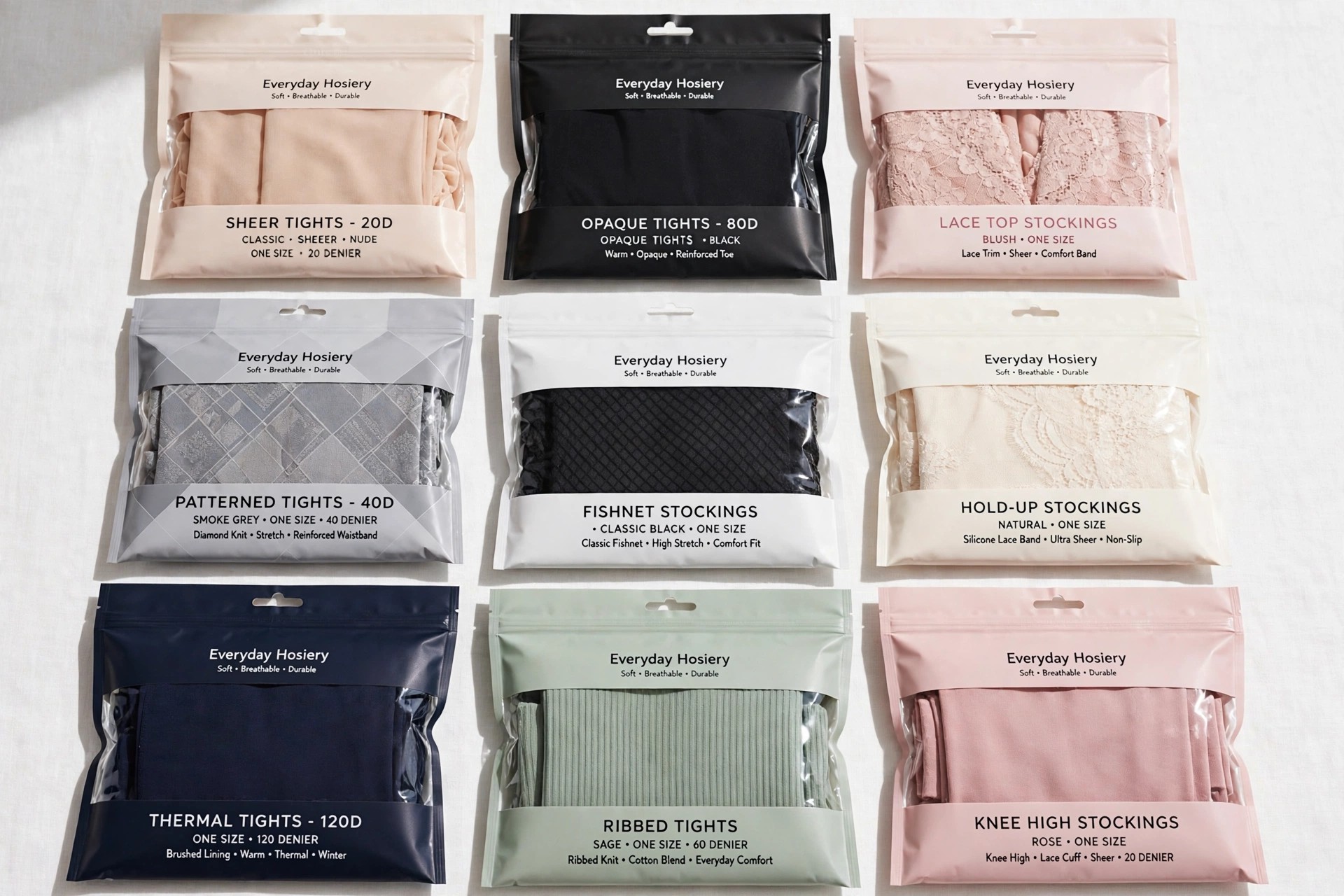
The salesperson's first literacy is the product range itself. Pantyhose run waist to toe in one garment; tights are their heavier, opaque relatives; stockings end at the thigh and are worn with a suspender belt, while hold-ups grip with silicone bands; below the knee sit knee-highs, ankle socks and trainer liners. Each style is specified by denier — the yarn-weight number that predicts sheerness, from ultra-sheer below 15 denier through classic sheer at 15 to 30, semi-opaque at 30 to 50, and opaque tights above that — and the salesperson quotes denier the way other sellers quote fabric weight, because buyers plan their fixtures by it.
Construction details are the rest of the specification: control-top and sheer-to-waist brief sections, reinforced toes and heels, sandal toes for open shoes, cotton gussets, flat seams and shaped heels, and the elastane content that gives a garment its fit and recovery. Support and compression hosiery adds graduated-compression grades sold on measured pressure. None of this is decorative knowledge — a buyer comparing two suppliers' 20-denier pantyhose is comparing exactly these points, and the salesperson presents samples as specifications, with packets, shade cards and size charts doing the talking.
Sizing Systems, Colours and Pack Presentation
Hosiery sizing is a two-axis grid of height against weight or hip measurement, printed on every packet, and each brand's grid differs slightly. The salesperson owns that grid for every account: which sizes the store stocks in which styles, where its customers fall on the grid, and how a new brand's sizing maps onto the brand it replaces. Size errors in hosiery cannot be altered or exchanged like a garment on a rail — a packet bought in the wrong size is a lost sale and often a lost customer — so sizing accuracy in the order is a service the account can measure.
Colour is the range's working wardrobe: black, natural and nude shades do the everyday volume, with seasonal fashion colours, patterns, fishnet and lace styles adding the department's interest. Hosiery is sold packaged, from fixtures and spinners, so presentation is a packaging discipline — packet design, shade visibility, size colour-coding and fixture density all affect rate of sale, and the salesperson advises on fixture layout and range editing: which styles earn a facing, which deniers pair in a promotion, and how the fashion end is rotated without disturbing the continuity core the fixture exists to serve.
Replenishment: the Continuity Business
Most hosiery revenue is replenishment. Core styles in core shades reorder weekly or monthly at rates a store can forecast closely, and the salesperson's in-season job is keeping that flow unbroken: monitoring rates of sale, flagging styles and sizes trending toward a stock-out, arranging top-up deliveries, and planning the two demand surges the category reliably produces — the autumn tights season, when opaque styles multiply their rate overnight with the weather, and occasion peaks when sheer styles spike. A hosiery department out of stock in a core size has nothing to substitute, which is why buyers judge hosiery suppliers on continuity above almost everything else.
Seasonal and fashion hosiery rides on top of that base: coloured and patterned tights, lace and fashion styles, and gift-packaged sets for the holiday season. The salesperson sells those as measured additions — tested in part of the fixture, read quickly, reordered or cleared before they age — and protects the core range's space while doing it. Promotional mechanics are also part of the craft: multi-buy offers and price-marked packs are standard tools in this category, and the salesperson plans them with the buyer so volume rises without training customers to wait for a deal on a product they buy every month.
Skills, Qualifications and Career Path
Employers look for product-led selling experience and fluency with specification selling: denier scales, construction features, sizing grids and shade ranges, quoted accurately from memory in a buyer meeting. A background in lingerie, underwear or packaged-goods departments is the usual route in, because the mechanics — sized packaged product, continuity replenishment, fixture presentation — are shared across those categories, and hosiery is frequently sold by the same teams that sell intimate apparel. Order accuracy and stock numeracy matter more than fashion instinct here; the category rewards the methodical.
Career paths run to larger hosiery and legwear accounts, key-account work with the department-store and pharmacy chains where much of the category's volume sits, and sales management across legwear and intimates ranges. The specialism also borders the sleepwear and lingerie pages in this directory — the same departments, buyers and replenishment systems recur — and experienced hosiery salespeople often carry a combined legwear and intimates portfolio. It is a quiet, exact corner of fashion selling where reputations are built on never letting a core size run out.
Common Questions
What does a women's hosiery salesperson sell?
Legwear as a packaged product range — pantyhose, tights, stockings, hold-ups, knee-highs and socks — specified by style, denier, size grid and shade, sold to department stores, lingerie and hosiery departments and general retailers, mostly as continuously replenished continuity stock.
What is denier and why does it matter in hosiery sales?
Denier is the yarn-weight number printed on every hosiery packet; in practice it predicts sheerness, from ultra-sheer below 15 denier to opaque tights above 50. Buyers plan fixtures and ranges by denier, so salespeople quote it as a core product specification.
Why is replenishment so central to hosiery selling?
Because most hosiery is continuity stock bought repeatedly in the same styles, shades and sizes. A store that runs out of a core size has no substitute to offer, so the salesperson's measured job is monitoring rates of sale and keeping core sizes unbroken, especially through the autumn tights surge.