Sales Forecaster Job Description
Projecting what apparel will sell, in what quantities, before the orders are written
A sales forecaster projects how much of a fashion line will sell — by style, colour, size, account type and month — before and while the selling season runs. This is an analytical desk, not a selling route: nobody here carries a sample case or calls on buyers. The forecast the role produces is the number the rest of the business plans against. Production books capacity and fabric from it, finance builds budgets on it, and sales leadership sets territory targets from it. When the projection is right, bestsellers stay in stock and weak styles are cut early; when it is wrong, the same errors surface months later as stockouts on winners and markdowns on everything else.
More Sales & Selling Job Descriptions by Letter:
Building the Demand Projection
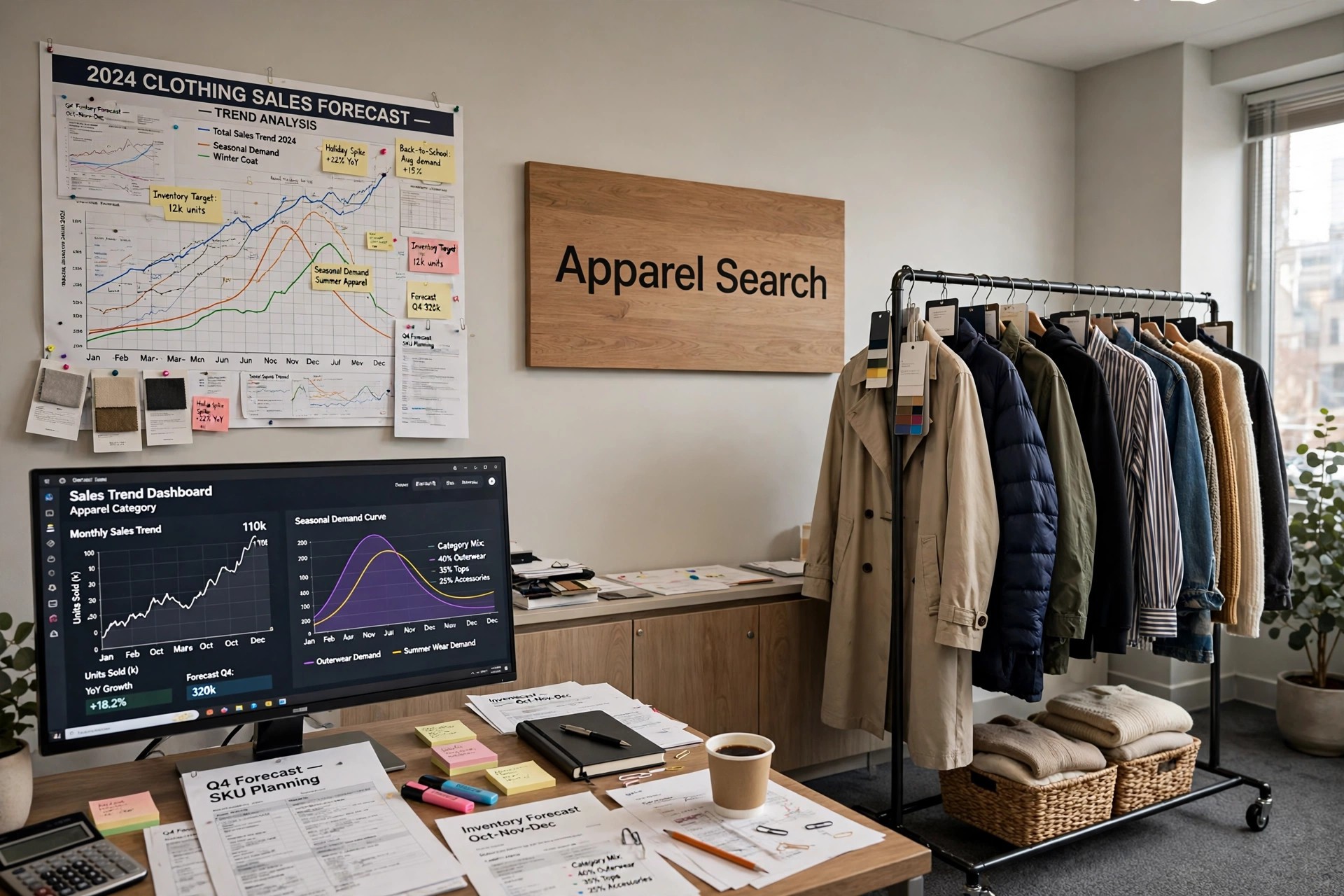
The forecaster assembles the projection from evidence, not optimism. Last year's sell-through by style and size, the current order book, pre-season bookings from key accounts, retail inventory levels and the wider trend picture — colour and silhouette forecasts, economic signals, weather patterns for seasonal categories — are weighed into a demand curve for each product group. A forecaster covering coats thinks in cold snaps and November weightings; one covering swimwear thinks in resort deliveries and spring breaks. The calendar shape of demand matters as much as its total, because production and shipping are scheduled against the months, not the year.
The output is granular. Management does not need to know that dresses will sell; it needs units by delivery month, split across the size and colour ranges, separated into the pre-booked business the order book already guarantees and the reorder and fill-in business that must be estimated. Forecasters maintain that split carefully, flag the assumptions underneath each line — a new account's unproven estimate, a style riding one retailer's promotion — and revise on a rolling cycle as real orders and point-of-sale data replace estimates with facts.
Working With Sales, Planning and Production
Although the forecaster does not sell, the sales team is the role's closest partner. Representatives and sales managers bring account intelligence no spreadsheet holds: a buyer planning a promotion, a chain expanding its apparel space, a territory where a competitor stumbled. The forecaster's craft is converting that intelligence into numbers without surrendering to it — field forecasts run optimistic by nature, and part of the job is testing them against sell-through history and saying, with evidence, where the plan should come down. Those conversations are the role's diplomacy: a cut forecast feels like a verdict on someone's territory.
Downstream, the projection drives the planning and allocation analysts who turn demand into purchase orders and store distributions, and it informs the production team's capacity and fabric commitments. Forecasters sit in the season's key meetings — line reviews, budget reviews, reorder committees — presenting variance: where actual demand is running ahead of or behind projection, which styles to chase, which to exit, and what the variance does to margin and inventory by season's end. Accuracy is tracked openly, and a forecaster's record of bias — chronic over- or under-calling — is part of the professional file.
Data, Systems and Methods
The working tools are forecasting and planning systems, business-intelligence dashboards and serious spreadsheet modelling. Methods range from straightforward trend and seasonality analysis on stable basic lines to judgement-weighted projections for fashion items with no history, where the forecaster leans on comparable-style performance — the fate of last season's nearest silhouette, in the nearest fabric, at the nearest price. Newness is the hardest forecasting problem in apparel: a genuinely new style has no past, so the role builds its estimate from analogues and updates aggressively on the first weeks of selling data.
Data hygiene decides how much of that method works. Style, colour and size codes must be consistent across seasons, discontinued lines mapped to their successors, and one-off distortions — a single bulk order, a weather event, a promotion week — identified so they do not poison the baseline. Forecasters spend real time on this unglamorous layer, because a model fed on dirty history produces confident nonsense. The role also maintains the forecast archive itself, so that later reviews can separate a bad projection from a good one overtaken by events.
Skills, Qualifications and Career Path
Employers hire forecasters from planning, allocation, buying-office analysis and sales analysis roles, and look for statistical comfort, advanced spreadsheet and systems skill, and a feel for apparel product — knowing why a fabric or a price point changes a style's prospects. A degree in business, statistics, supply chain or fashion merchandising is common. Presentation matters too: the forecaster must defend a number in a room full of people whose bonuses hang on a different one, calmly and with the workings shown.
The career path runs toward demand planning management — leading the forecasting function for a division or a whole company — or sideways into merchandise planning, where the same projections become buying budgets, and into sales operations leadership. Some forecasters move into the trend forecasting world linked below, where the subject is fashion direction rather than unit demand; the two share a name and a habit of looking ahead, but one sells numbers to a production meeting and the other sells direction to designers, and employers hire for them quite differently.
Common Questions
What does a sales forecaster do in fashion?
Projects demand for apparel lines — units by style, colour, size, account type and month — from sell-through history, order books, account intelligence and trend signals, and maintains the rolling forecast that production, inventory and sales targets are planned against.
How is a sales forecaster different from a salesperson?
The forecaster never carries a territory or writes orders personally. It is an analytical role: estimating what the whole business will sell, testing the sales team's own estimates against evidence, and reporting variance. Salespeople sell to accounts; forecasters predict the outcome of everyone's selling.
What background leads into sales forecasting?
Planning, allocation, buying-office and sales-analysis roles are the usual route, with strong spreadsheet and forecasting-system skills, statistical confidence and genuine apparel product knowledge. Business, statistics, supply-chain and merchandising degrees all appear in the job's holders.