Womenswear Sales Job Description
Selling women's clothing by category and channel — dresses, separates and collections, from boutiques to department store groups
Womenswear sales means representing women's clothing lines to the retailers who sell them — and this page approaches the role through its two organising structures: the categories a women's range is built from, and the channels that buy it. Dresses, separates, coordinates, suits, denim, knitwear and outerwear each sell on their own rhythm, and a department store group, a specialty chain, an independent boutique and an online retailer each buy those categories in a fundamentally different way. The womenswear salesperson's craft is matching category to channel, account by account, season by season.
More Sales & Selling Job Descriptions by Letter:
The Categories: How a Women's Range Is Built
Dresses are the occasion-driven heart of many women's ranges: day dresses, social and occasion styles, and the seasonal dress that anchors a collection's advertising. They sell as complete garments, judged on silhouette and print, and a strong dress season can carry a whole account's buy. Separates — skirts, trousers, blouses and knit tops — sell as components: the buyer builds outfits and price architecture from them, size and colour depth matter more than any single style, and replenishment of proven pieces runs alongside the new season's fashion.
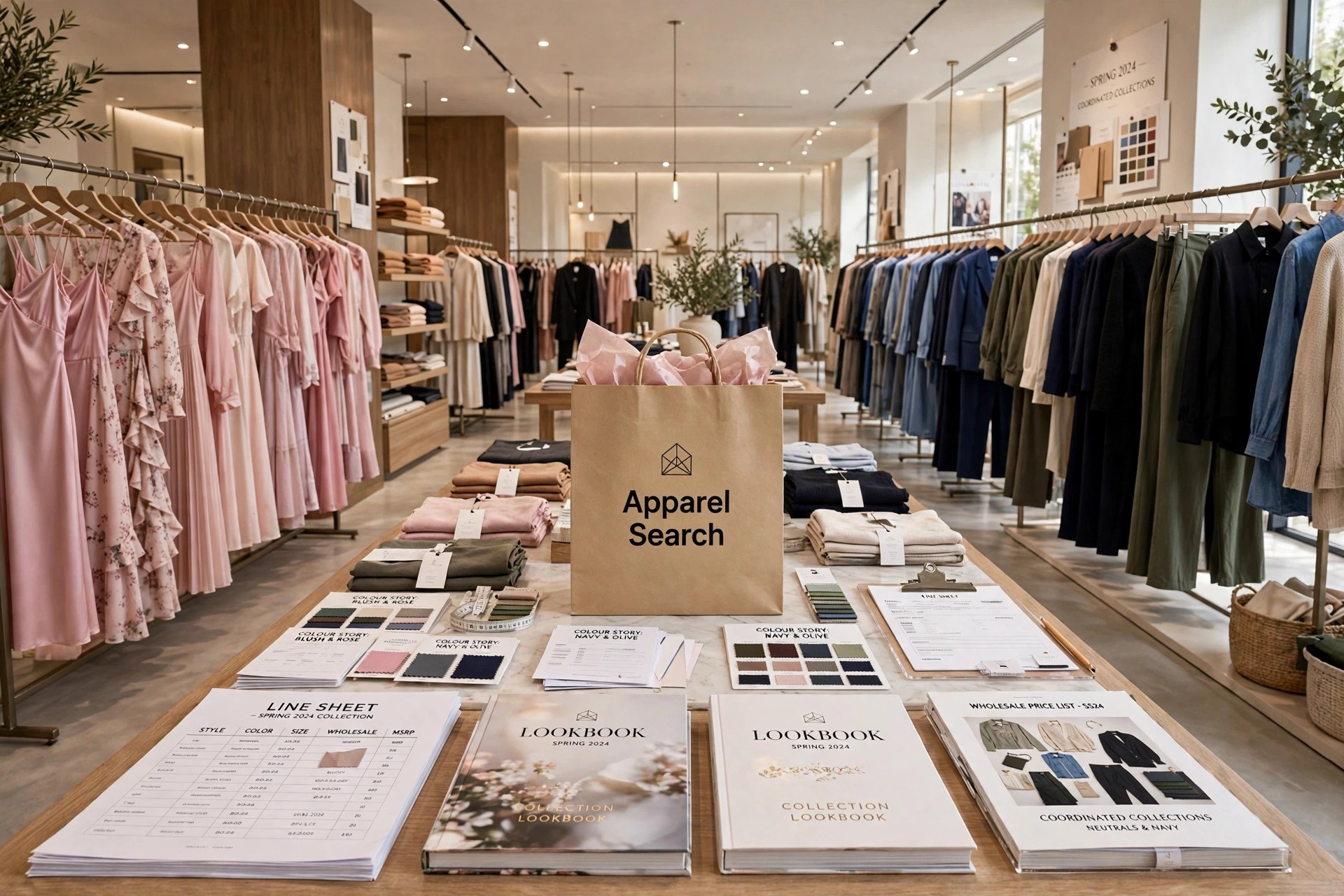
Coordinates and collections are sold as stories. A collection is presented as a designed whole — a colour palette, a fabric group, pieces that merchandise together on one fixture — and the salesperson's presentation walks the buyer through the story before the individual styles, because the department's display and its sell-through both depend on the group landing together. Suits and tailored pieces, denim and casual categories, and active and leisure ranges each complete the assortment at their own price levels, and part of the role is knowing which categories a given account's customer actually comes to that store to buy.
The Channels: Department Stores, Chains, Boutiques and Online
Department store groups buy centrally, by category department, with planned open-to-buy, margin targets and marketing programmes negotiated at group level; the salesperson works with a category buyer whose decision covers many doors at once, and whose calendar is fixed far ahead. Specialty chains buy to a tighter, faster model — narrower assortments, quicker reads on early selling, reorder and exit decisions taken in weeks — and expect the representative to bring selling data, not just samples, to every appointment.
Independent boutiques buy on the owner's eye and a small, personal customer knowledge the chains cannot replicate; they take smaller quantities across more styles, need delivery reliability above almost everything, and reward the representative who protects them from over-buying. Online retailers buy against imagery and data: the garment must photograph, describe and size accurately, because their customer never touches it before purchase. A womenswear territory usually mixes all four channels, and the same collection is legitimately presented four different ways in a single week.
Assortment Planning and the Colour Story
Within each account, the work is assortment construction. The salesperson helps the buyer balance the range across categories and price points — opening, core and better levels — set size and colour depth by category, and place the collection's colour story so the department reads as one designed offer rather than a rack of unrelated garments. Womenswear colour is commercial information: the palette a season is built on, which colours are carried across categories so separates coordinate, and where a fashion colour is taken as a calculated, shallow risk rather than a core commitment.
Delivery flow is planned with the same care. Women's ranges land in successive drops through a season, and the order is written so fresh product reaches the floor in waves — early transitional pieces, the main seasonal delivery, then high-season and occasion product — rather than in one overwhelming shipment. The salesperson tracks each account's intake against that plan, flags the drop that is slipping at the maker, and keeps the buyer's floor fresh, because in womenswear a stale department loses its customer to the store that just received new stock.
Skills, Qualifications and Career Path
The role asks for fluency in the women's categories and their different buying logics, an eye for colour and collection structure, and the channel versatility to negotiate with a central buyer in the morning and advise a boutique owner in the afternoon. Employers look for women's apparel selling experience, honest assortment judgement — the willingness to talk a buyer out of a style that will not sell in her store — and meticulous delivery follow-through. Many representatives build the category knowledge first in women's retail departments or buying offices.
Progression leads to the major department store and chain accounts, to key-account responsibility for a category such as dresses, and onward to womenswear sales management. A companion page in this directory, filed under S as sales — womenswear, treats the same occupation from its working-rhythm side; this page is the category-and-channel treatment, and the pair are cross-referenced rather than merged, because employers advertise the role under both titles.
Common Questions
What does a womenswear salesperson sell?
Women's clothing lines to retailers: dresses, separates, coordinates and collections, suits, denim, knitwear and outerwear — sold category by category into department store groups, specialty chains, independent boutiques and online retailers.
How do the womenswear channels buy differently?
Department groups buy centrally by category on fixed calendars; chains buy narrow and fast on early selling data; boutiques buy small and personal on the owner's knowledge of her customers; online retailers buy against photography, description and sizing accuracy.
How does this page differ from the sales — womenswear page under S?
They describe the same occupation under its two common titles, and are flagged as a duplicate-title pair. This page takes the categories-and-channels angle — what the range is made of and who buys it; the S page takes the occupation's working-rhythm angle. Both are kept and cross-referenced.